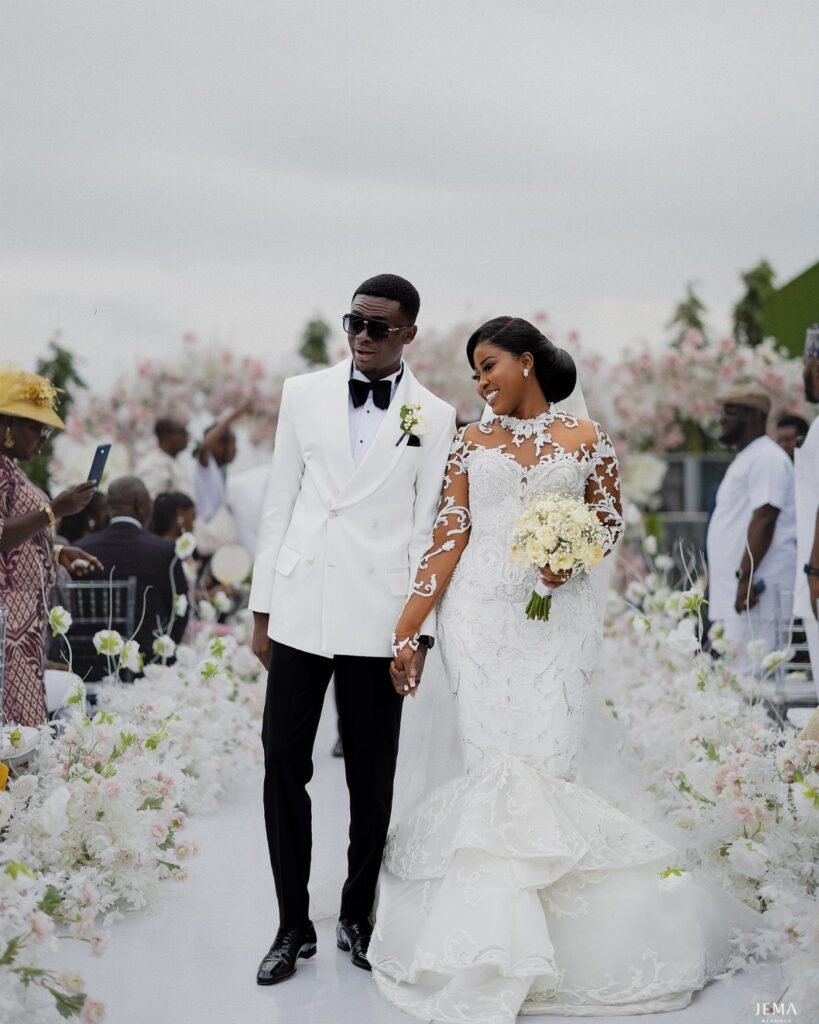
A wedding expenses checklist here runs from attire and stationery to the extra rentals that never show up on a venue quote, then on to setting a realistic budget and reviewing it as the bills come in.
Which line deserves the biggest share depends on the one thing you two would hate to skimp on, whether that is attire, stationery or rentals, because every overage has to come out of another category when you review and adjust the budget.
The gown and the white tuxedo count as 2 line items, and alterations can add to each.
1. Wedding Attire
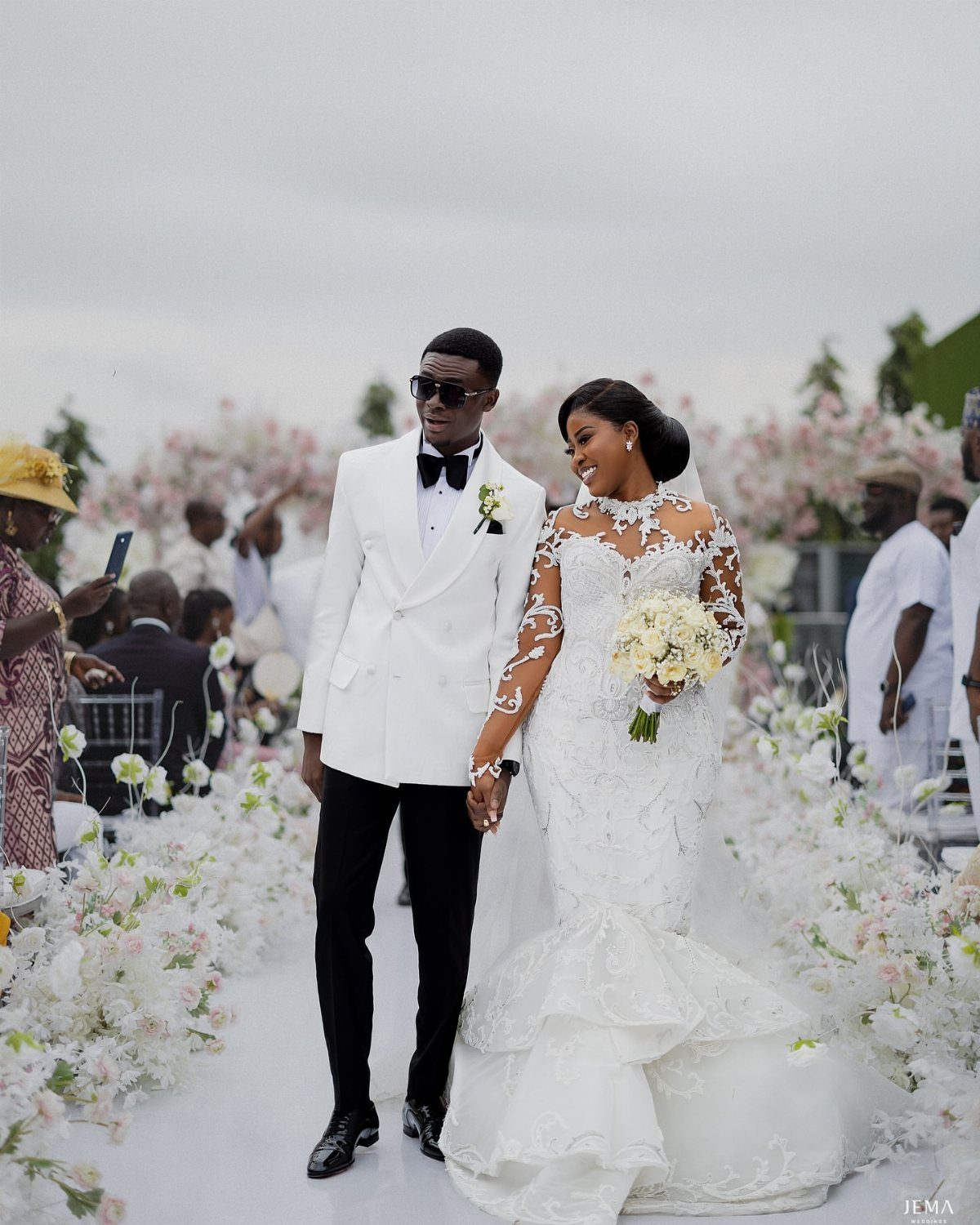
Attire is the one line item where couples set the budget first and the dream second, and it pays to price both outfits together.
A lace gown and a white tuxedo are two separate purchases, and each can come with alterations, so count them as 2 line items rather than one.
I would set the gown and suit numbers side by side before falling for either. Add fittings, shoes and accessories to the same line, since those extras are what push the total past the number you wrote down.
2. Stationery

Stationery starts with the save the date, and picking one accent color early lets it carry through the invitation, RSVP card, programs and menus, so you order a matched set once instead of paying for reprints.
Budget for the full set: save the dates, invitations, and matching envelopes.
Postage belongs on the list too, and it is the cost people forget. I would pick the color and ribbon first, then price the whole suite in one quote so the pieces match and nothing gets added late.
3. Extra Rentals Required

Rentals are the hidden costs that sneak past a venue quote.
Ask the venue what is included before you request any rental quotes.
Then count chairs against your guest list, and ask about delivery and setup fees, because those can run as high as the items themselves. Add a line for the tent and its draping so it is not a surprise later.
However, high-end planners can cost significantly more. Those looking to find someone to throw a luxury event will need to be prepared to spend at least $15,000 in addition to the cost of the wedding itself.
— Vogue
Setting a Realistic Budget
Before you price a single item, add up the money you actually have. Count your own savings plus whatever family has offered, and write down the total as one number.
Ask each contributor what they are giving and whether it comes with conditions, like a say in the guest list. A verbal "we’ll help out" is not a figure you can plan around, so get an amount.
Use only money you are sure of. If a contribution might arrive late or shrink, I would leave it out of the total and treat it as a cushion.
Reviewing and Adjusting Budget
Put a recurring date on your calendar to look over the budget, such as the first of each month. A fixed date keeps it from becoming something you only open when you are worried.
Update it right after any big booking or purchase. Swap the estimate for the real cost, so you always see where you stand.
When one category runs over, the money has to come from another.
Decide ahead of time what matters most to the two of you. If photography is the priority, I would let it take a larger share and trim a category you will barely notice on the day.
Treat the budget as a working document. Changing it is not failure; it is how the plan stays honest.
Frequently Asked Questions
What is the 50/20/30 rule for weddings?
It is a budgeting guideline that splits spending into 3 buckets: 50% for venue and catering, 30% for design, style and personal details, and 20% for extras. Treat it as a starting point, since you do not have to match the percentages exactly.
What is a typical breakdown of a $30,000 wedding budget?
Most breakdowns include venue, catering, photography and decor, plus attire, flowers, entertainment and a buffer.
Percentage ranges give a rough shape for a $30,000 budget: venue and catering take the biggest share by far, photography and video come next at 10–15%, attire and beauty and entertainment each take 5–10%, and a buffer of 5–10% sits at the end for surprises.
Plan on about 1% for gifts for the wedding party, which many budgets leave out. Apply those percentages to $30,000 to get your dollar figures.
What is the groom’s mom responsible for?
Traditionally, the groom’s family covers the marriage license, the officiant’s fee and the rehearsal dinner. Those are customs, not rules, so confirm what each family is actually giving.





