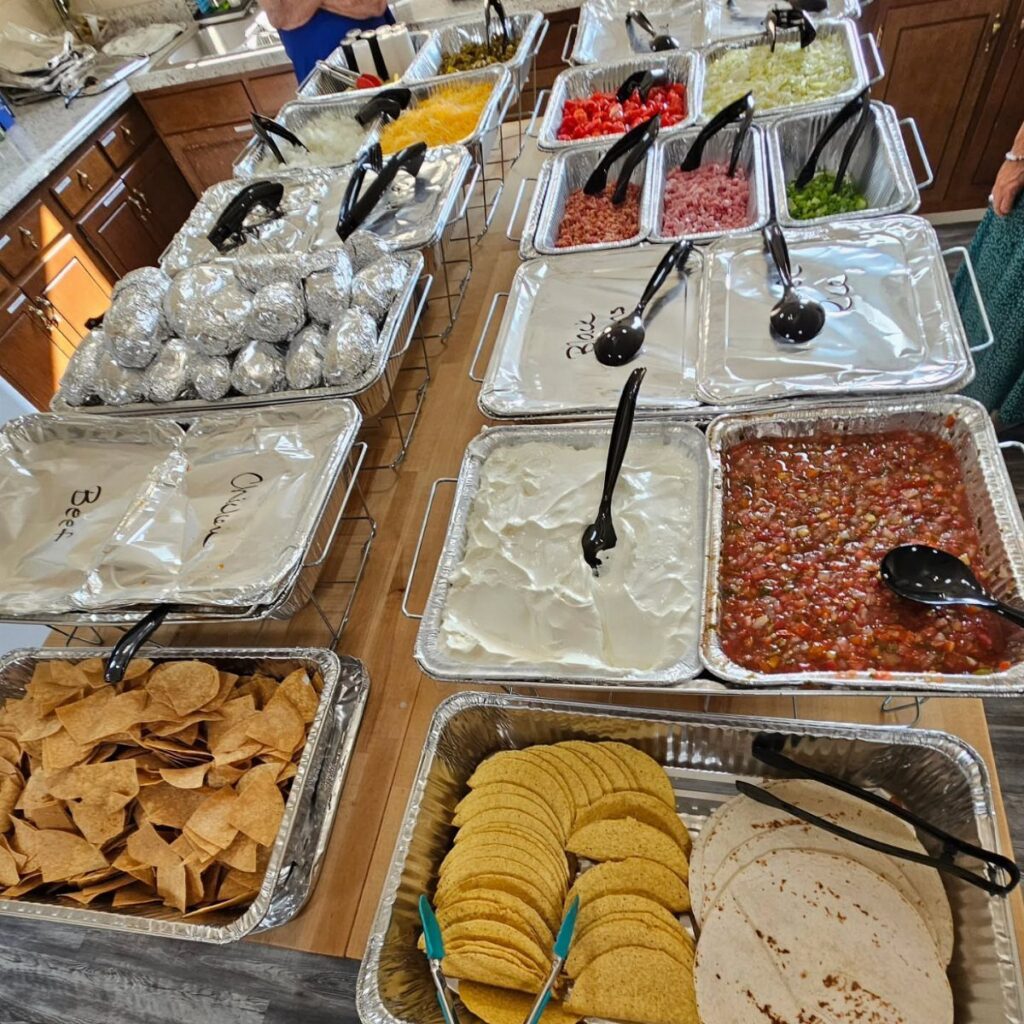
The ideas run from Drop-Off Party Platter Catering, with no kitchen, servers or rentals to pay for, to a Chicken and Rice Plated Meal, where staffing is what pushes the price up.
Once you multiply each option’s per-guest food cost by your real guest count, the right choice from this list usually becomes obvious.
1. Taco Bar
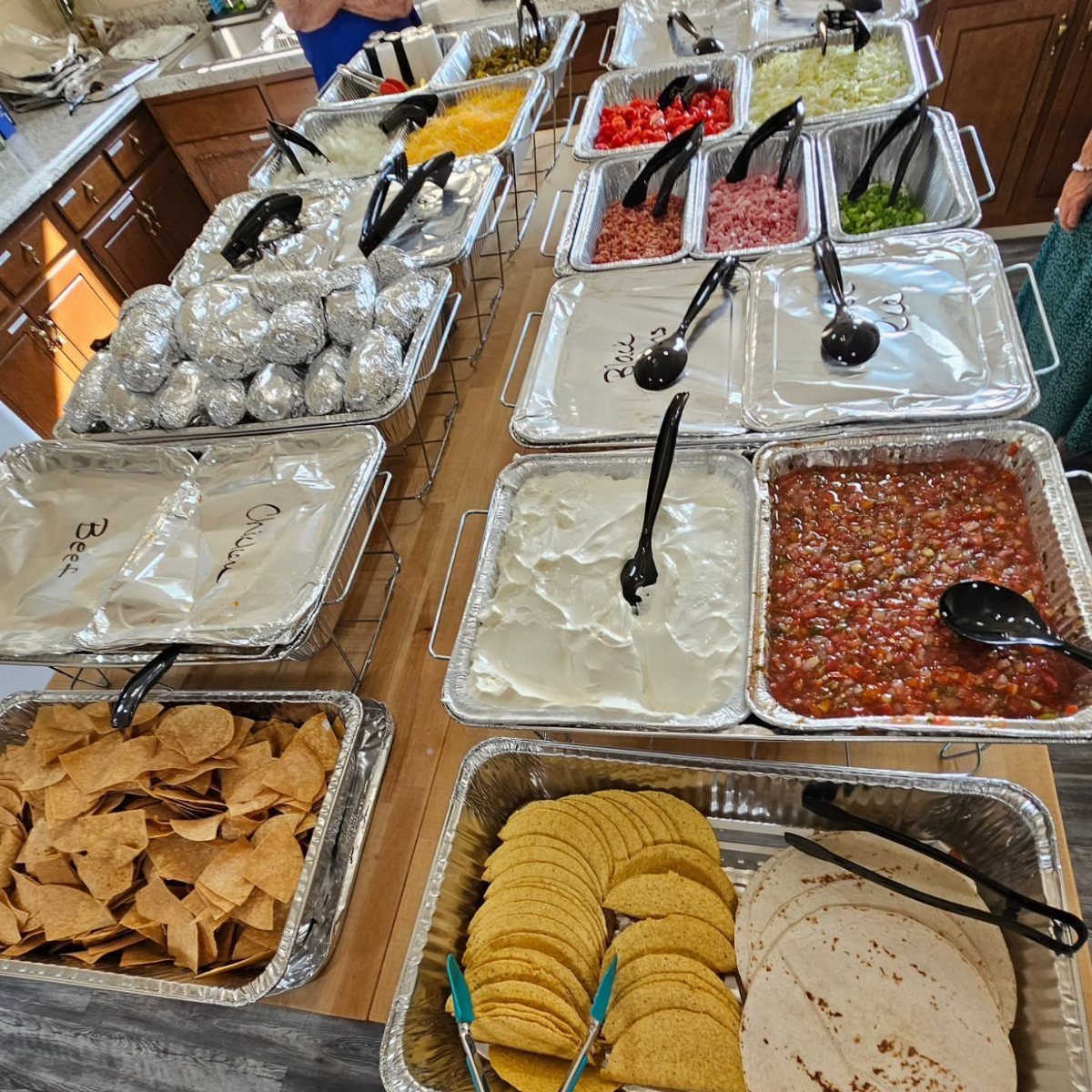
Guests build their own plates here, so one set of trays covers picky eaters, vegetarians and big appetites without a separate menu.
Keep the base simple with tortillas, chips and a few toppings, and put the cheapest fillers up front so plates fill before they reach the pricey items.
Baked potatoes pair well with a taco bar, since a split potato with the same toppings stretches a pound of meat and fills plates for pennies.
Potatoes stretch the food per head for very little money, and foil keeps them warm on the table.
Aluminum trays also mean almost no rental or cleanup cost.
2. Buffet Style Wedding Meals
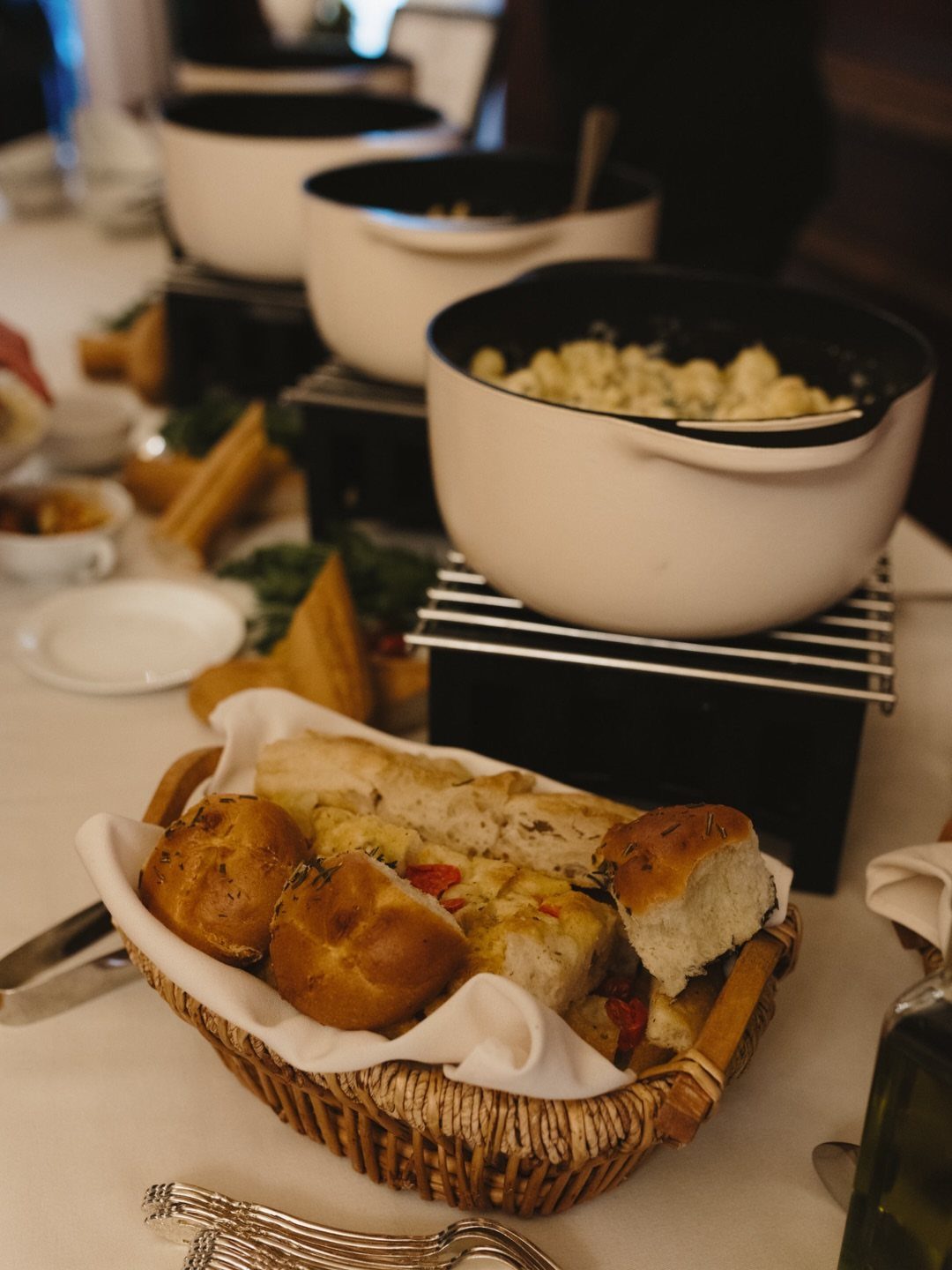
Chafing dishes let you serve a hot spread without paying for plated service staff. A basket of rolls on the front of the line is a cheap way to fill plates before guests reach the pricier dishes.
Pick two or three mains and a couple of sides rather than six; each extra dish adds cost and waste. Ask your caterer whether the quote covers servers, warming fuel and serving utensils.
For a small budget, I’d choose buffet over plated every time.
3. DIY Charcuterie Board
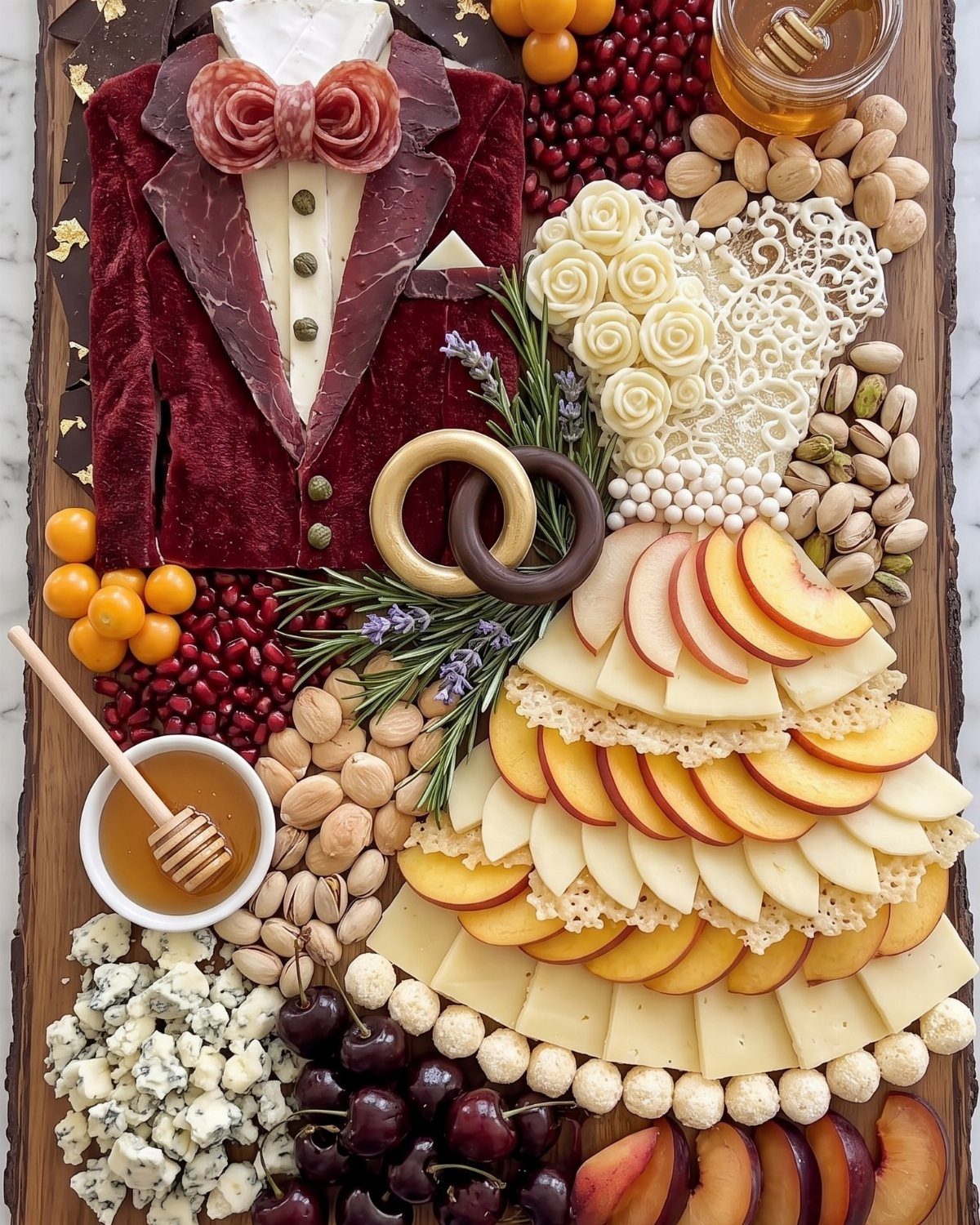
A board shaped like a wedding couple, built from cheese, meats, fruit, nuts and honey, turns grocery-store ingredients into a centerpiece. Shopping and arranging it yourself costs far less than hiring a caterer for the same look.
Build it on a wooden platter, using sliced meats for the bodies and fruit for the details. Assemble it the morning of the event and keep it chilled until guests arrive.
One board feeds only a small crowd, so make several, or use this as a cocktail-hour starter rather than the whole meal.
4. Pulled Pork BBQ Catering
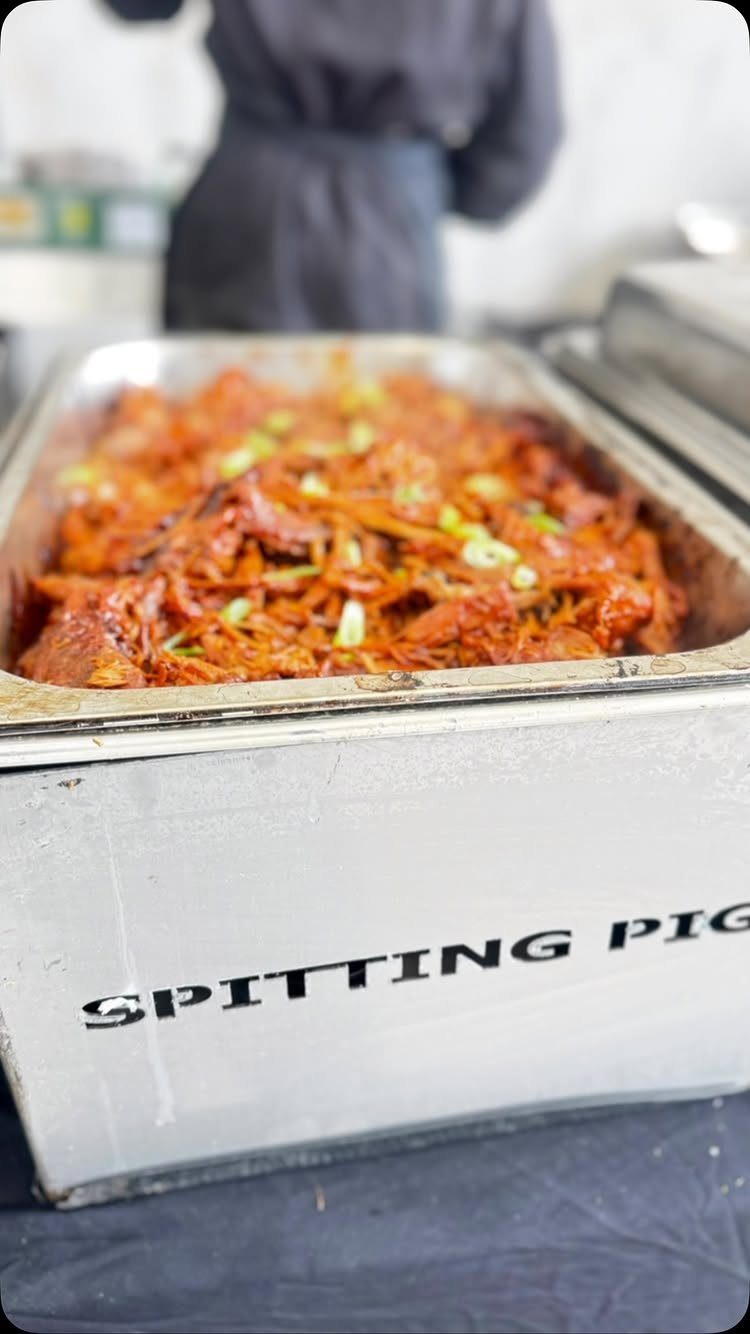
Slow-cooked pork is among the friendliest meats for a big headcount, and the maker of this tray describes it as what a BBQ for 150 looks like.
Plan on one or more full catering trays for the pork, and top them with something fresh like green onions so the food looks as good as it tastes.
Order it by the tray, then add rolls, slaw and a couple of cheap sides to fill out plates. Ask the caterer whether sauce, buns and serving tools come with the price.
Pulled pork is hard to overcook, which makes it forgiving for a long reception.
5. DIY Pasta Bar
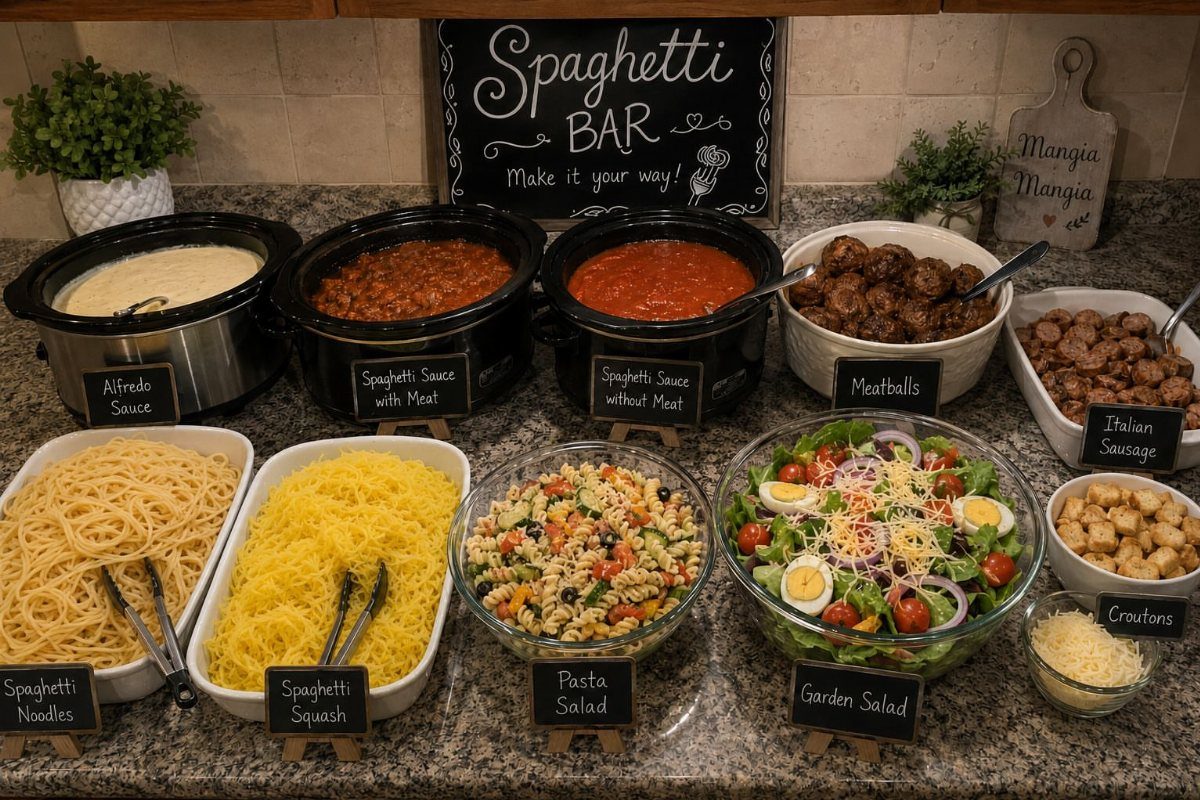
Spaghetti, plus 2 sauces, meatballs and sausage, lets guests choose their own combination, and a granite counter works fine as the serving line. Alfredo alongside red sauce covers most tastes.
Pasta is cheap, so spend where it counts: good sauces and the meatballs.
Add a pasta salad and a garden salad with croutons to round out plates, as in this spread. Spaghetti squash gives gluten-free guests a real option.
Label everything with a sign, since guests will ask what each pan holds. Hot sauces need warming trays or slow cookers.
6. Substantial Appetizers
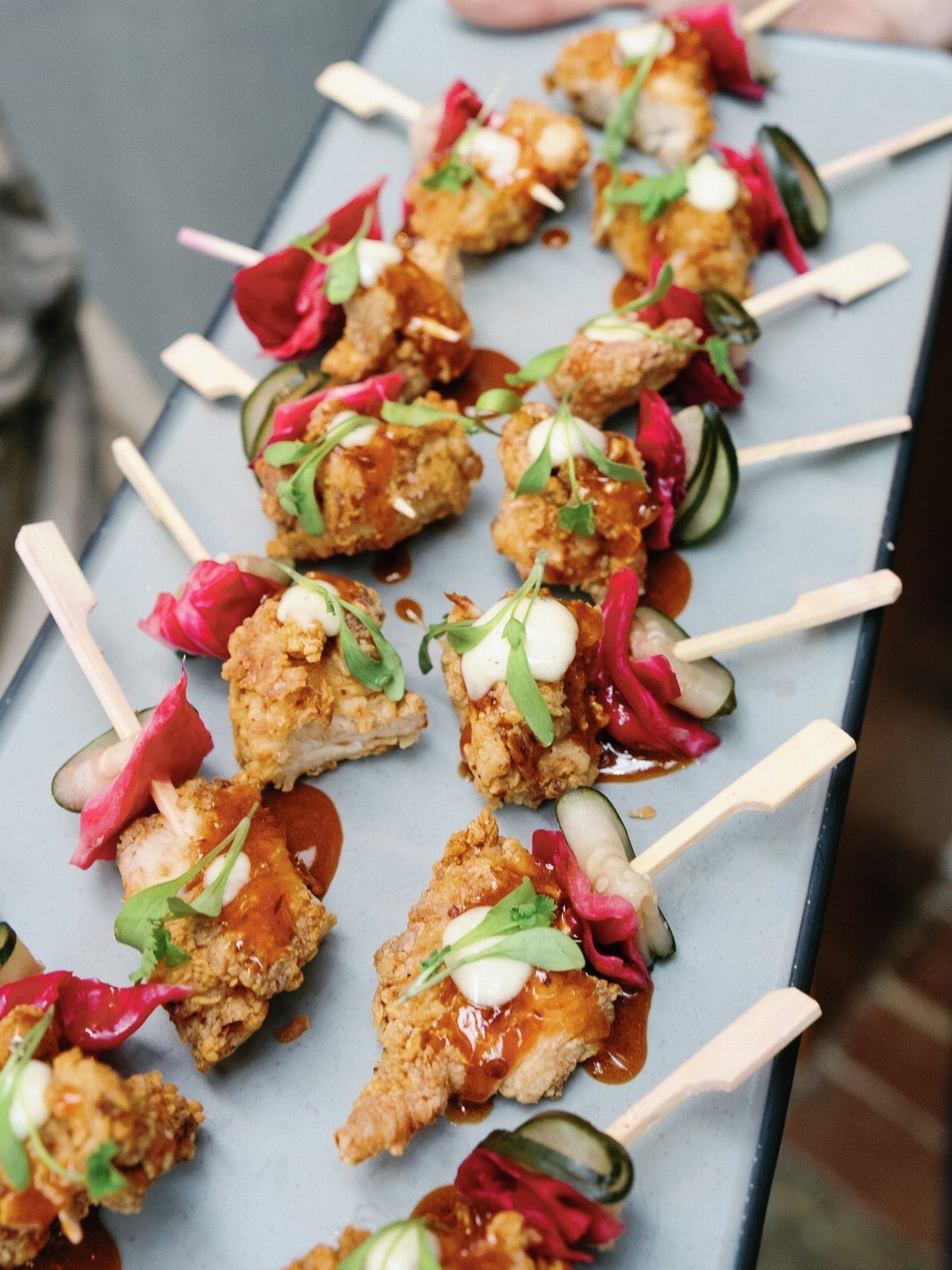
Bigger bites can replace a seated dinner if you skip the plated meal and pass enough food that guests leave full.
Plan on several heavier items instead of many light ones, and tell guests in the invitation that dinner is passed food so nobody eats beforehand.
My preference is skewers because they need no plates or forks. Expect to need more servers walking the room, which eats into the savings.
7. DIY Sandwich Bar
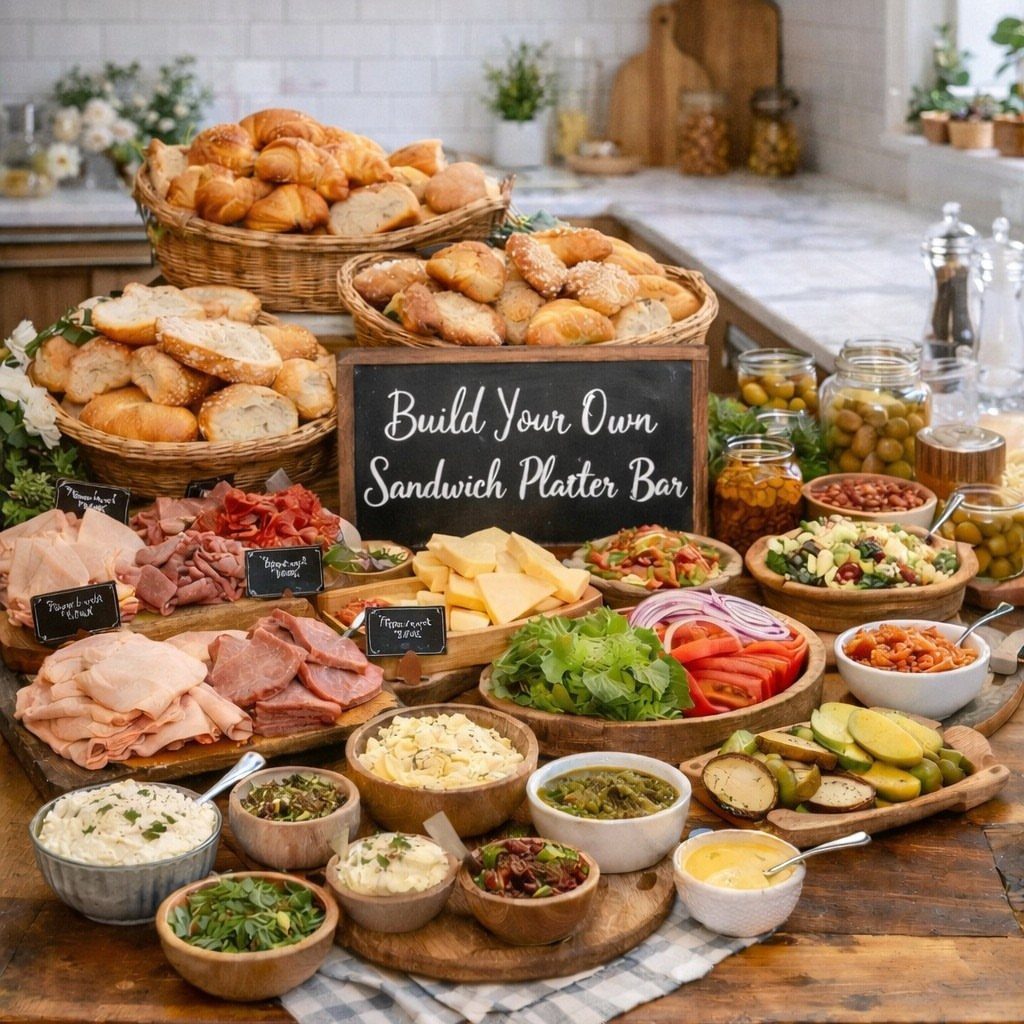
Bread, meat, cheese and toppings in separate trays let guests build the sandwich they want, and the chalkboard sign tells them how it works.
Sandwich fixings cost far less per head than a hot dinner, and nothing needs cooking on site.
Offer two or three breads, a couple of meats and cheeses, and plenty of sliced vegetables, which fill a sandwich cheaply. Put condiments in small bowls at the end of the line.
Set out a vegetarian option so those guests are not left with only bread and cheese.
8. Dessert Buffet
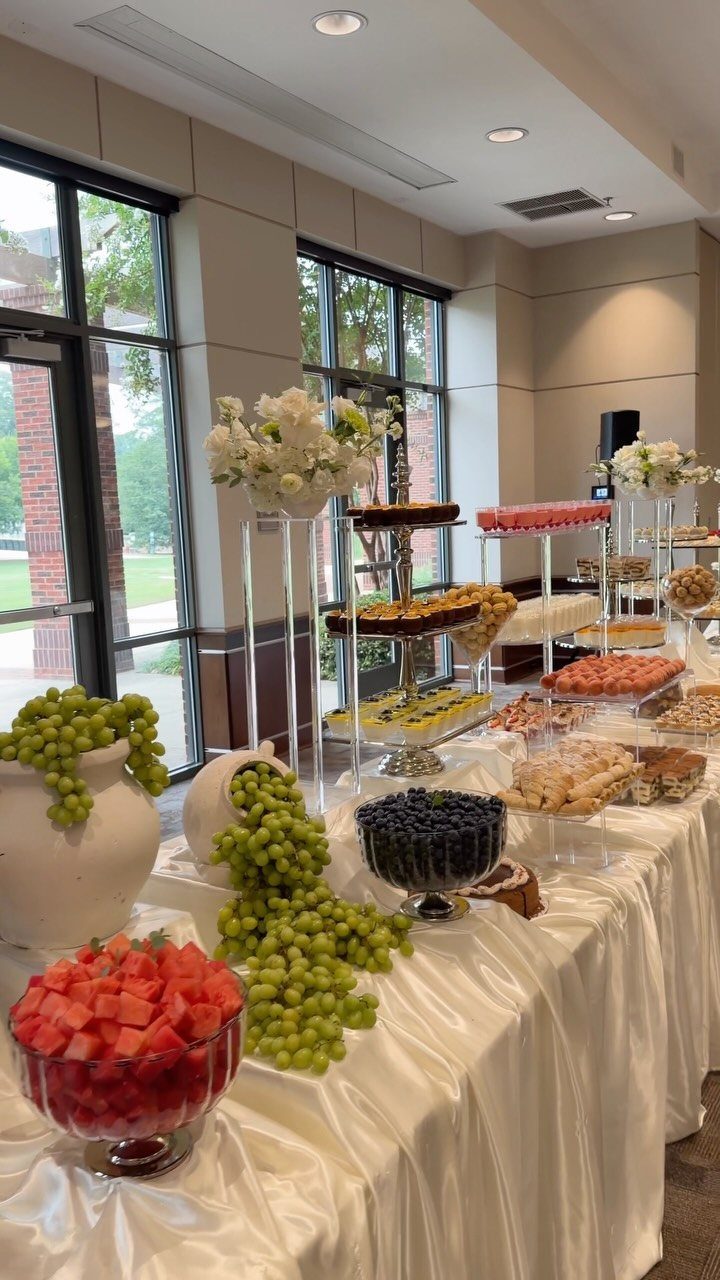
A dessert buffet lets a long table do the work of a single cake, and variety is the draw: tarts, a tiered cake and fruit give every guest something they like.
Fresh fruit is the cheapest filler, so use it to fill gaps between the pricier items.
I would use this as a finish to a modest dinner rather than the meal itself, since sweets alone will not feed a crowd.
9. Food Trucks
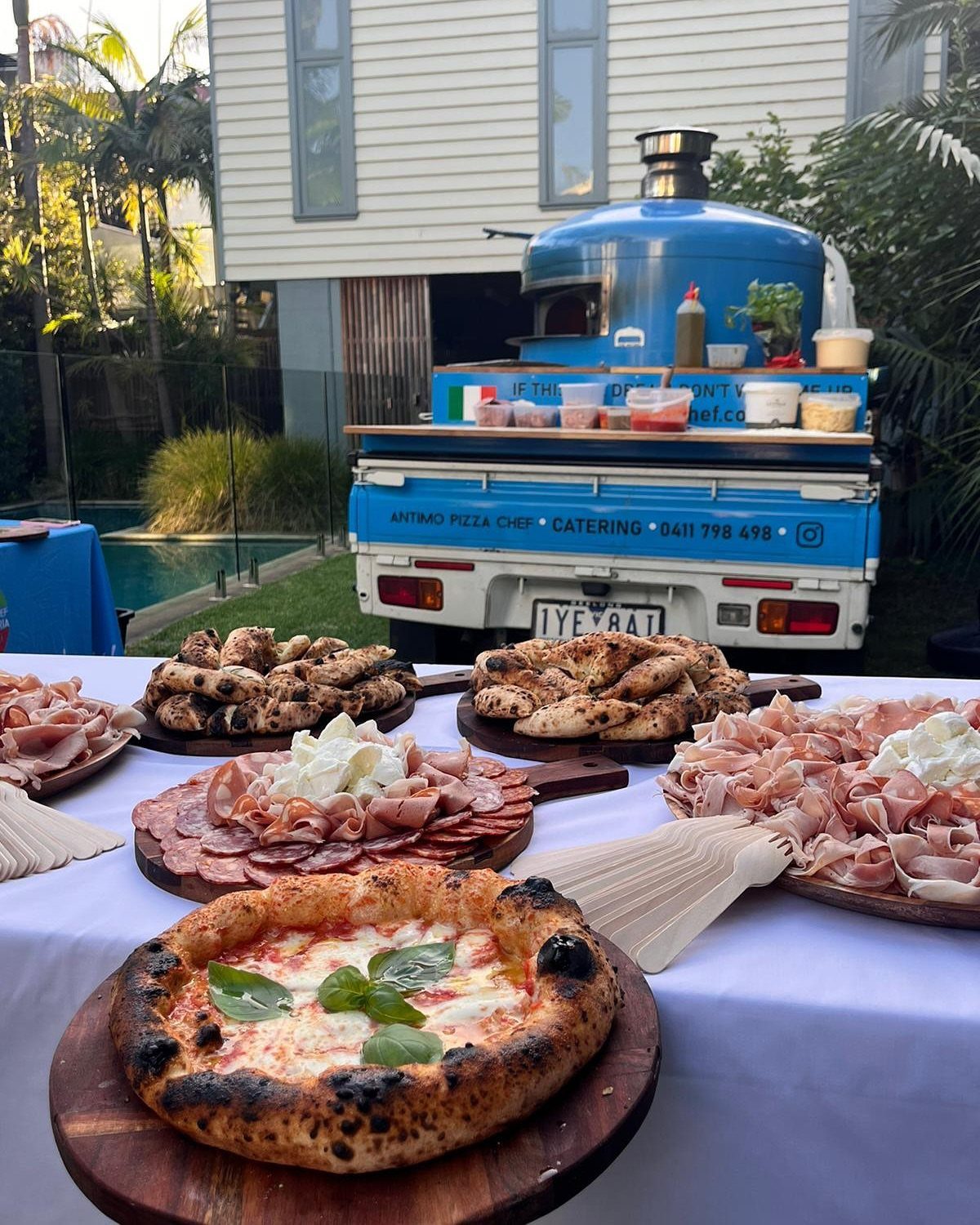
A pizza truck parked outside brings the oven to the reception, and guests can eat straight from the line. Pizza is a cheap, filling food that most guests will eat.
Add a table of cured meats and cheeses for the cocktail hour, so people have something to eat while the truck works through orders.
Ask what the quote includes, such as travel, service hours and any minimum guest count, before you compare it with a standard caterer.
10. Sausage and Mash
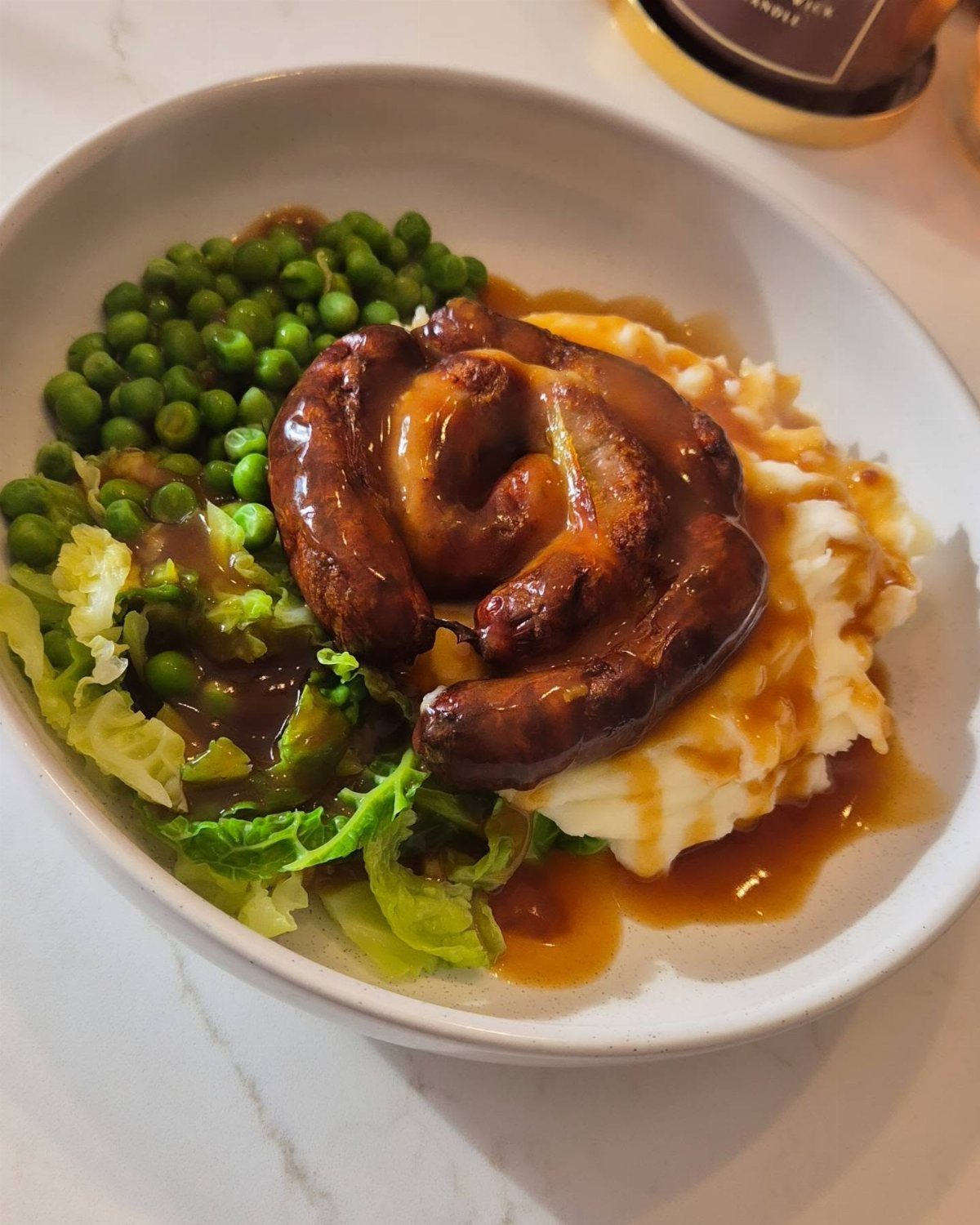
Potatoes and sausage are cheap, so the cost per plate stays low.
Gravy carries the dish, so make it well. Peas and cabbage add color and cost very little.
Serve it in bowls from a warming tray, and keep the mash covered so it does not dry out.
11. Fruit Display
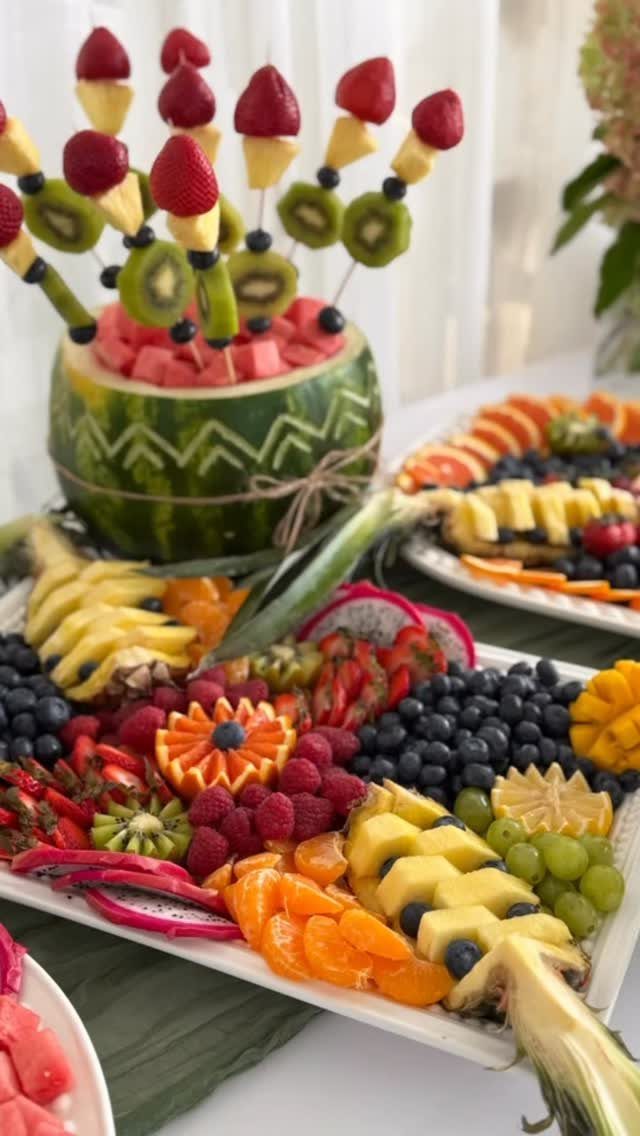
Fresh fruit works as a light side or a dessert, and a carved watermelon bowl turns one cheap melon into the centerpiece of the table.
Pick what is in season, since berries and pineapple cost less then. Threading pieces onto skewers keeps serving tidy and gives guests a no-plate bite.
Fruit will not make a full dinner, so pair it with a heavier course.
12. Drop-Off Party Platter Catering
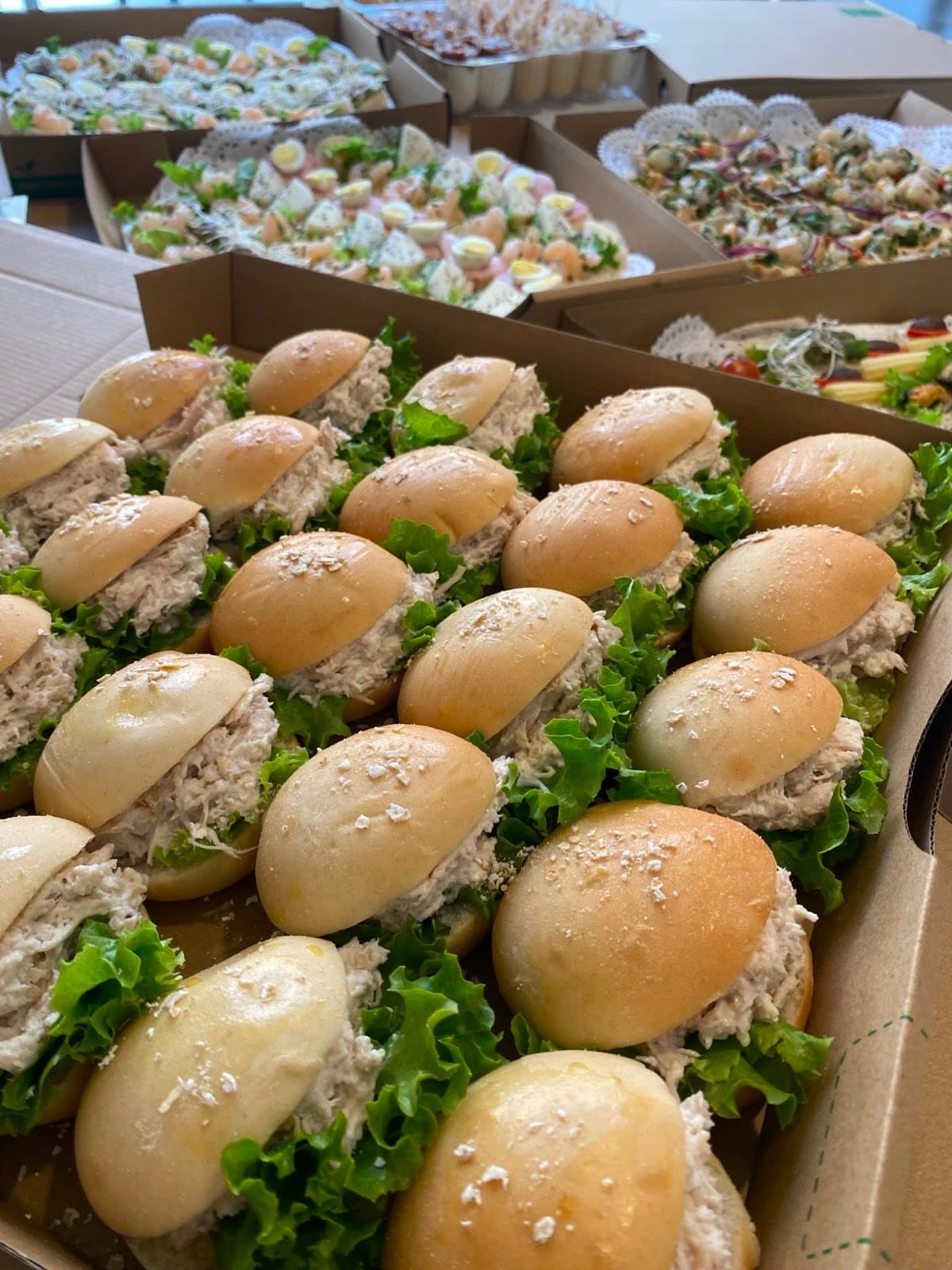
Small chicken or tuna salad sliders on golden buns arrive in cardboard boxes, ready to set out. No kitchen, servers or rentals are needed, which is where the savings come from.
Order the sliders with a salad platter and an appetizer platter, so the spread has more than one type of food. Confirm the delivery time, and ask how long the food can sit out.
I would pick this for a small, casual reception with a tight budget.
13. Chicken and Rice Plated Meal
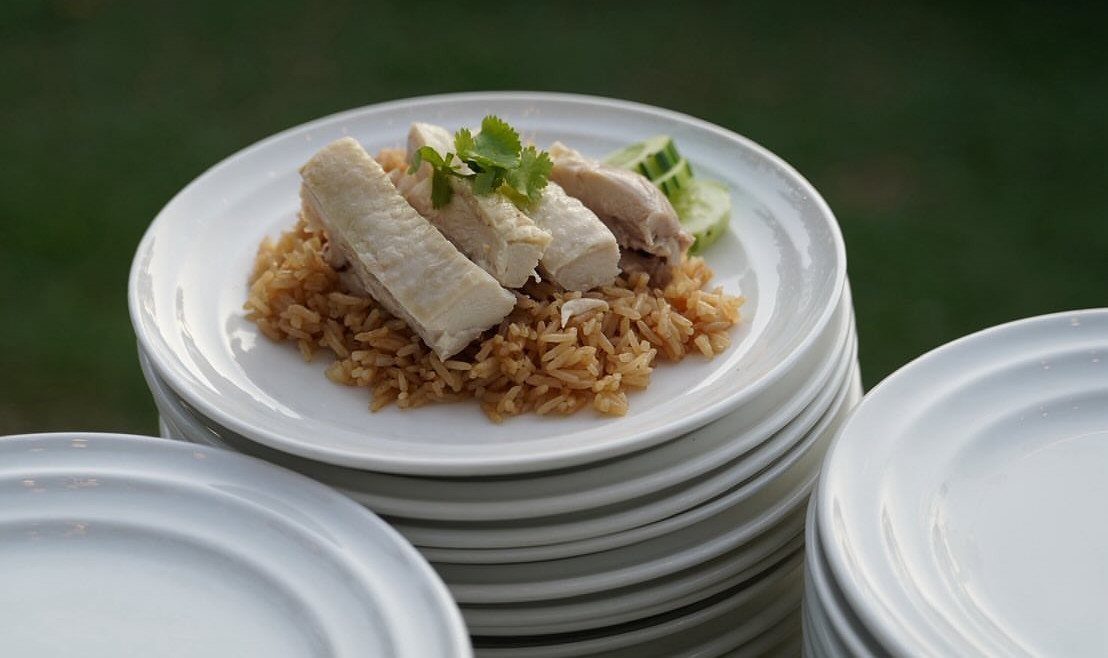
Sliced chicken breast over seasoned brown rice, finished with cucumber and cilantro, is a plated dinner that stays plain on purpose. 2 cheap staples carry the plate, and the fresh garnish makes it look more expensive than it is.
Slice the chicken before it goes on the plate so each portion looks generous. Cucumber adds crunch and color for very little money.
Plated service needs servers, which is where the cost creeps in, so ask your caterer for a per-plate quote that includes staffing. If money is limited, I’d still pick the buffet from entry 2.
14. Gourmet Grilled Cheese Station
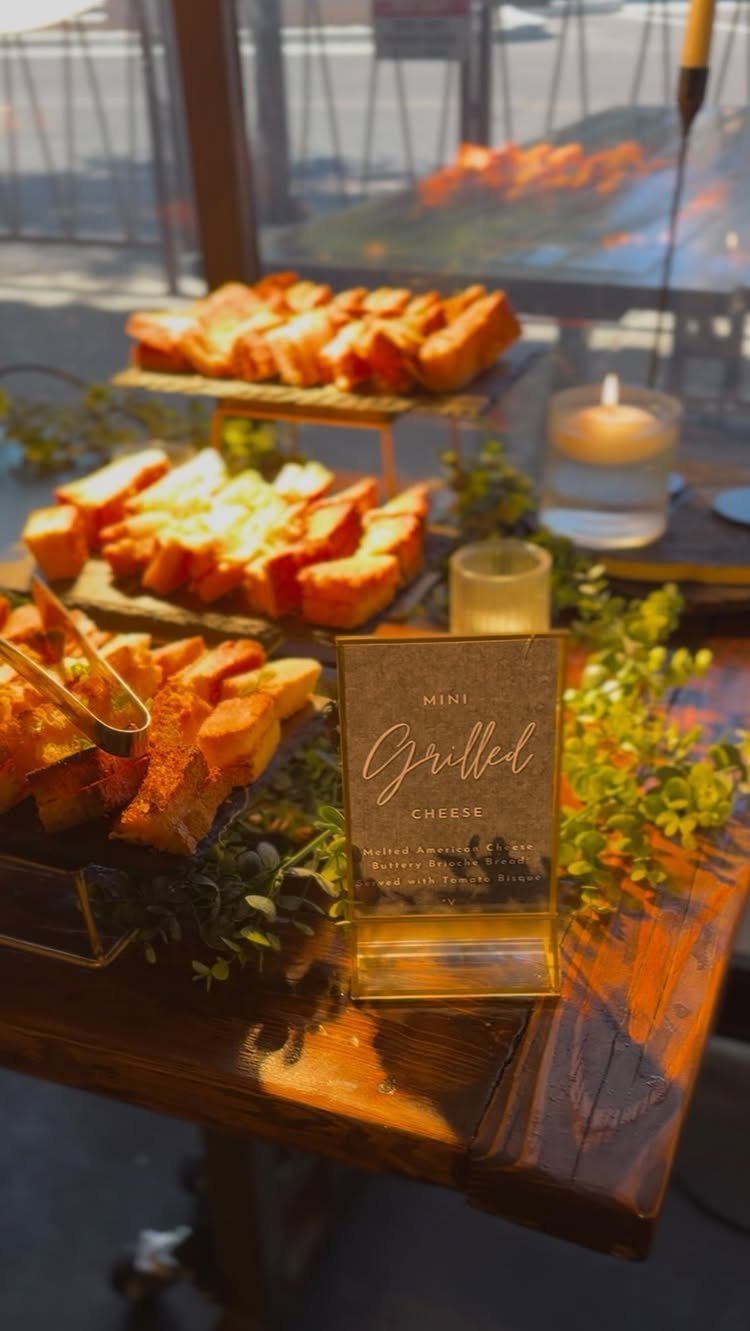
Mini grilled cheese sandwiches on wooden platters turn a childhood comfort food into a reception station, and a printed sign listing the ingredients answers guests’ questions before they ask.
Cut the sandwiches small so guests can try more than one flavor. Bread and cheese cost little, so spend on the fillings you name on the sign.
Toast them in batches close to serving time, since a cold grilled cheese loses its appeal fast. Greenery and candles around the platters dress the table cheaply.
I would serve this late in the evening as a snack, or beside a soup course, rather than as the only dinner.
Cost-Saving Tips
Seasonal produce and locally raised proteins cost less than imported ones, so build the menu around what is fresh near you in your wedding month.
Stick to 2 entrees, one with meat and one vegetarian, and nobody will feel shortchanged. A third option adds waste and cost without adding anything guests will remember.
Let pasta, rice, bread and roasted vegetables fill the plate, and treat the protein as the star rather than the bulk.
A $10-per-person plated dessert can give way to a late-night pizza or cookie station at about $3 a head, served around 10 PM.
Serving only beer and wine rather than a full bar can take $20 to $40 off each guest’s tab. 2 batch cocktails with a signature name give the bar some personality, and you skip the cost of stocking everything.
Ask your caterer for a custom package instead of a preset tier. Most are flexible.
Guest Count Considerations
Multiply the per-guest food cost by your real headcount before you commit to a menu. A dish that looks cheap at 30 people can break the budget at 60.
If the total won’t work, cut in this order: alcohol first, since beer, wine and one big-batch nonalcoholic drink saves $6-$12 per guest. Entrees come next, and offering 1 instead of 2 saves roughly $40 to $70 at a 30-person wedding.
Trim the guest list only after the other cuts, and make each name you remove a deliberate choice. Never stretch a menu built for 30 across 60 people.
Guests forgive plain food, but they remember a buffet that ran dry.
Catering Alternatives
Look for a local culinary school that takes catering jobs. Culinary schools are often priced well below a traditional caterer, which makes them a good option for cutting food costs.
Call early, since school schedules and class calendars set what they can take on.
DIY catering is another low-cost route if you have willing help. Build the menu from budget-friendly ingredients like pasta or rice dishes and homemade salads.
Line up enough friends and family to cover setup, serving and cleanup, and settle who does what well before the wedding. I’d assign each helper a specific job in writing, so nobody is left guessing while guests wait.
Frequently Asked Questions
What is the cheapest catering option for a wedding?
A taco bar, pizza from a truck or delivery, and pulled pork BBQ by the tray are among the cheapest. A taco bar works because guests build their own plates and cheap fillers like tortillas and chips go up front.
Pasta trays, a big pot of rice and a few homemade salads can push the per-plate cost lower still, as long as friends or family agree to cook and haul it.
What is the most popular wedding meal?
Chicken tends to win the most votes at wedding tables, and it also sits near the bottom of the price range for proteins.
A buffet with 2 proteins, a few sides, bread and salad is the most common budget-friendly way to serve a full dinner. Buffets need fewer servers than plated service, which keeps the price down.
Is it tacky to serve pizza at a wedding?
No. Wood-fired pizza has become a regular wedding menu pick, and it suits a backyard tent as easily as a formal reception.
Skip the cardboard boxes: set the slices out on real platters, add cloth napkins, and the same food reads as a deliberate choice.
A pizza truck also lets guests eat straight from the line, and a cocktail-hour snack table covers the wait while orders are made.
Is $5000 a good budget for a wedding?
The food portion of a budget like that only works with a low-cost menu and a small guest list. Limiting the bar to beer, wine and a single nonalcoholic batch drink trims roughly $6–$12 off each guest’s tab.





