The list runs from cheap, small jobs like a ceremony rehearsal, which takes one evening, to months of work like invitations, the seating chart and the reception plan, with hiring professionals sitting at the pricey end.
Your timeline decides which ones to start first: anything made to order, like wedding favor gift bags or weekend itinerary cards, needs production time, so order those before you touch the reception details.
On a tight budget, put the money into floral arrangements and hiring professionals, and keep the rest simple.
1. Send Invitations
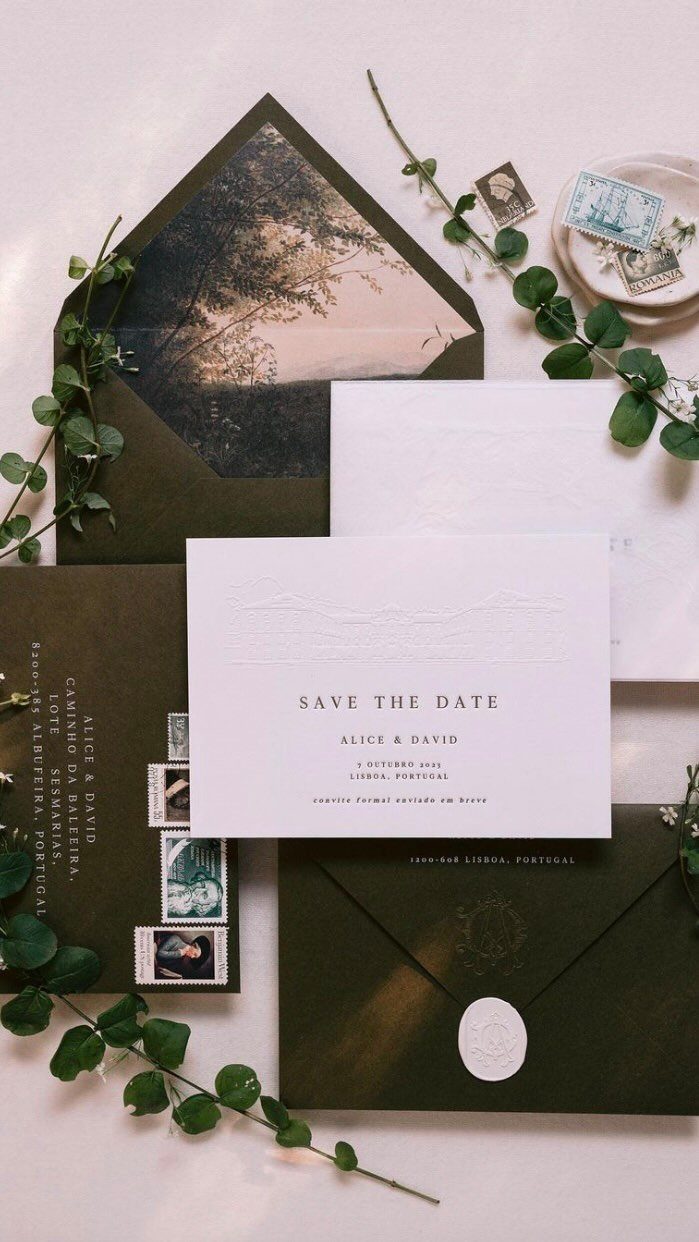
A save the date works best when it carries only 3 facts: who is marrying, where, and roughly when.
A save-the-date that carries only names and a city still does its job: it tells out-of-town guests to start checking flights before any other detail is settled.
Mail it early to anyone who needs to travel, since a destination like Lisbon asks far more of a guest than a local venue does.
I would match the envelope to the invitation that follows, so the two read as one set.
2. Plan the Reception
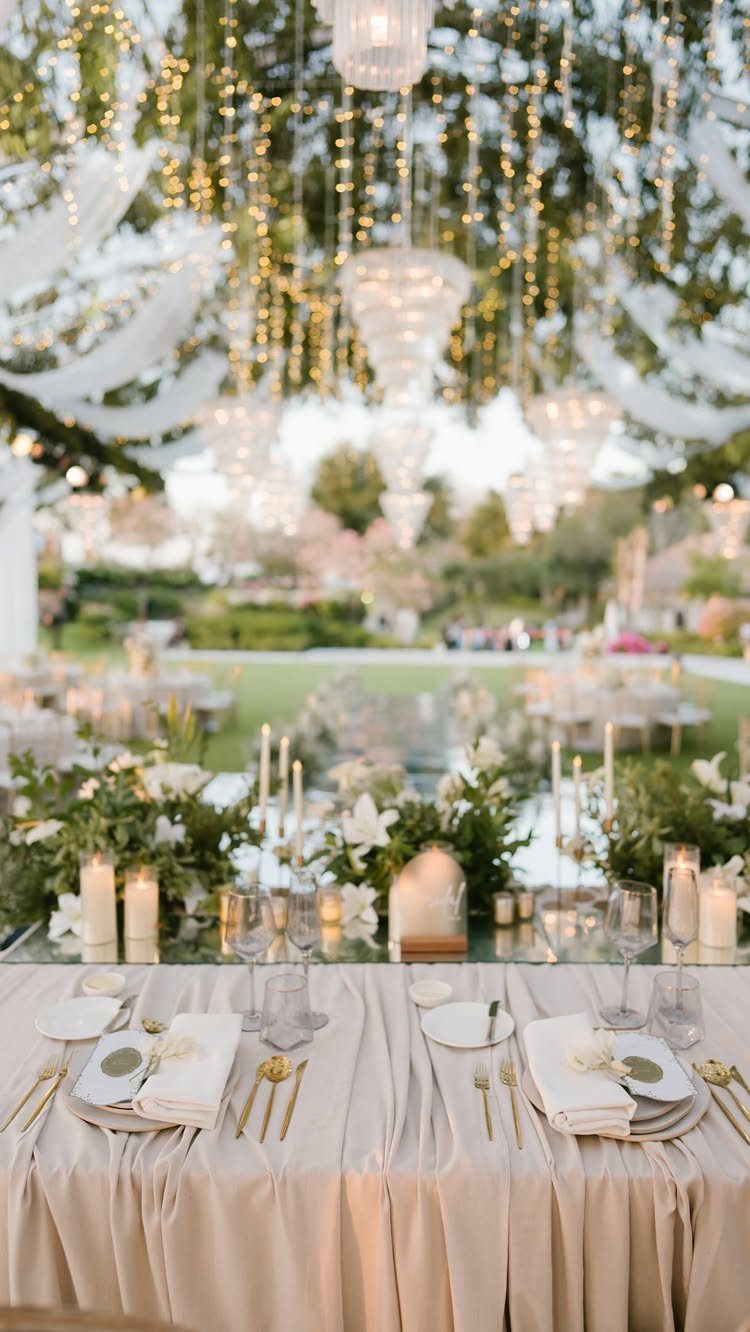
Candles, fairy lights and white linens are cheap to repeat and expensive to improvise, so settle the reception look before you choose anything else for it.
I would start with the order of the evening: dinner, toasts, first dance, then open dancing. Then work out what each stretch needs in space, lighting and staff.
An outdoor garden setup needs a backup plan for weather. Price a tent or an indoor fallback before you commit to the open sky.
3. Create a Wedding Day Emergency Kit
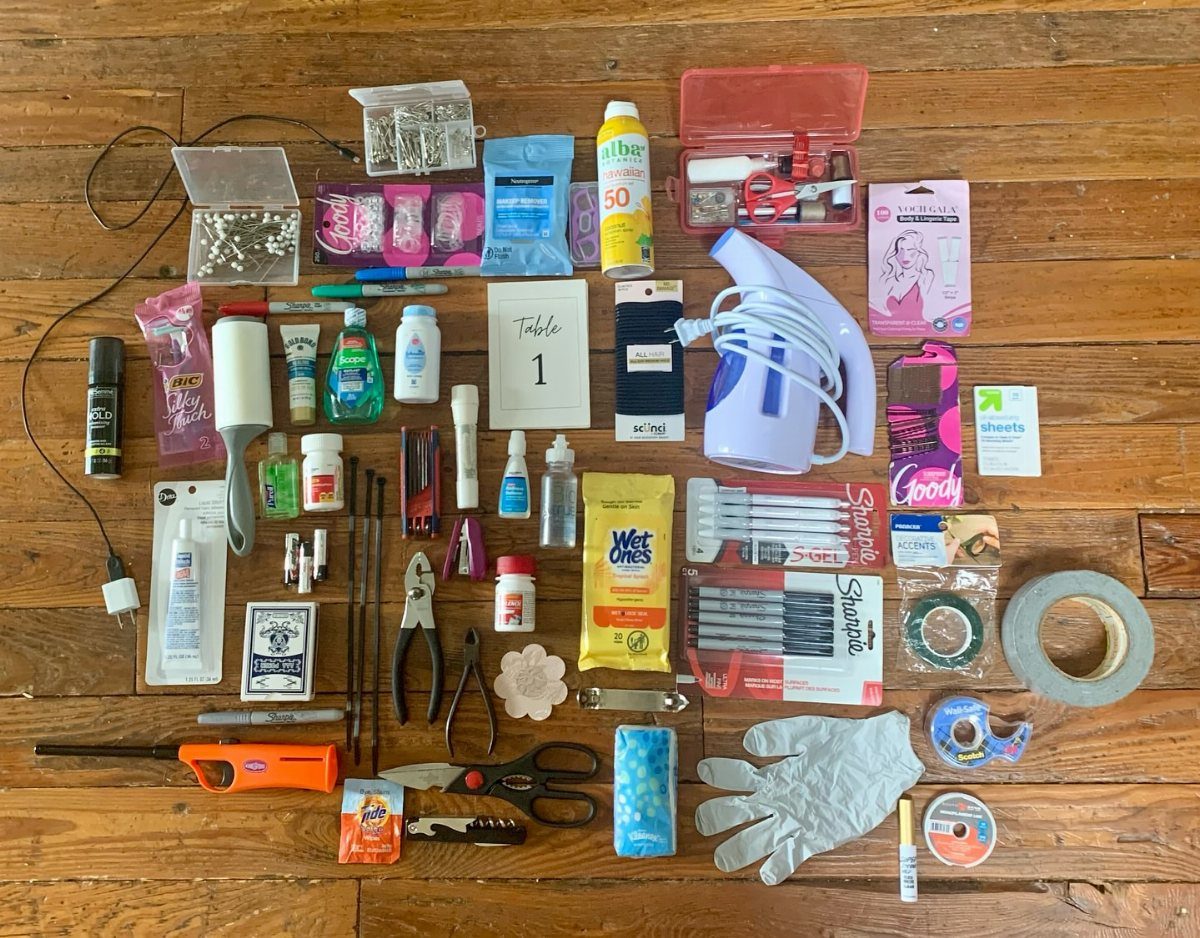
Pack the kit a week ahead, because a steamer, a first aid kit and a sewing set are only useful if someone can find them on the wedding day.
Group the contents into grooming, repair and first aid, and label each pouch. Hand the whole kit to one calm person, not to the couple.
Add the small things people forget: pain relievers, bobby pins, safety pins and stain remover. None of it costs much, and all of it is worth having.
4. Seating Chart
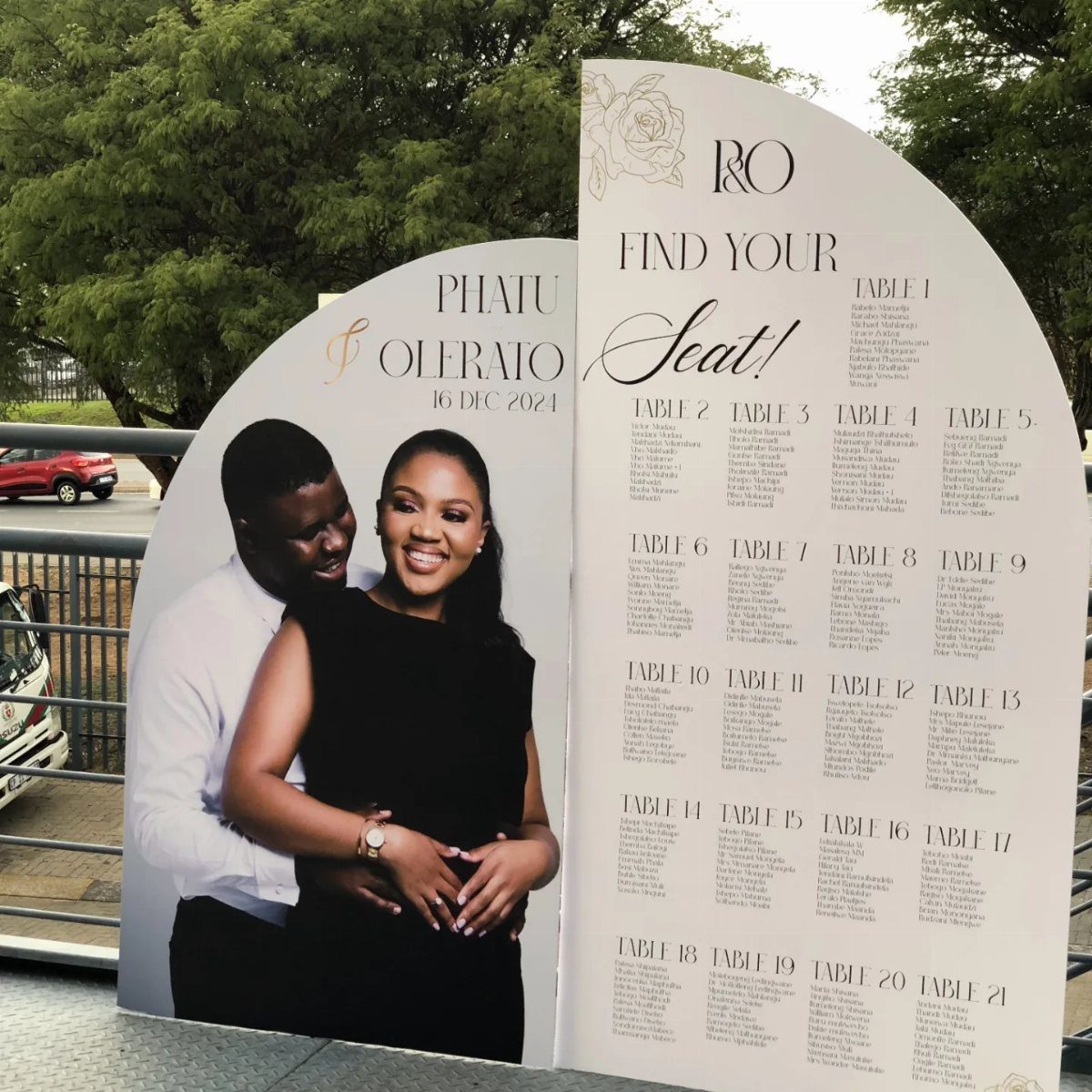
Guests read a seating chart standing up, in a crowd, with a drink in hand. That is why a large display with table numbers and names in clear columns beats a stack of small cards.
Build the list in a spreadsheet first, and fix it only after your RSVPs are final. Seat the people who know each other together, and give the awkward pairings a friendly neighbor.
An arched board with a couple’s photo is lovely.
5. Ceremony Rehearsal
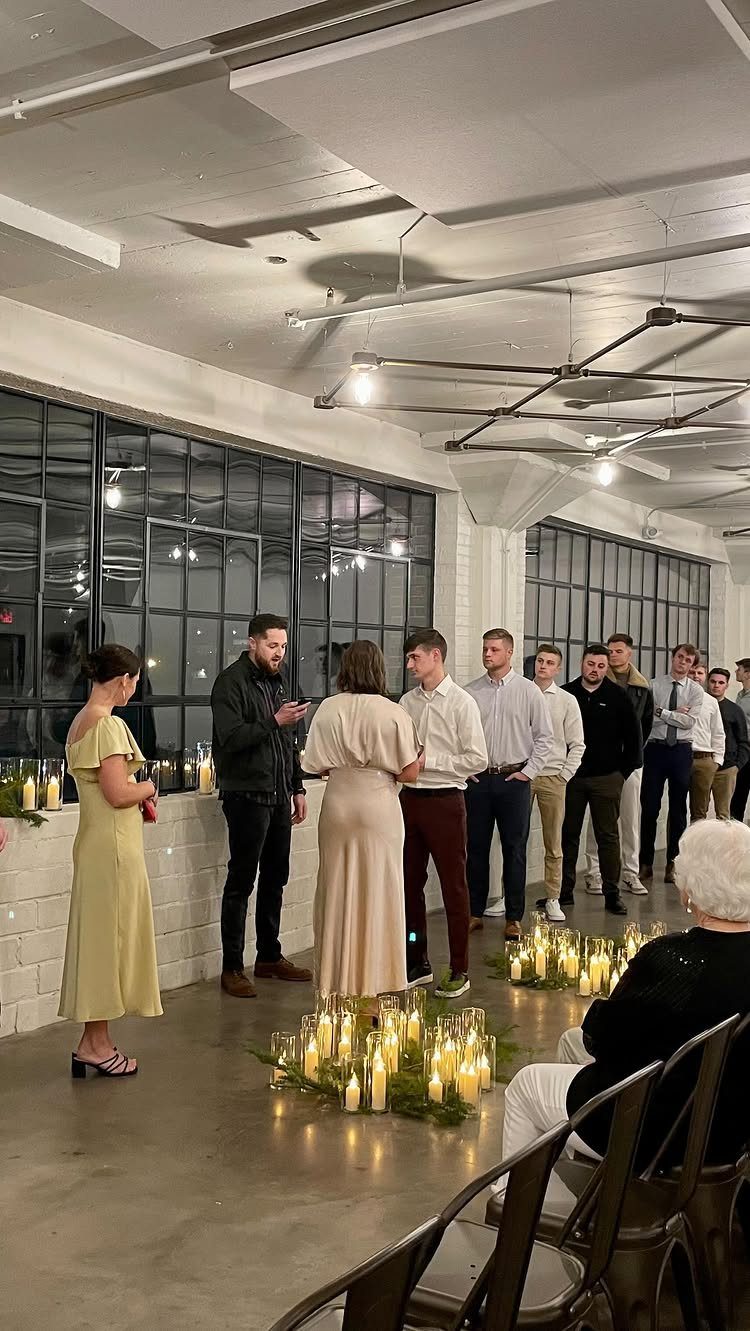
Run the rehearsal with the whole wedding party, candles and all, because the walk down the aisle is where people stumble.
Practice the processional order, where everyone stands, and when the ring bearer or readers step in. Time it once, then run it again at a slower pace.
I like to finish with a short walk through the exit, since that is the part most couples forget to plan. Ask everyone to arrive on time and wear shoes close to what they will wear on the day.
6. Floral Arrangements
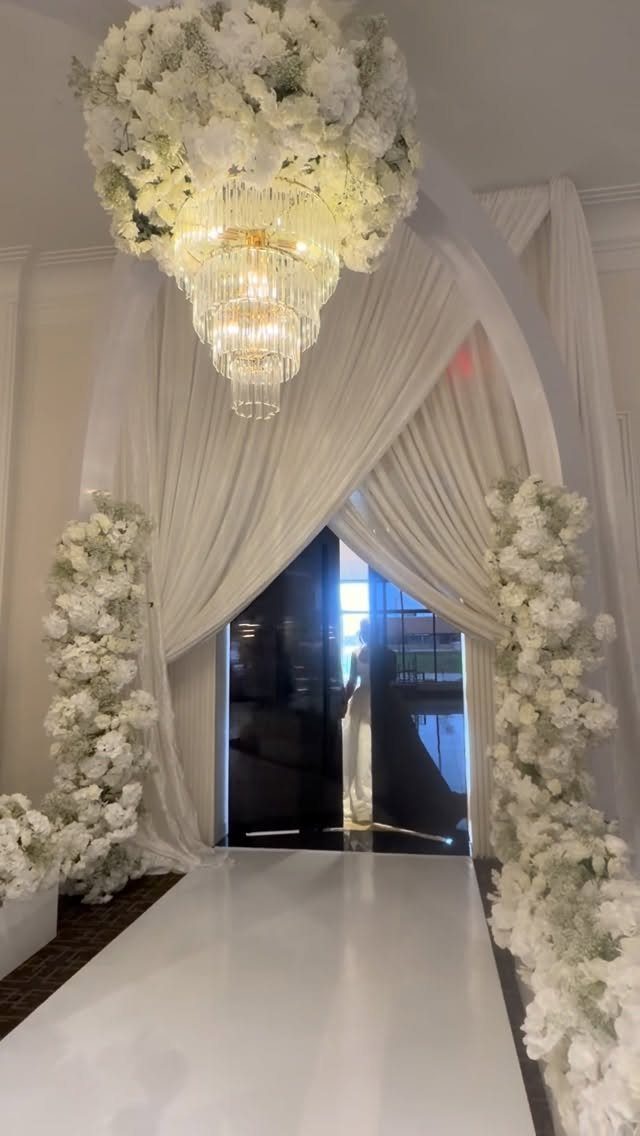
Floral pillars, draped fabric and a hanging chandelier of blooms can make an aisle feel like a room of its own, so spend there if the aisle is where guests will look longest.
I would put the budget here before the tables, since guests see it first and photographers shoot it most.
Pick one flower color and vary the textures. An all-white palette hides a mismatch better than a mixed one.
Hanging pieces need a secure mounting point, so ask the venue what it will allow before you order.
7. Plan Entertainment
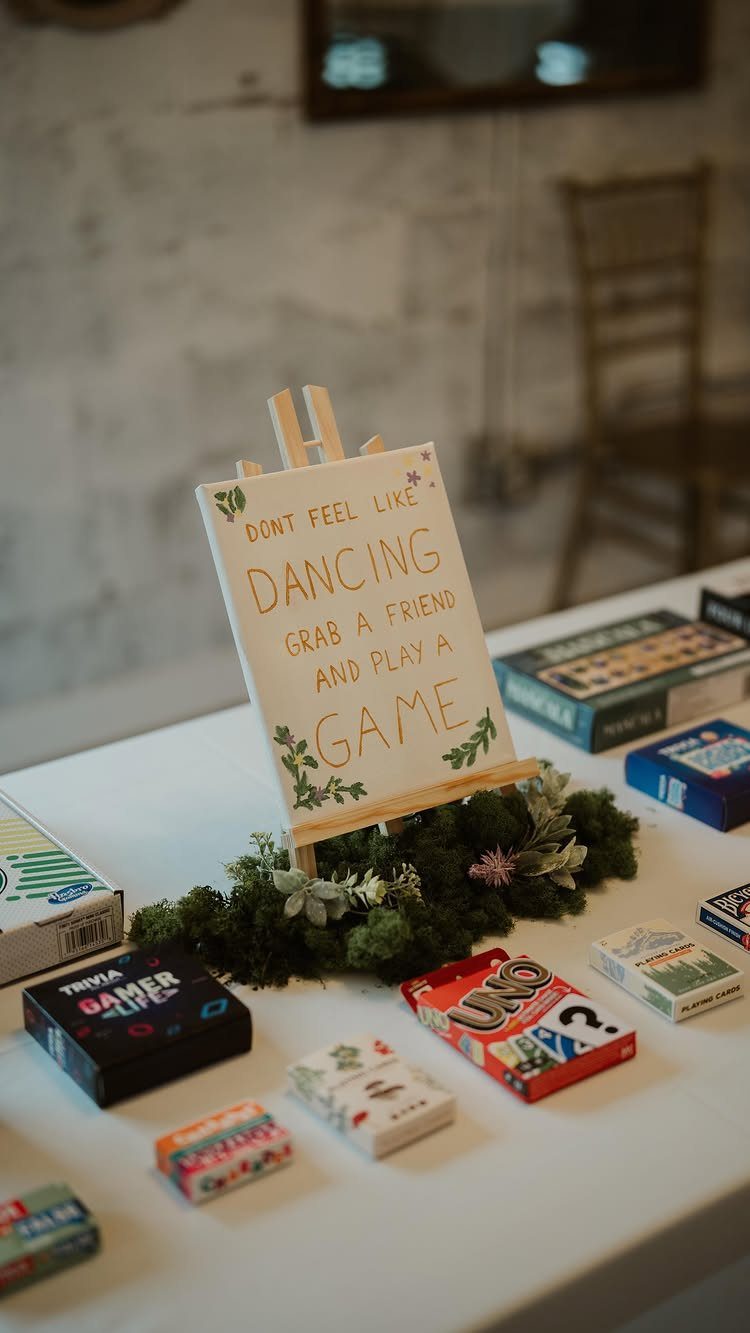
A game table gives guests who skip the dance floor something to do besides hover near the bar. I would set one up beside the dancing area, not in a far corner, so players still feel part of the party.
Pick games that need no explanation and end quickly, so guests are laughing instead of waiting for someone to read the rules. A hand-lettered sign on an easel with a little greenery tells people the table is open to everyone.
Keep the music as your main entertainment and treat the games as the backup for quiet stretches.
8. Wedding Party Gifts
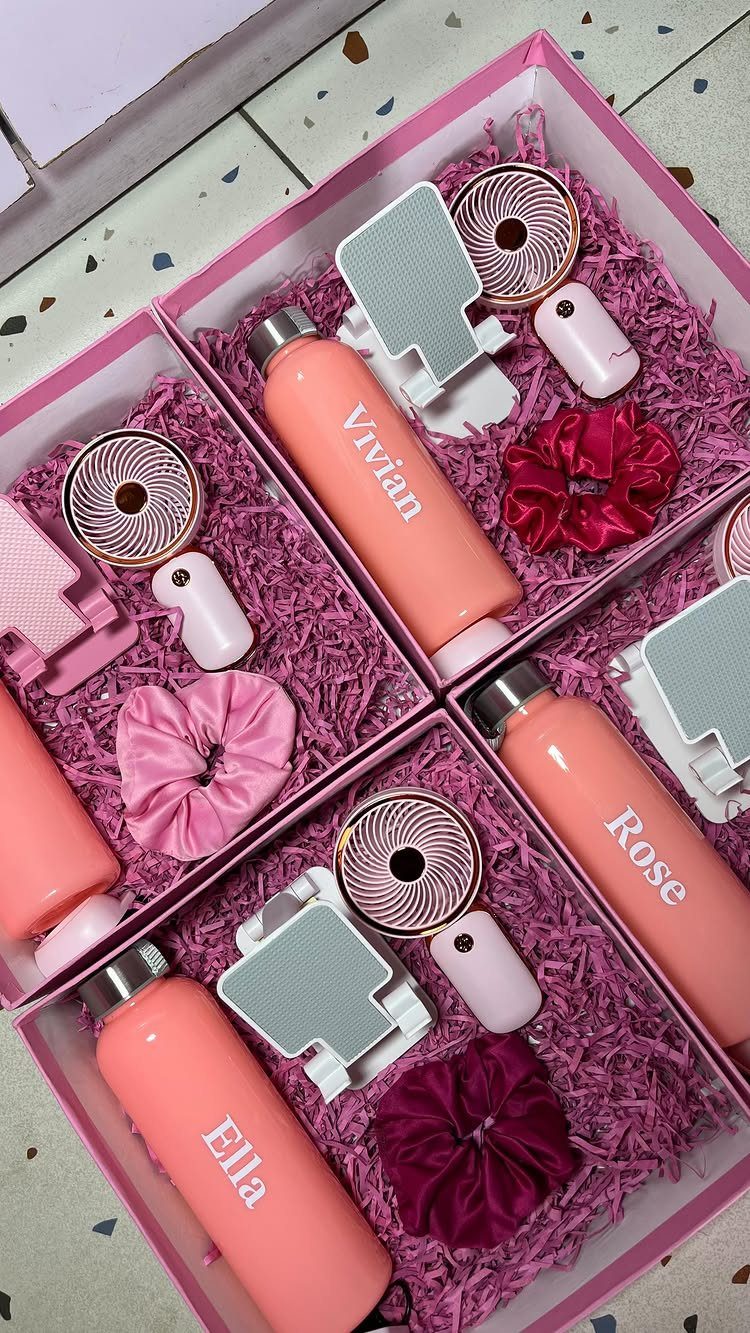
Matching gift boxes with each person’s name on a water bottle make a wedding party feel like a team.
A scrunchie, a mini fan and a small mirror or phone stand fit into one box, and each is useful on the wedding day itself.
I would choose items people will use that morning and again later, since a gift that works twice justifies the cost.
Personalized pieces take time to produce, so order early. Pack everything in shredded paper so the boxes look full without extra spending.
9. Personalize the Space
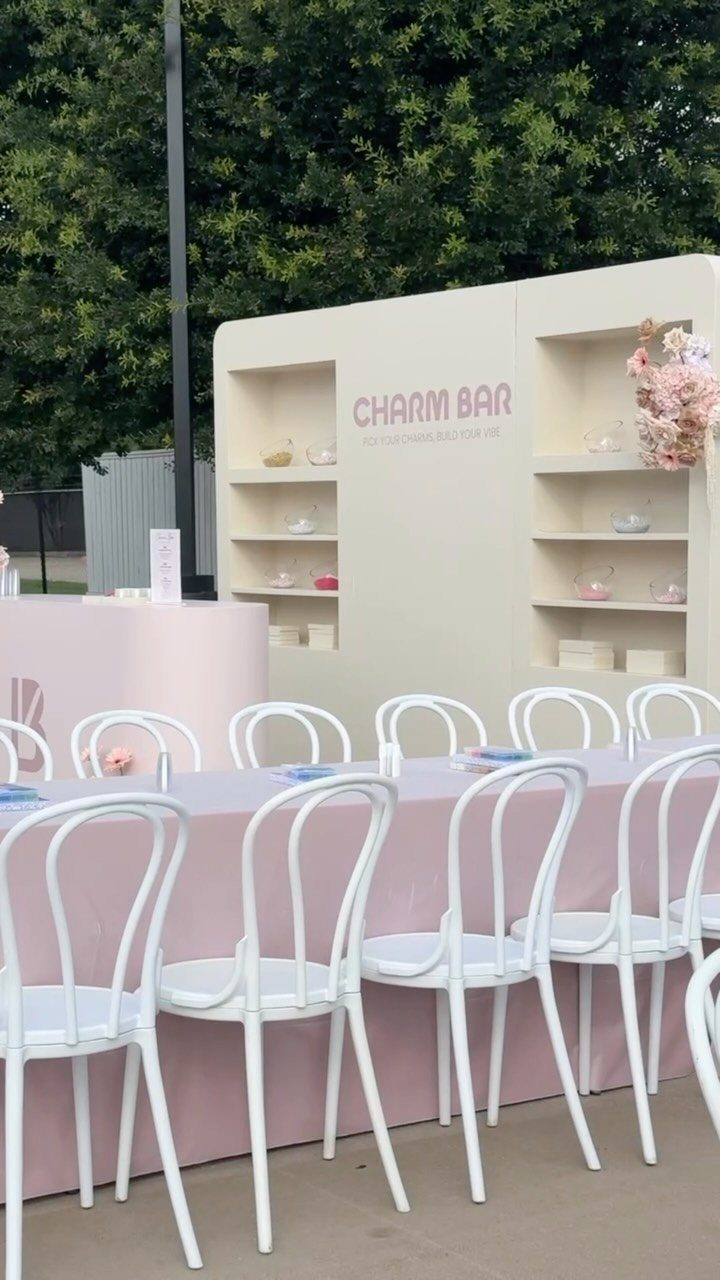
A charm bar turns a plain table into something guests take part in, which is how I would think about personalizing a space. Guests pick their own charms and leave with a keepsake that has their taste in it.
Choose one color and repeat it on the table, shelves and signage so the station reads as part of the décor. Put clear, short wording on the sign, since people should understand the activity in a glance.
Set out plenty of chairs, because choosing charms is slow, social work.
10. Wedding Rings
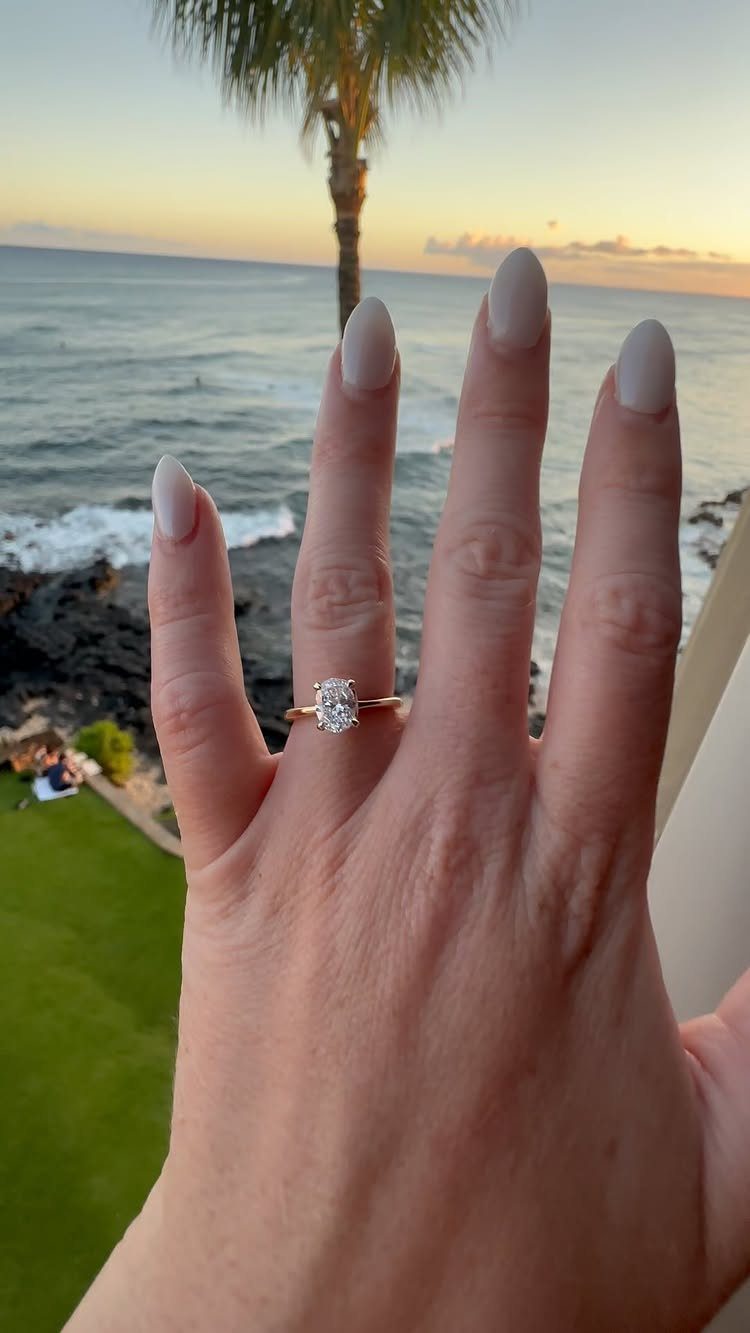
An oval-cut diamond on a slim band looks longer on the finger, and that is the detail I would weigh before falling for any ring online. Try on the shape in person, because photos flatter every stone.
Set a ring budget before you shop and tell the jeweler the number at the start. Decide on the wedding bands together, so metal and width suit the engagement ring.
Order early enough to allow for sizing, and buy insurance for whatever you choose.
11. Reception Grand Entrance
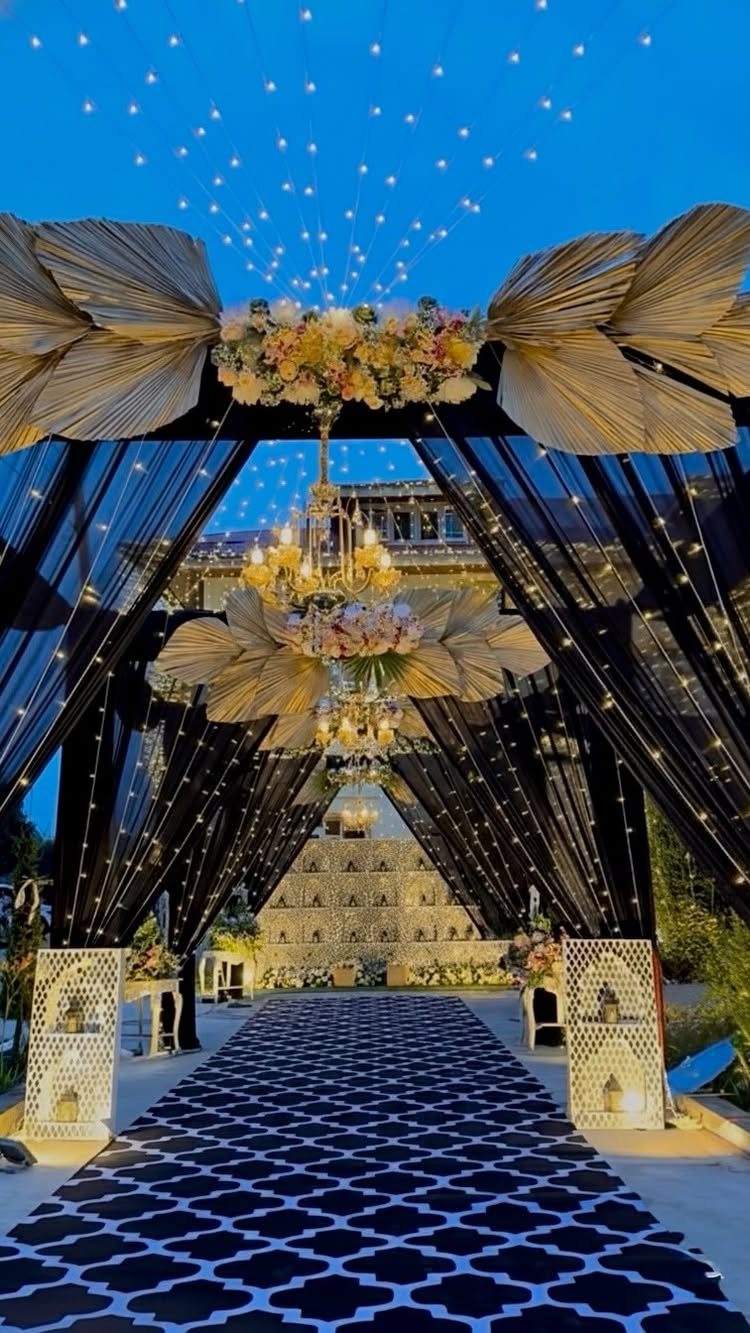
A grand entrance works best when the approach is dressed as carefully as the moment itself. Black drapery, hanging chandeliers, florals and a patterned runner give guests a clear path to watch, so the couple walks into a framed scene.
Pick the music and announcer first, then build the look around the route. I would walk it once with the DJ to check the timing.
Keep the runner secure and flat so nobody trips while the whole room is watching.
12. Wedding Favor Gift Bags
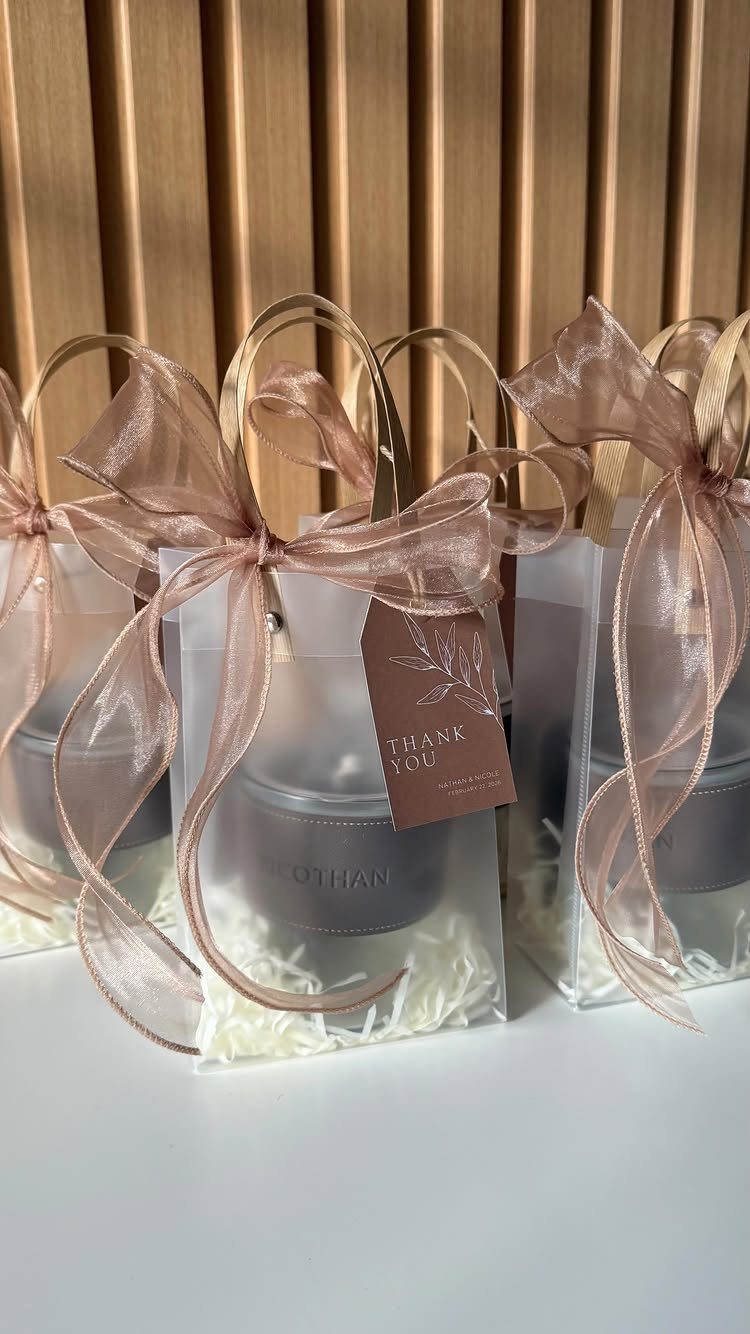
Clear gift bags let guests see the favor before they open it, so the candle inside does the work of a decoration. Pack each one on white shredded paper and tie it with a ribbon.
Add a tag with both names and the date; a thank-you line on it makes the bag feel personal instead of generic. I would order tags in the same run as the ribbons so the colors match.
Candles are a favor people actually keep and burn, which beats a trinket headed for a drawer.
13. Wedding Weekend Itinerary Cards
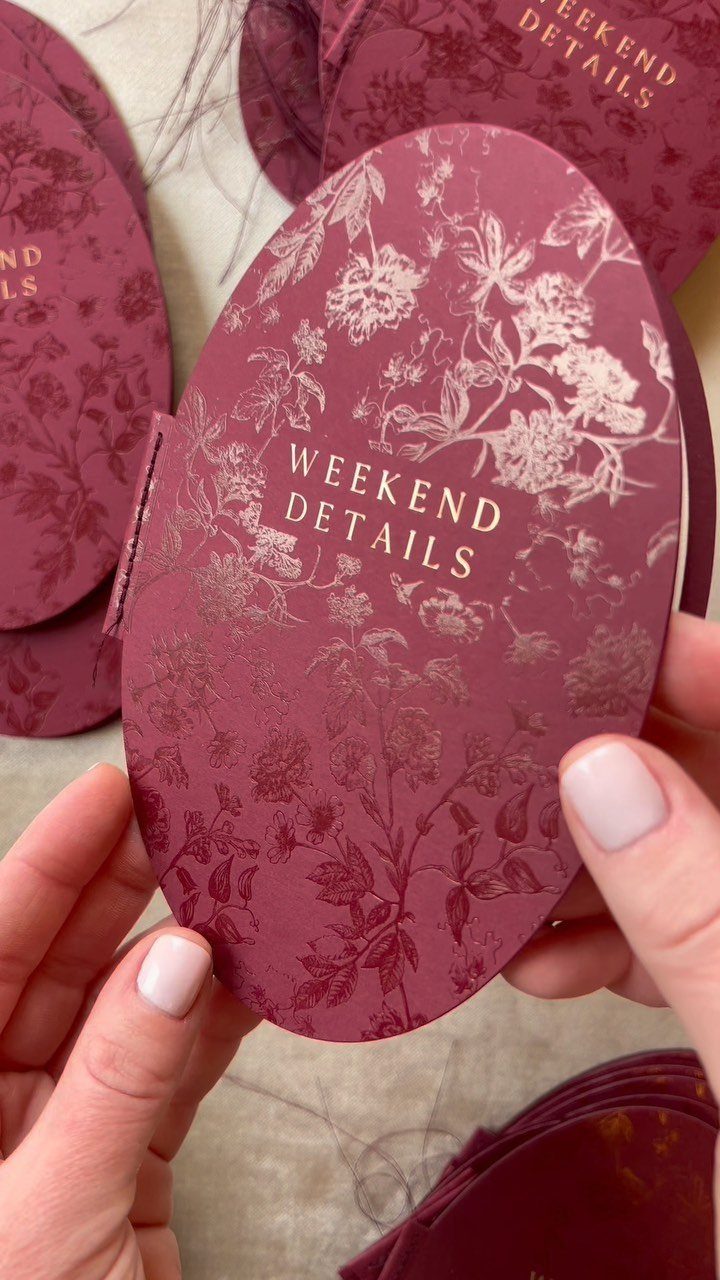
An oval card in burgundy with gold lettering gives a weekend schedule the weight of a keepsake, and guests are far more likely to keep it in a bag than a folded sheet of printer paper.
Gold text on a dark ground reads best when the wording is short, so put only the day, the time and the place for each event.
Order a few extra beyond your guest count, since a card with a typo or a changed time is hard to fix once it is handed out.
I would hand them over at check-in or tuck one into each welcome bag, so every guest has the schedule before the first event.
Importance of Organization
A checklist beats memory every time, because a wedding produces more small tasks than anyone can hold in their head.
Write every task down in one place, whether that’s a notebook or a shared document, and give each one a deadline.
Checklists also make delegating easy. Once a task is on paper, you can hand it to a sibling, a friend or your partner and change the owner later without losing track of it.
If organizing doesn’t come naturally to you, that’s fine. Keep a running journal of everything that needs doing, and review it once a week so nothing sits unnoticed.
Give yourself enough time, too. Stress usually comes from a short runway more than from any single decision.
Hiring Professionals
Pick the level of help before you pick the person. A full-service planner stays on from the first budget meeting until the reception hall is cleared, and a typical fee runs about $2,000.
Some planners take a smaller job, like building the day-of schedule, and hand the rest of the details back to you.
They cost much less, which makes them a smart fit if you enjoy the planning but dread the final week.
I would choose a coordinator for the wedding day itself if the full price strains your budget. Someone else fielding vendor questions and keeping the timeline moving lets you actually be present.
Ask any planner what is included in writing before you sign.
Managing Family Dynamics
Talk to each family member early, and ask what matters most to them before you share your own plans. Talking through roles and expectations with family early keeps small conflicts from growing, so planning stays smoother.
Give people a clear job. A parent with a defined task, like greeting guests or handling a vendor question, is less likely to push opinions on everything else.
If someone is contributing money, settle in advance what that covers and whether it comes with a say. Vague expectations cause more fights than any disagreement over flowers.
Decide as a couple which points are not up for debate, and present them together, calmly, as decisions already made.
Frequently Asked Questions
How much does an event planner cost for a wedding?
Hiring a planner for the whole job, from the first budget meeting through load-out after the last dance, usually runs around $2,000 at the low end of full service.
A narrower scope, such as a planner who only builds your timeline and vendor schedule, costs a good deal less.
A day-of coordinator is the version I would book if the full fee stretches your budget, and I would ask for the exact list of services in writing before signing anything.
How long does it take to plan a wedding?
Plan on at least 6 months, and 12 months gives you plenty of room. Venues, caterers and photographers fill up fast, and some couples lock in the location 18 months or more ahead.
With a shorter timeline you can still pull it off by condensing the schedule and keeping a written checklist with a deadline on every task.
What should be included in a wedding budget?
Include the venue, catering, attire and vendor costs, plus a line for a planner or coordinator if you want one.
Set a separate figure for rings before you shop. Decide the total first by checking what you actually have saved, then divide it up.
What is the average cost of a wedding?
Nationwide, couples spend roughly $33,000 on a wedding, though cities like New York and Philadelphia push that figure well past the average.
Venue and vendor choices move the number most. Experienced photographers, for example, commonly charge $3,000–$5,000, and a DJ runs $1,000–$2,000.





