Some of these items cost a few dollars per guest and some are the biggest line in the budget, yet they all run on one clock: the venue comes first, and the save the dates, stationery, food and drink, favors and seating chart all get booked or ordered around it.
Which ones deserve your attention depends on how many months you have left, since key vendors fill up 6–12 months out while a printed timeline can wait until the details are settled.
1. Wedding Day Schedule
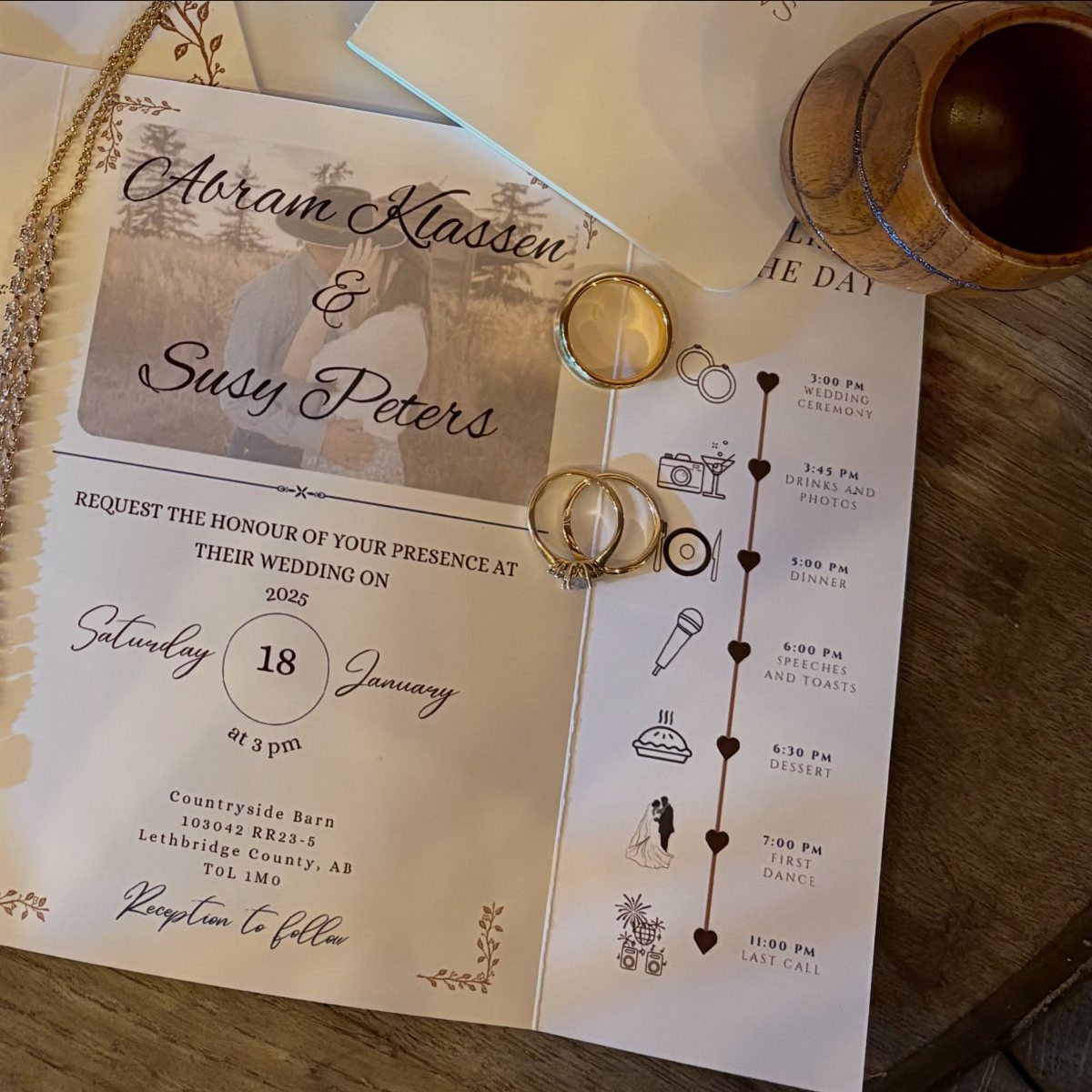
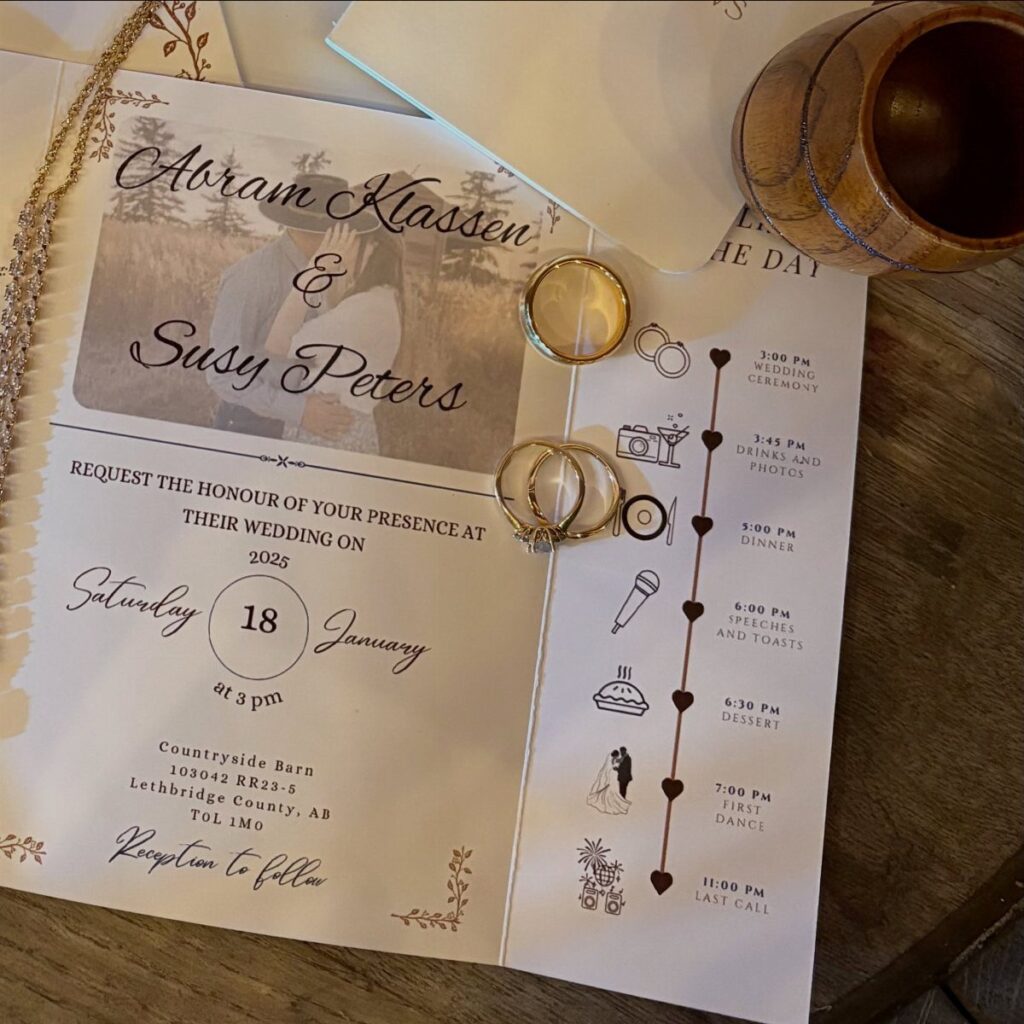
A printed timeline works best when it sits next to the invitation. Guests get the order of events, and the vendors get the same page you do.
List each event with a start time: ceremony, reception, meal, and whatever comes between. Then build backward from the ceremony so hair, photos and travel all fit before it.
I’d print a few extra copies for the wedding party. A schedule nobody can find on the day does no good.
2. Save the Dates
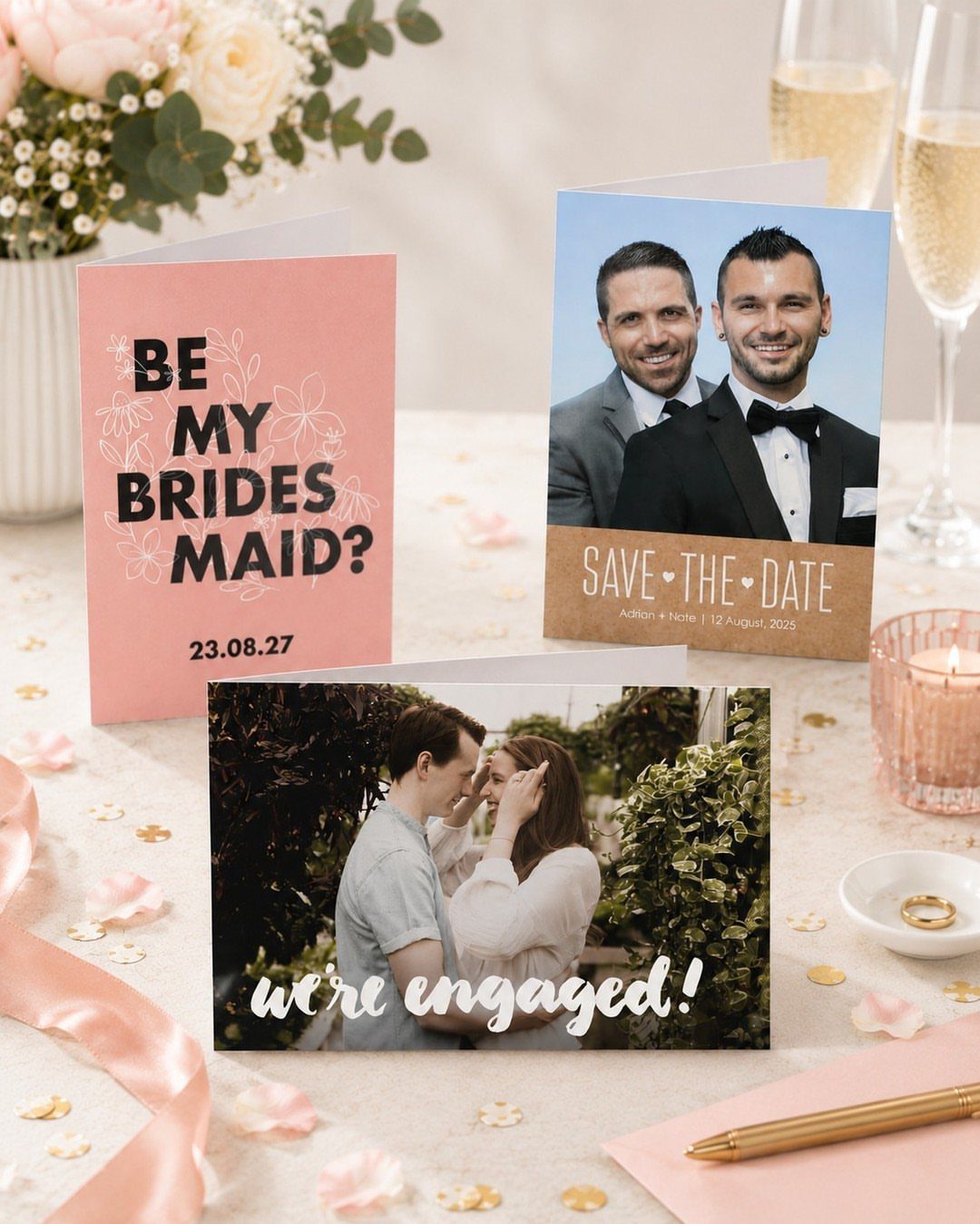
Save the dates go out before invitations, and their only job is to lock the date into your guests’ calendars. Keep the wording short: your names, the date, and a line saying the invitation follows.
Ordering them in the same style as your invitations makes the set feel planned. A bridesmaid proposal card can ride along in the same batch if you’re buying paper anyway.
Send them to the full guest list, so settle that list first.
3. Wedding Venue
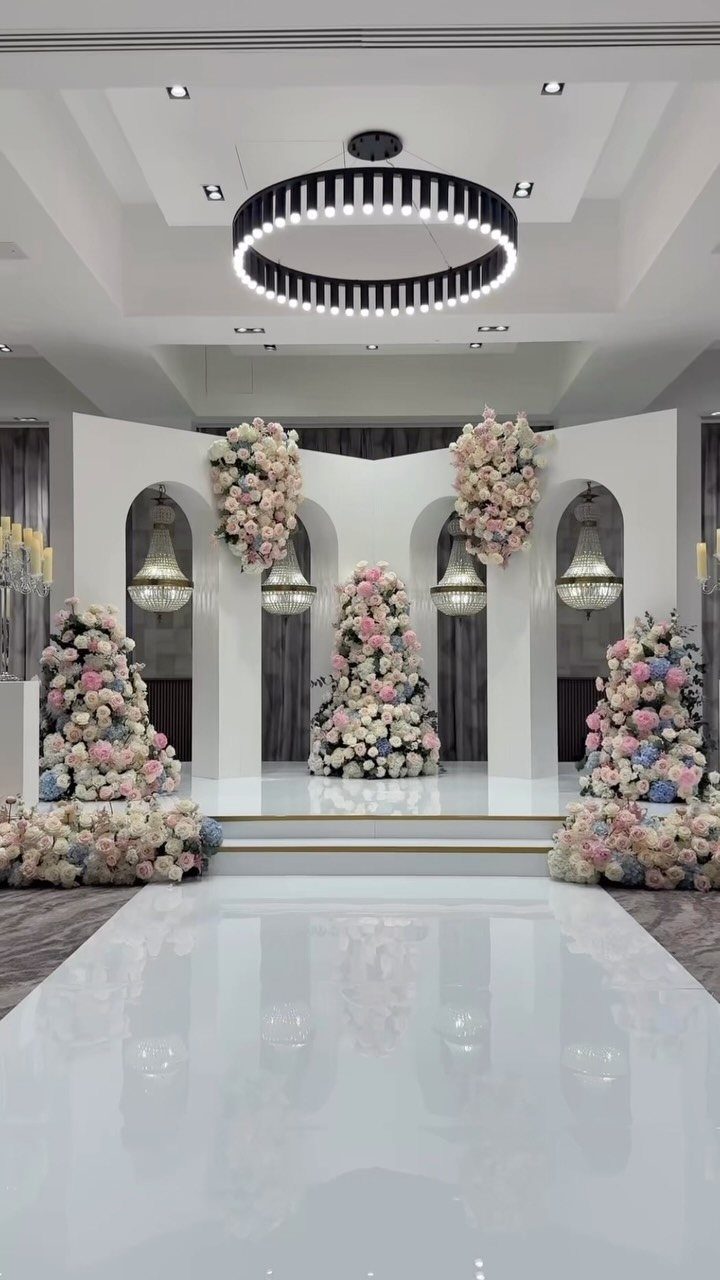
Pick the venue before almost anything else, because the date, the guest count and the budget all hang on it. A room like this, with built-in chandeliers and a polished dance floor, already carries much of the decor.
On a tight budget, this is the choice that sets the pace for every other line in the spreadsheet. Floral arrangements are the part you add, so ask what the space includes before pricing anything extra.
Tour at least a few options, and ask each one for a written list of what the rental covers.
4. Wedding Favors
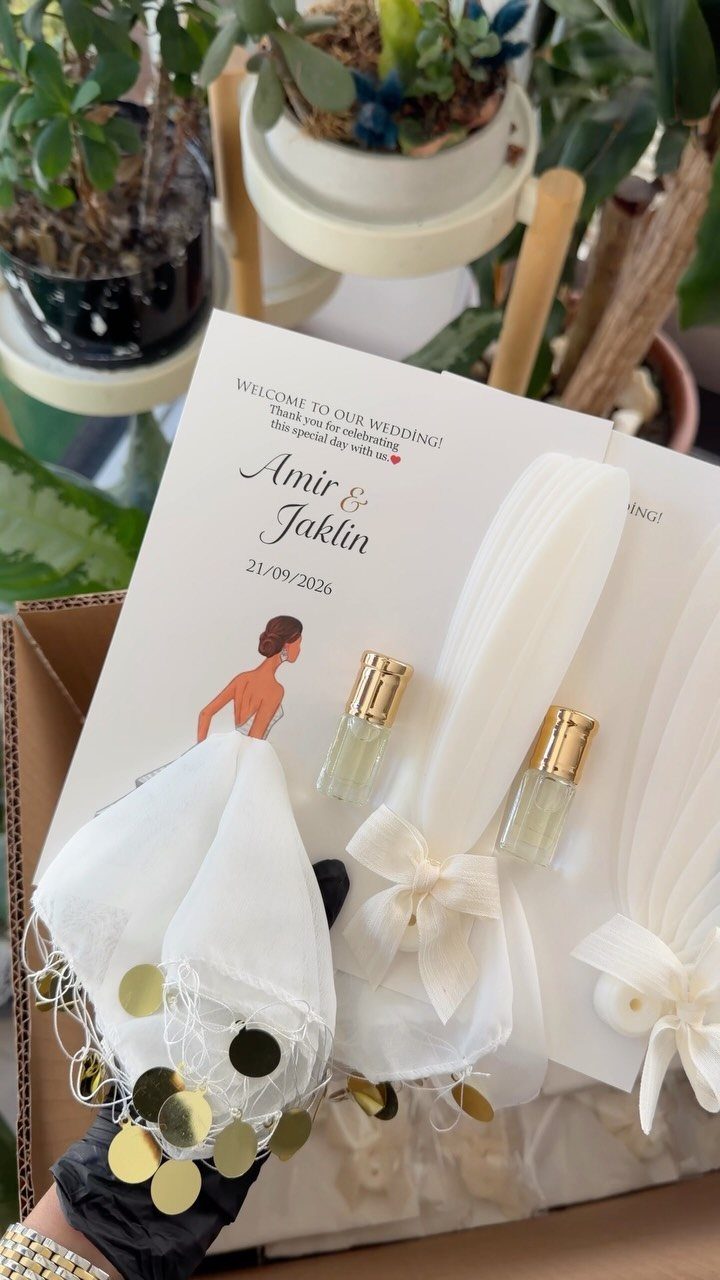
A favor works best when guests can use it. Perfume is a good pick for a favor: a small bottle with a card printed with your names and the date is compact, personal and easy for guests to carry home.
Cost scales with guest count, so multiply before you commit. Even a few dollars per favor adds up fast once you multiply it by the whole guest list.
I’d skip favors entirely before choosing something cheap that ends up in the trash. A good card with a small item beats a table crowded with filler.
5. Food and Drink Options
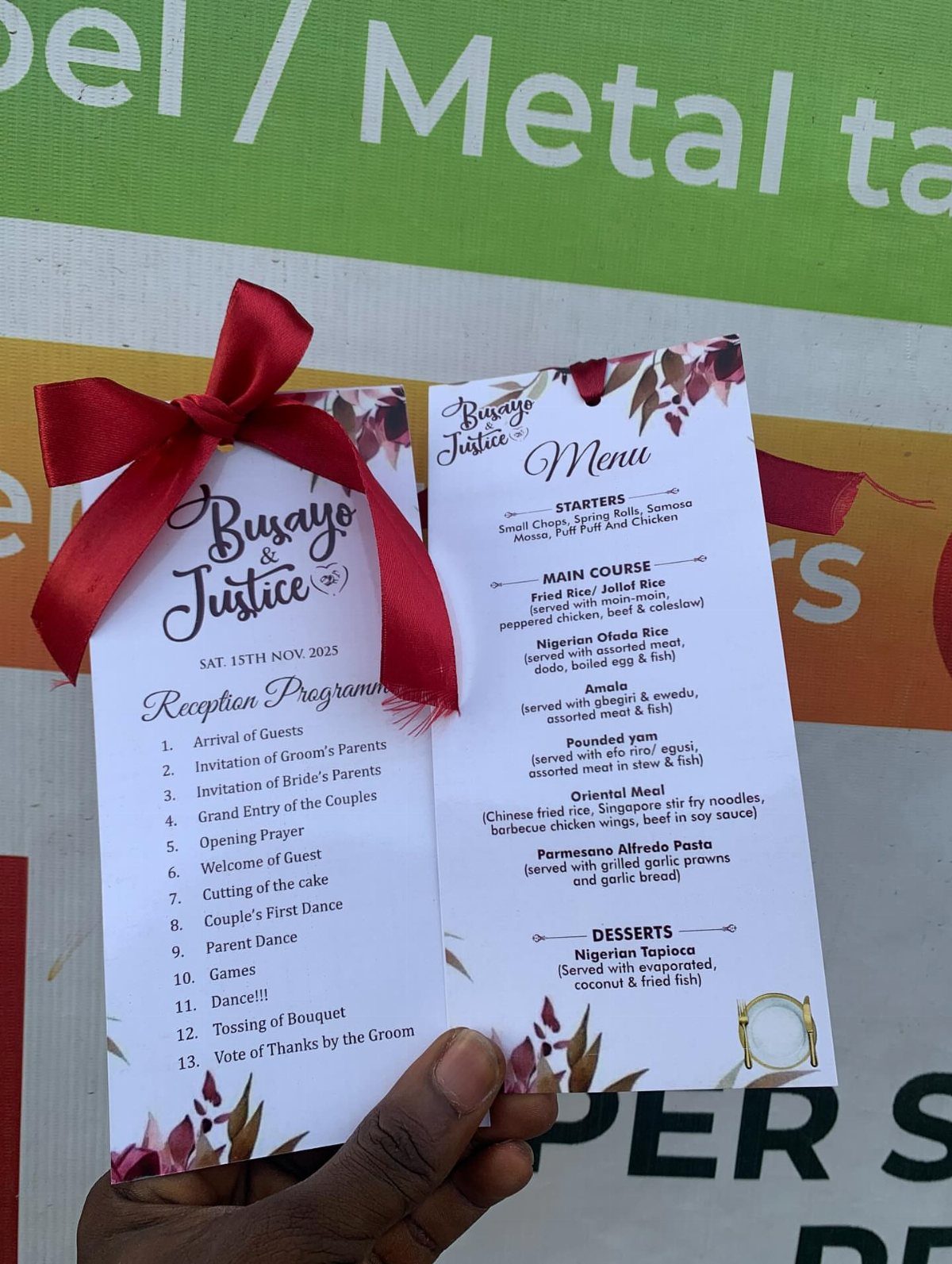
Food and drink usually take the biggest share of the budget, so settle them early. Decide the meal format first, whether a plated multi-course dinner or something more casual, since it sets the price per guest.
A printed menu card on each table lets guests see the courses in order. It also doubles as a program if you list the events beside it.
Ask your caterer about tastings and about drink packages, which can be cheaper than an open bar.
6. Order Stationery
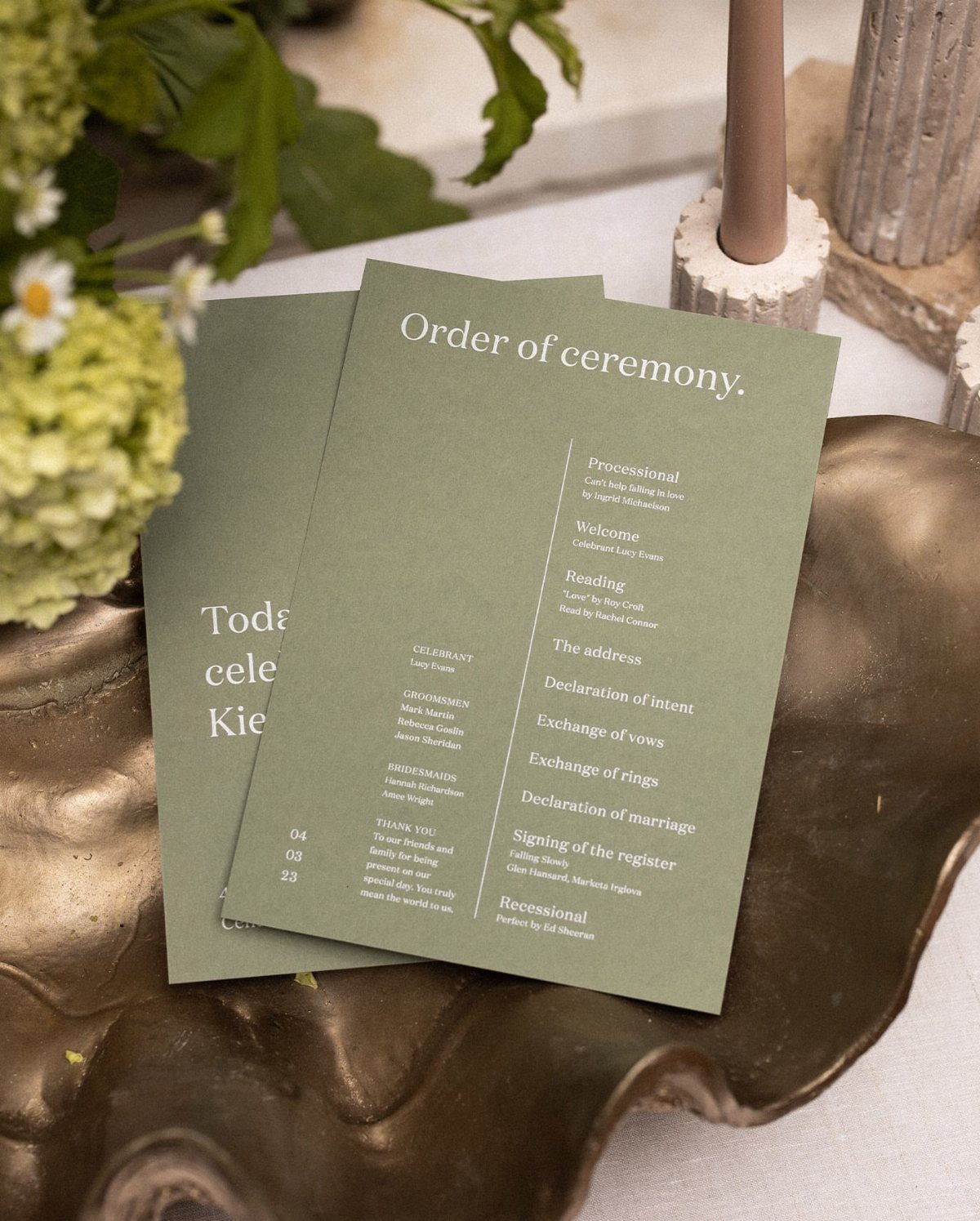
Order stationery in one batch, if you can, so colors and fonts match from the first card to the last. Programs, place cards and thank-you notes all belong to the same set as your invitations.
A ceremony program is a good example. It lists the order of events on one side and the wedding party on the other, with a thank-you note tucked in.
Proof every name and time twice before printing. A typo that makes it to print means paying for the whole run again, so it is an expensive mistake to fix.
7. Seating Chart
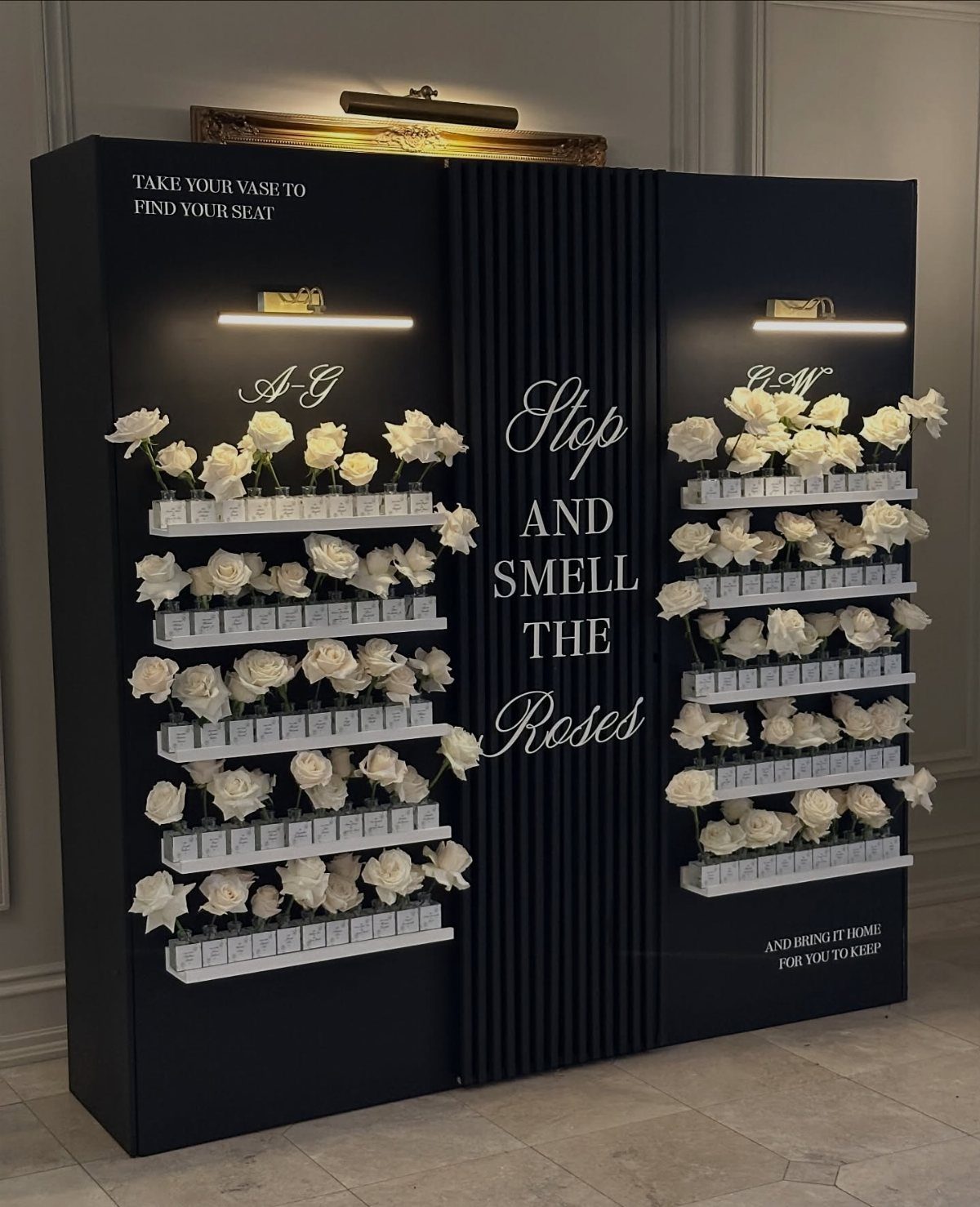
A vase-based seating chart turns the escort display into a favor. Each guest picks up a white rose in a small vase, finds the table number or name attached, and carries the vase to their seat and home afterward.
Count the vases against your RSVPs, plus a few spares for late replies. Each one needs a name card, so proof the spelling before anything is attached.
Keep the display wall in a spot where guests can circle it without blocking the bar or the door. A black backdrop makes white blooms stand out, but it also shows dust and petals, so check it before doors open.
This replaces a separate favor, so I’d drop the favor line from the budget.
Advice on Budgeting
Start the budget with one honest conversation between you, your partner and anyone contributing money. Settle how much each person is comfortable spending and what they expect in return, before a single deposit goes down.
Then sort every line into 2 piles. Your must-haves are the line items you would cancel the wedding over before cutting them, and for most couples that means the venue, the food or the photographer.
Nice-to-haves are extras such as a photo booth, fireworks or luxury transport, and they are the first things to cut.
A starting split I like: 50% for venue, catering and rentals, 15% for photography and videography, 10% for attire and accessories, 10% for entertainment and music, 10% for decor and florals, and 5% for miscellaneous costs or an emergency fund.
Adjust it to your must-haves, but keep the 5% cushion.
Track every payment in a budgeting app or a wedding-specific planner, so surprises show up early.
Vendor Recommendations
Popular vendors book fast, so reach out early, and ask friends and family who they hired before you trust a stranger’s star rating. A personal recommendation tells you how someone behaves when a day goes sideways.
Photographers can be booked up to a year ahead, so 6–12 months out is the window for most key vendors. If you’re marrying in a hotspot during high season, lean toward the early end.
Book the planner or coordinator first, since they can point you to others. Book hair and makeup and any ground transportation, such as a shuttle between ceremony and reception, after the bigger vendors are locked in.
Build a simple vendor comparison chart with pricing, reviews and availability side by side.
Taste the caterer’s dishes before the menu is final, and hand your florist the theme and the color palette so the flowers match the rest of the room.
Timeline Importance
Send the finished timeline to everyone who touches the day: family, the wedding party, the photographer, the videographer and the DJ.
Each of them works from the same clock, so a late cocktail hour doesn’t surprise the person holding the microphone.
A digital itinerary template beats scribbled notes, because you can change a time once and send the update instantly. Resend after every change, and tell people to toss the old version.
Frequently Asked Questions
What is the 50/20/30 rule for weddings?
The rule splits money into 50% for needs, 20% for wants and 30% for savings.
My preferred budget split follows the event itself: 50% to venue, catering and rentals, 15% to photo and video, 10% each to attire, entertainment and decor, and 5% held back for emergencies. Whichever you use, sort every line into must-haves and nice-to-haves first.
What to do 7 days before a wedding?
A week out, call each vendor to check arrival times and details, and give the caterer your final headcount. Send the finished timeline to the photographer, videographer, DJ, wedding party and family, and tell people to toss any older version.
Is $5000 a reasonable budget for a wedding?
It can work, but it depends on your location and guest count, so plan around those 2 numbers.
Lock in the venue, food and bar first, since they take the biggest share, then fit attire, photography and favors into what is left. Keep a 5% cushion and cut nice-to-haves such as a photo booth before any must-have.





