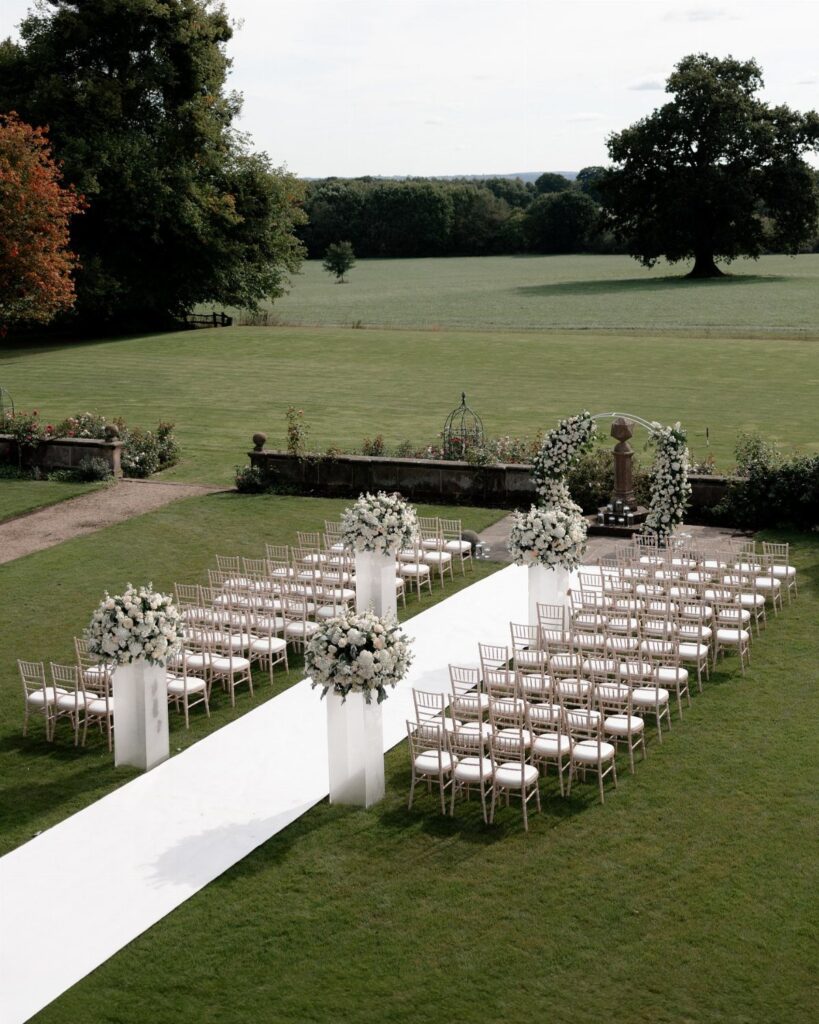
The list runs from Floral Arches and Natural Decor to Outdoor Lighting, and the cheaper picks mostly let the setting and the season’s blooms carry the look.
Your date decides which items matter most: a July or August ceremony leans on Weather Considerations, Hydration Stations and a short program, while the milder months mostly reward Seasonal Timing and an early booking.
Whatever the season, get the Weather Backup Strategies in writing before you sign, including whether a move to a tent triggers extra rental fees.
1. Natural Decor
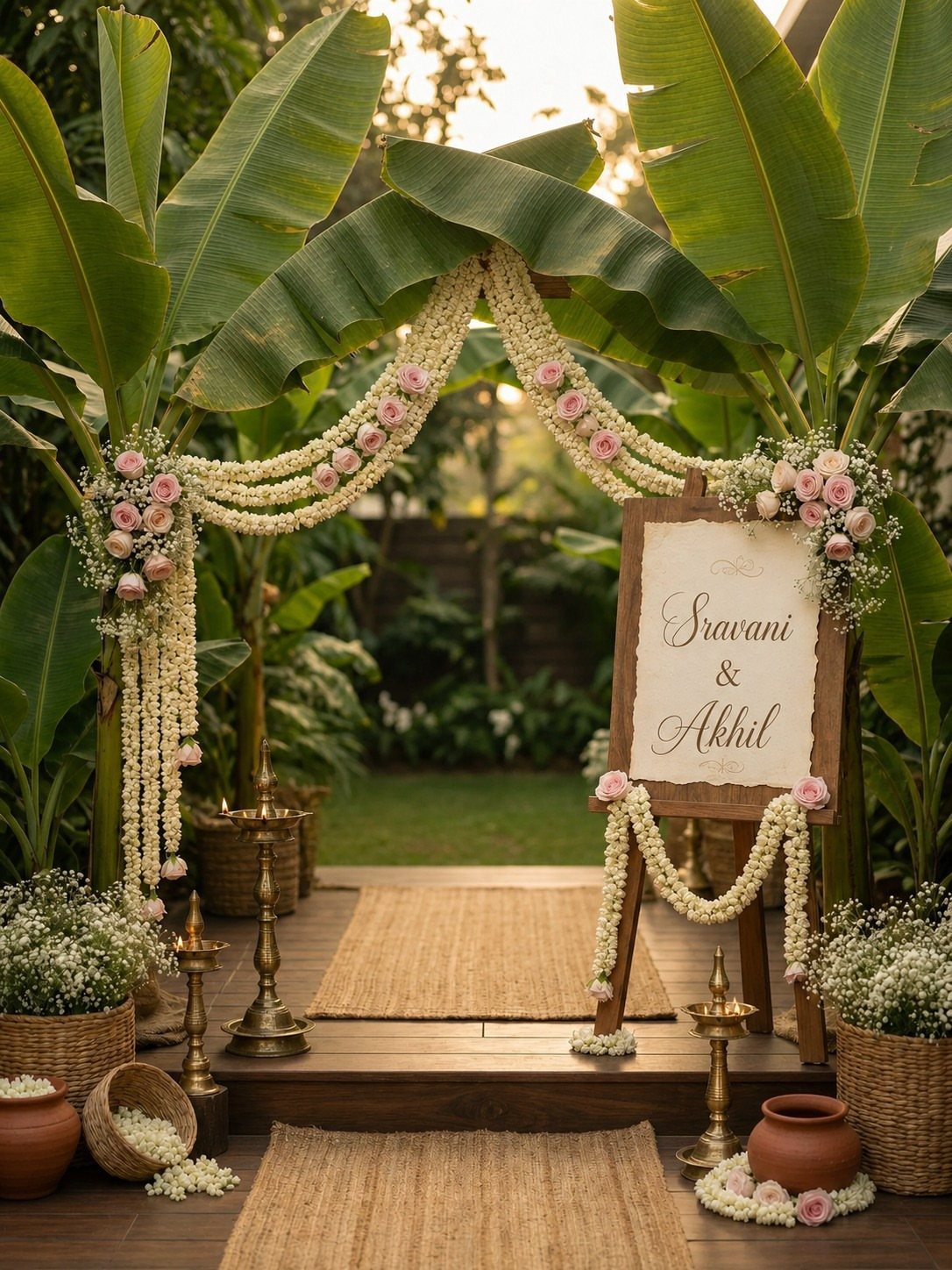
Banana leaf arches, flower garlands and a wooden welcome sign can stand in for a much pricier entrance, because the greenery carries the look and the sign adds the personal touch.
Let the setting supply the bulk of the decor and spend only on a few pieces that frame where guests walk in.
I would pick one focal point, the entrance, and keep everything else quiet. Decor that echoes what already grows nearby costs less and looks like it belongs.
2. Lawn Games
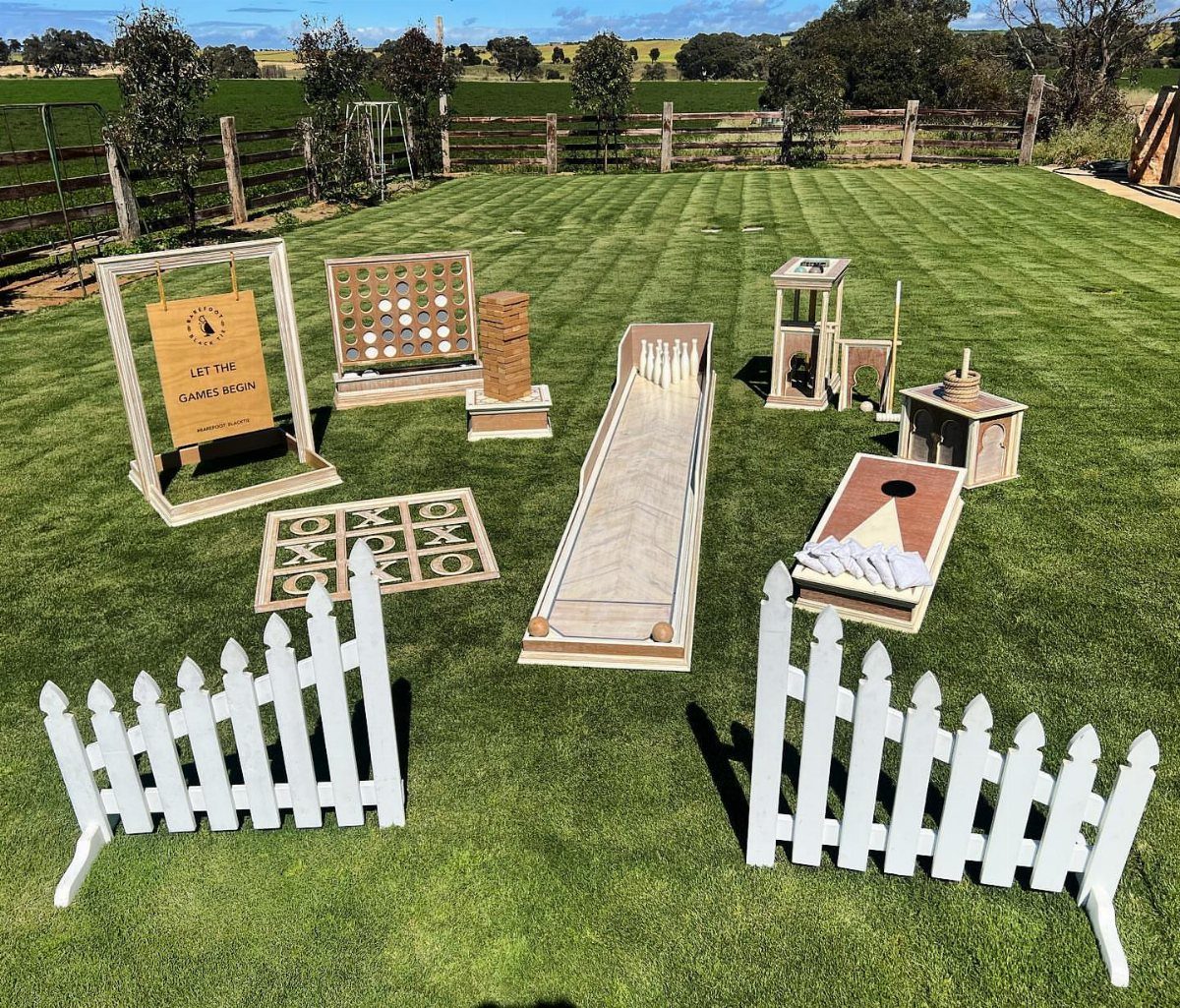
Oversized wooden games like cornhole and tic-tac-toe fill the gap between ceremony and dinner, when guests are mostly standing around with a drink.
Set them up on open grass near the cocktail area so people drift toward them without being told.
A sign saying "LET THE GAMES BEGIN" makes the invitation clear. I would choose games that need no explanation, since nobody wants to read rules in dress shoes.
3. Weather Considerations
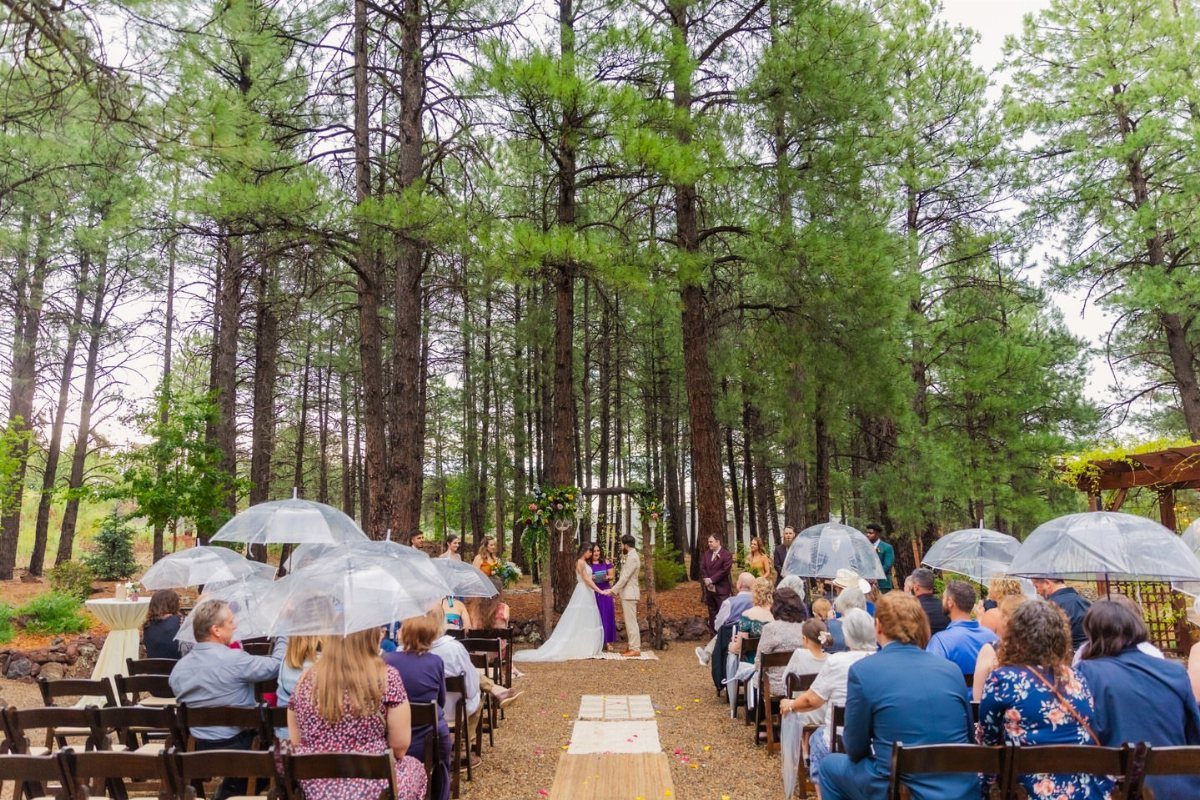
Clear umbrellas are my favorite rain plan, because guests stay dry and the faces, the trees and the vows stay visible. A basket of them at the ceremony entrance costs far less than renting a tent.
Check the forecast for the whole day, not just the ceremony hour. Plan a second spot for photos, and tell guests early that the ceremony happens in any weather.
4. Hydration Stations
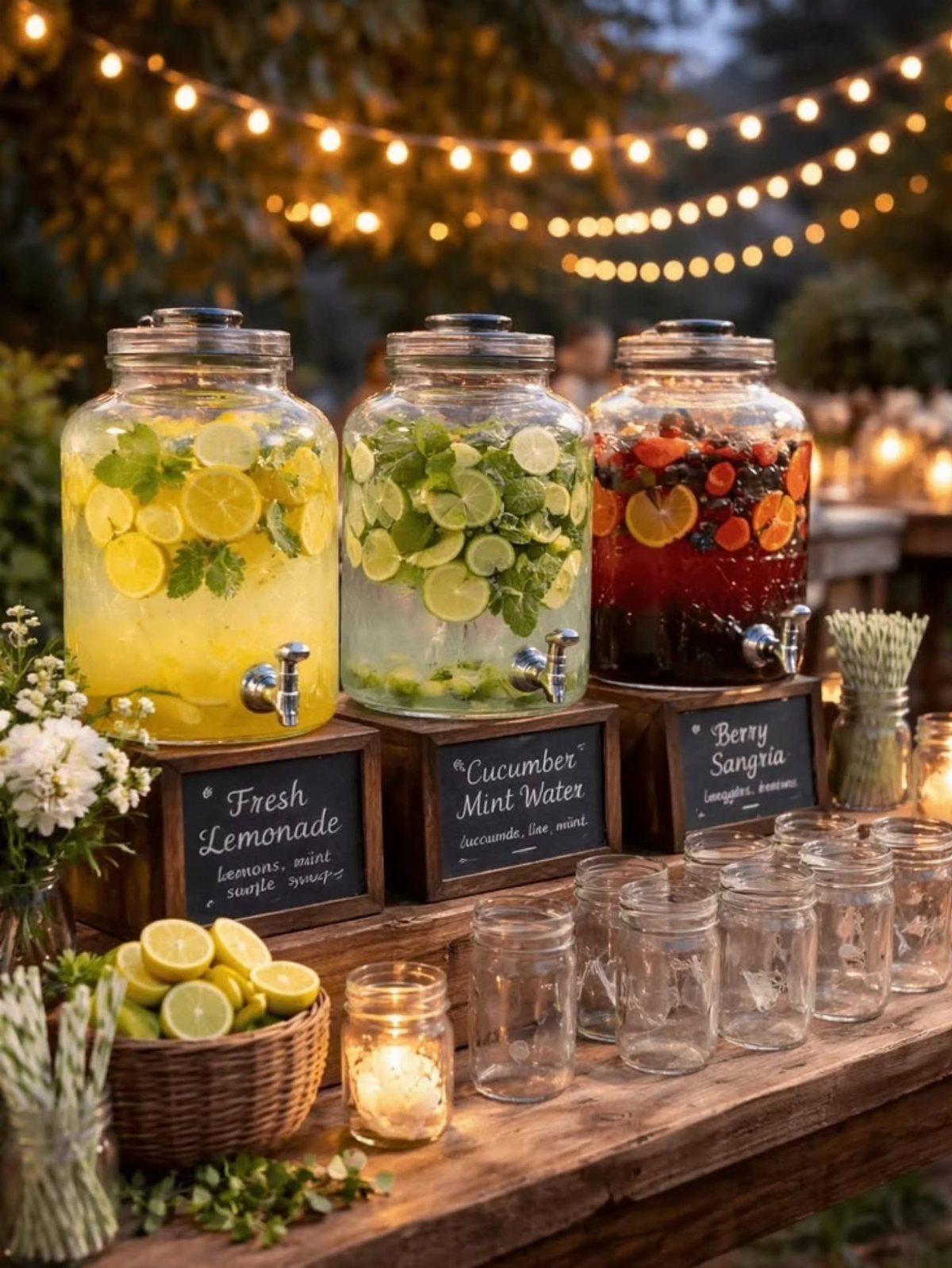
Keep the table in shade if you can, and put the sangria at one end so the non-drinkers know where to go.
Drop sliced fruit and fresh herbs into the glass, and the drinks look finished for pennies.
Mason jars keep the setup cheap and easy to restock, so buy a few extra cases and let guests grab a clean one as they go.
5. Unique Seating Arrangements
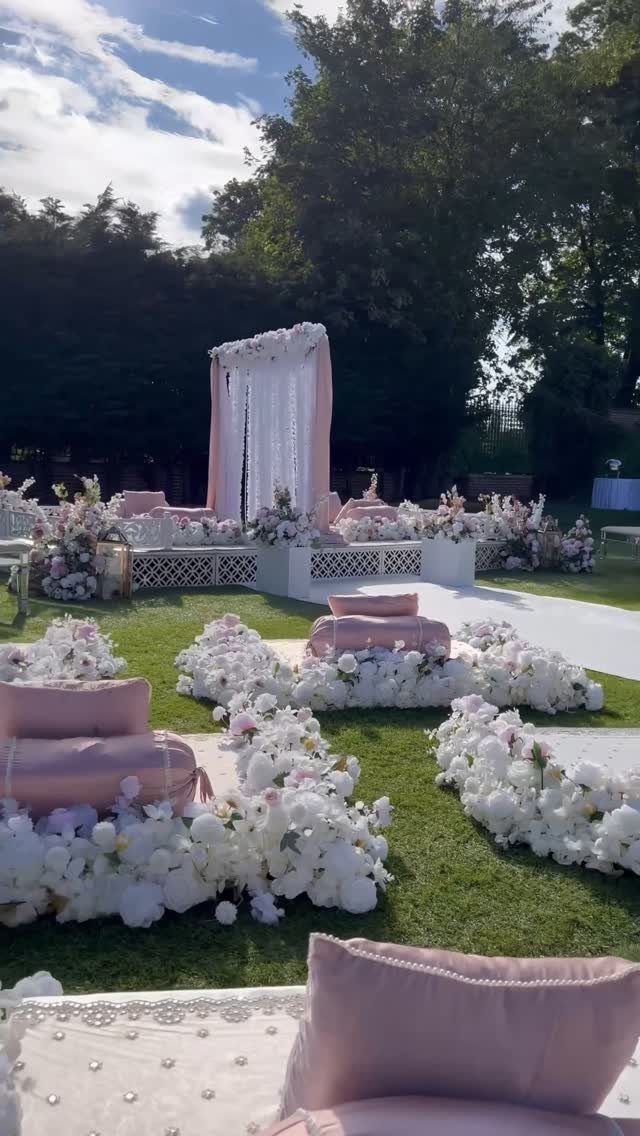
Pink floor cushions ringed with white flowers turn the ceremony seating into part of the design. Low seating draws the eye toward the decorated altar canopy, which gets the view it deserves under open sky.
I would save cushions for a short ceremony and a younger crowd, and keep a few regular chairs for guests who can’t sit low. Dry grass matters, so have a plan if the ground is damp.
6. Outdoor Lighting
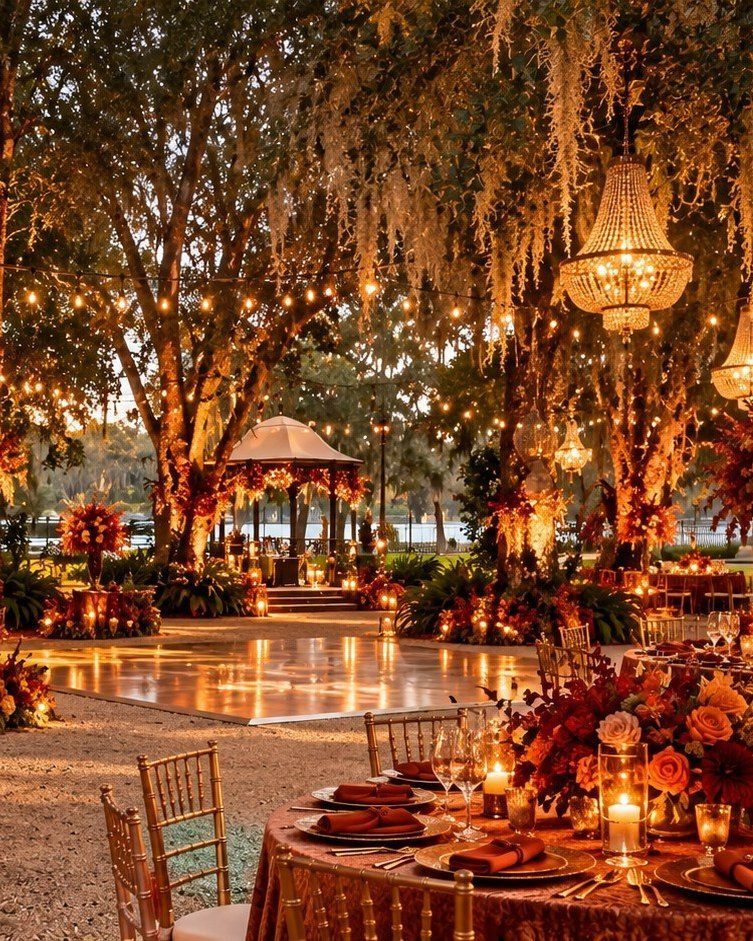
Crystal chandeliers hung from old oaks, with string lights stretched between them, give a reception a glow that no ballroom can copy. Aim the light at the dance floor and the tables, and let the edges stay dim.
String lights are the cheap layer; chandeliers are the splurge. If the budget is tight, I would choose the strings and spend on one chandelier over the dance floor.
7. Seasonal Flowers
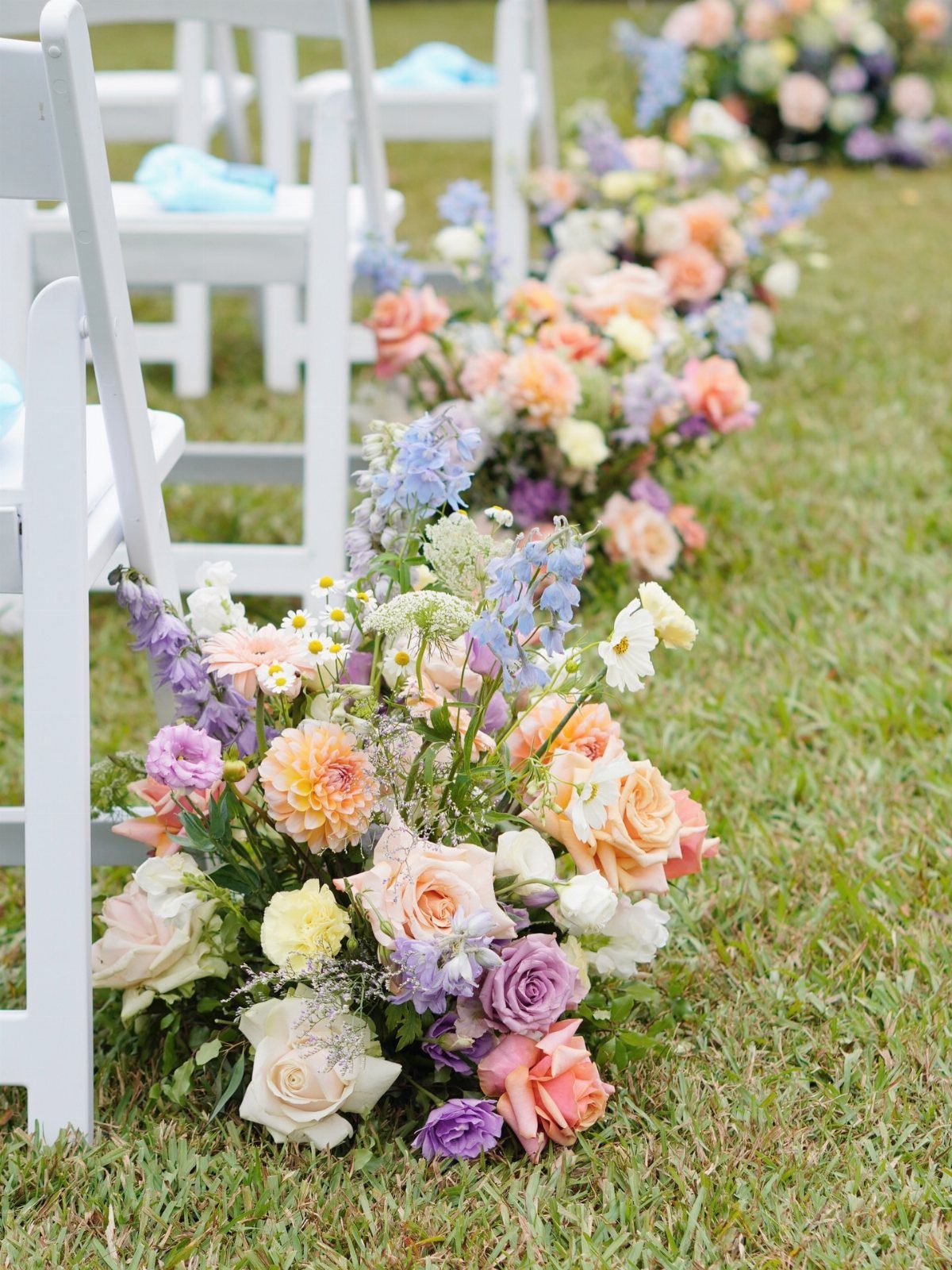
Pastel arrangements set directly on the grass along the chair rows give an aisle color without a single arch or stand. Ground-level flowers cost less than tall installations, since they need fewer stems and no structure.
Pick blooms that are actually in season for your date, and ask your florist what that means locally. I would keep the palette to two or three soft shades so the rows look planned, not scattered.
8. Custom Signs
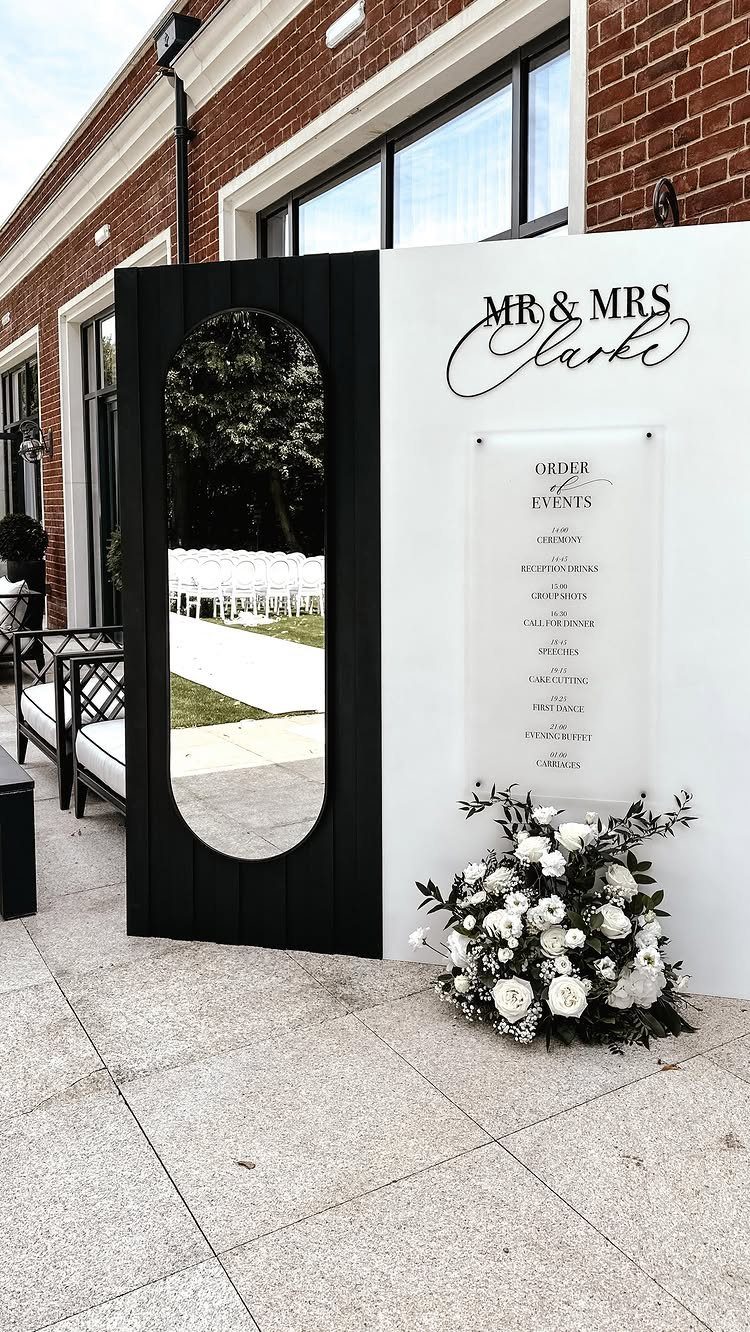
A clear acrylic "Order of Events" sign tells guests what happens and when, so nobody has to ask the person next to them.
Pair it with a welcome sign at the same spot, and add a mirror or a few flowers at the base so the display reads as decor, not a notice.
Keep the wording short and the lettering large enough to read from a few steps away. I like to place it where guests arrive, before they find seats.
9. Floral Arches
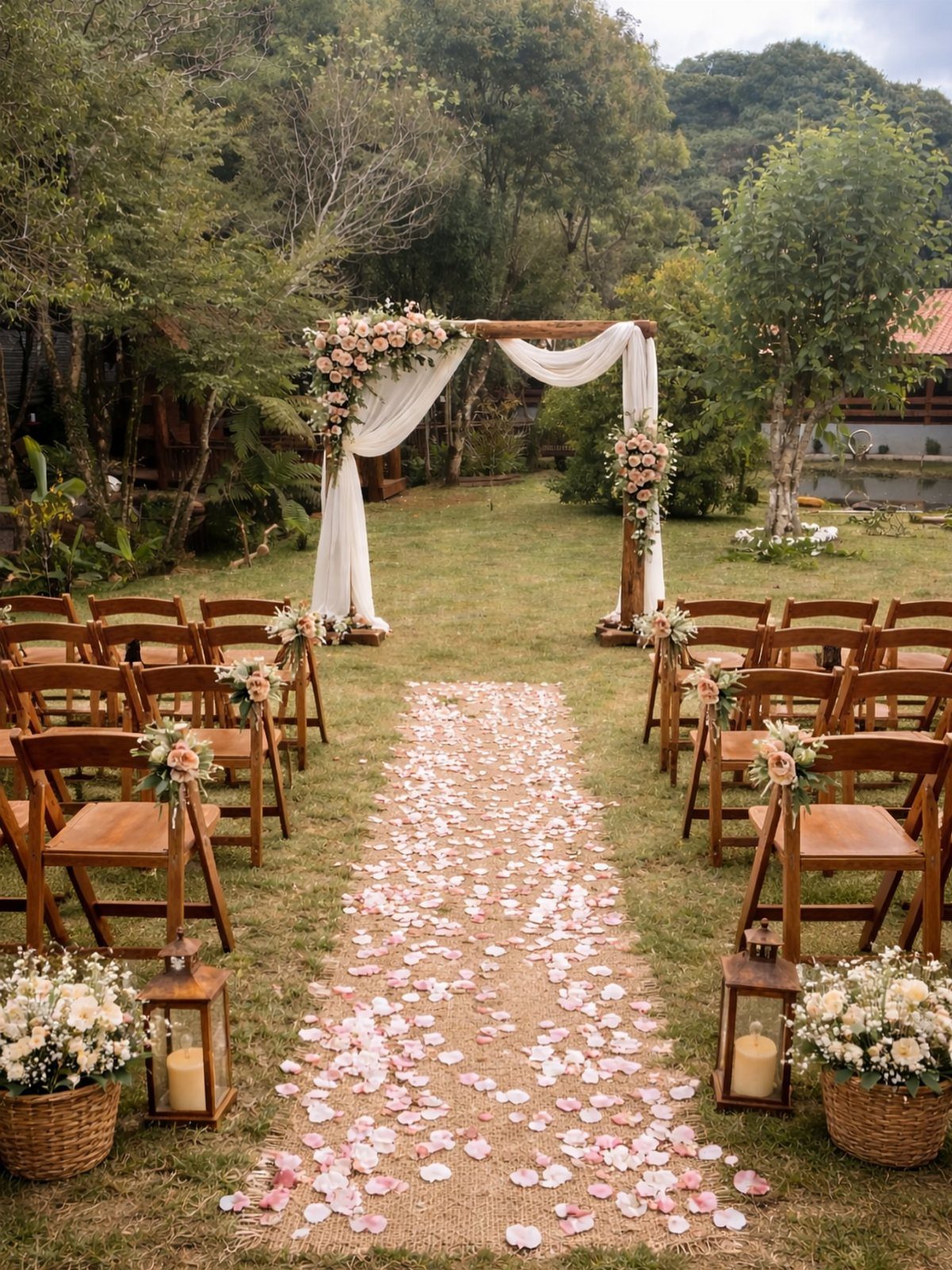
Draping white fabric over a wooden arch softens the frame, and flowers added to one side give it a focal point without hiding the wood.
A plain wooden arch is the budget-friendly base, since you pay only for fabric and blooms.
I would put the flowers on one corner or the top rather than covering the whole frame. Stems go further that way, and the arch still looks full from the back rows.
Weather Backup Strategies
A tent that exists on the property says nothing about whether it fits your guest count, has sidewalls, or can go up in time, so ask the venue to put those details in writing.
Ask the venue whether the backup is a permanent structure or a rental tent, and whether it holds your full guest count without cramping the ceremony.
Get the transition timeline in writing: who makes the call, how many hours before the ceremony, and how long the move takes.
Ask whether switching to the backup triggers extra rental fees, because that number belongs in your budget before you sign.
Think through logistics too. Guests with limited mobility need an easy route to whichever space ends up in use, and I would settle that before the invitations go out.
Guest Experience Tips
Guests care most about seeing and hearing you, so check sightlines and sound from the back row before you commit to a site.
Then walk the route as a guest would. Where do cars park, and what does that lot look like after rain?
Picture a guest in 3-inch heels crossing gravel or soft grass from the parking area to the seats, and decide whether that path needs a mat or a shorter route.
A shaded structure, a few fans or a couple of patio heaters can keep a 100-degree afternoon or a drizzly 50-degree evening bearable.
Ice-cold bottled water handed out at arrival is the easiest fix, and I would add a self-serve dispenser with lemon slices in a few spots rather than one.
Seasonal Timing
The strongest windows near Philadelphia run late April through early June and September through mid-October. Mild temperatures and manageable rain make them popular, and fall adds peak foliage.
Expect more competition for venues and vendors, so book early.
For July or August, choose a shaded ceremony site and keep the ceremony short. Heat, humidity and afternoon thunderstorms are the risks.
Late November and early March are the quieter options, with bare-tree backdrops and less venue competition. Before you sign, check that guests can reach the outdoor space easily and that the site offers heating and lighting.
Frequently Asked Questions
What is too cold for an outdoor wedding ceremony?
Temperatures below 50°F are generally considered too cold for an outdoor ceremony. If your date falls in late November or early March, check that guests can reach the space easily and that the site offers heating and lighting.
Patio heaters, even just a few, make a damp 50-degree evening much easier to sit through.
What are some popular wedding venues in the United States?
Outdoor venues across the country cover nearly every style, from barns and gardens to lawns under old oaks.
Fame matters less than what you can check yourself: how the view and the sound hold up from the last row, where guests park and how far they walk, and whether the weather plan is on paper.
Find out if the rain option is a permanent building or a rented tent, and whether it seats every guest on your list.
What is the best time of year for an outdoor wedding ceremony?
Late April to early June and September to mid-October work best, at least in the Philadelphia area.
Those weeks bring mild temperatures and rain you can plan around, and autumn adds peak leaf color. Those dates draw the most competition, so book venues and vendors early.
How do I plan for rain at an outdoor ceremony?
Have the venue put the rain plan in writing, and let guests know well ahead that the ceremony goes on whatever the sky does.
Clear umbrellas in a basket at the entrance are a cheap option that keeps faces and vows visible.
How can I keep guests comfortable at an outdoor wedding?
Start with shade, water and an easy route. Test the route from the lot to the seats in 3-inch heels, then lay a mat or pick a shorter path if gravel or soft grass gets in the way.
How can I decorate an outdoor ceremony on a budget?
Let the setting do most of the work and spend on one focal point, usually the entrance. A plain wooden arch draped with white fabric, with flowers on one corner or the top, costs only fabric and blooms.





