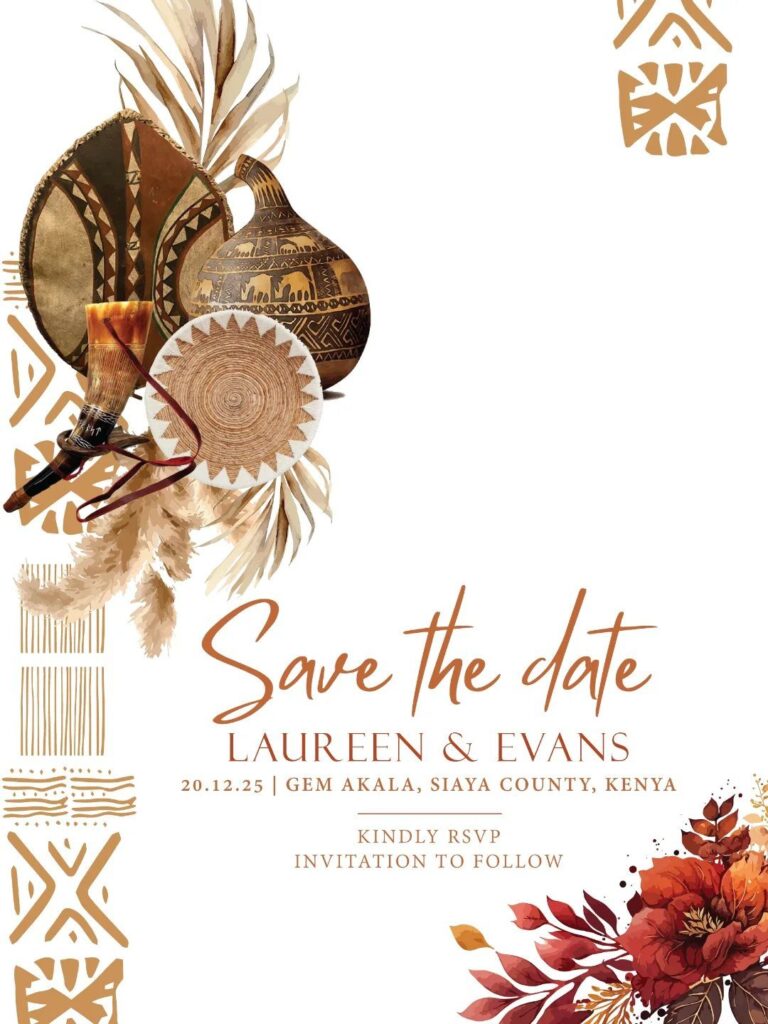
The list runs from a Save the Date, which is cheap to print and mail, up to foil fold-out invitations, wax sealed embossed envelopes and keepsake boxes that add weight and postage.
Distance decides which one fits: guests who must book flights need the place and date early, so the save the date sent 8–12 months ahead matters more than any extra on the invitation.
Spend on the heavy pieces only for a short list of close family and the wedding party, and let a plain card carry the destination to everyone else.
1. Passport-style Invitations
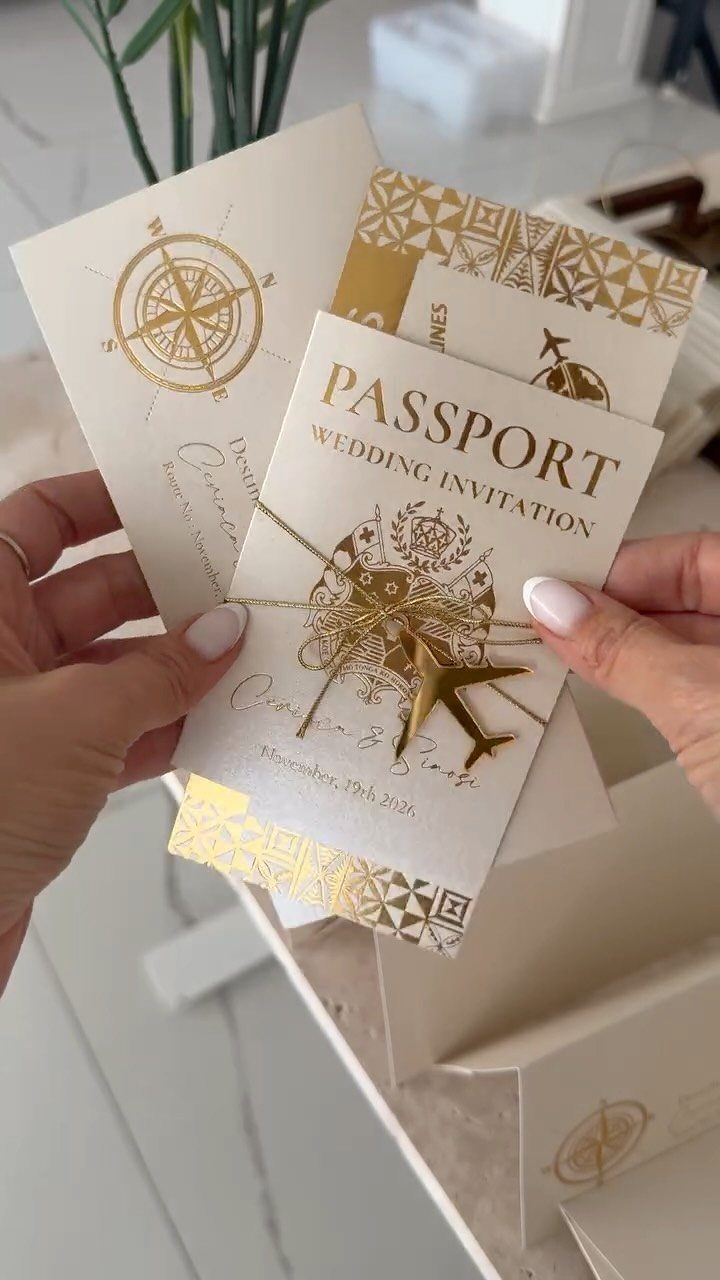
A passport-style invitation is a small booklet, and it gives guests the first piece of the trip before anyone books a flight.
Gold foil and a compass motif on the cover tell guests the wedding involves a trip before they read a word inside.
I like this format for destination weddings because the booklet has room for pages. Put the date on the cover, as this one does, and save the inside for travel details like the location, hotel block and RSVP deadline.
Foil costs more than flat printing, so order a proof first.
2. Save the Dates
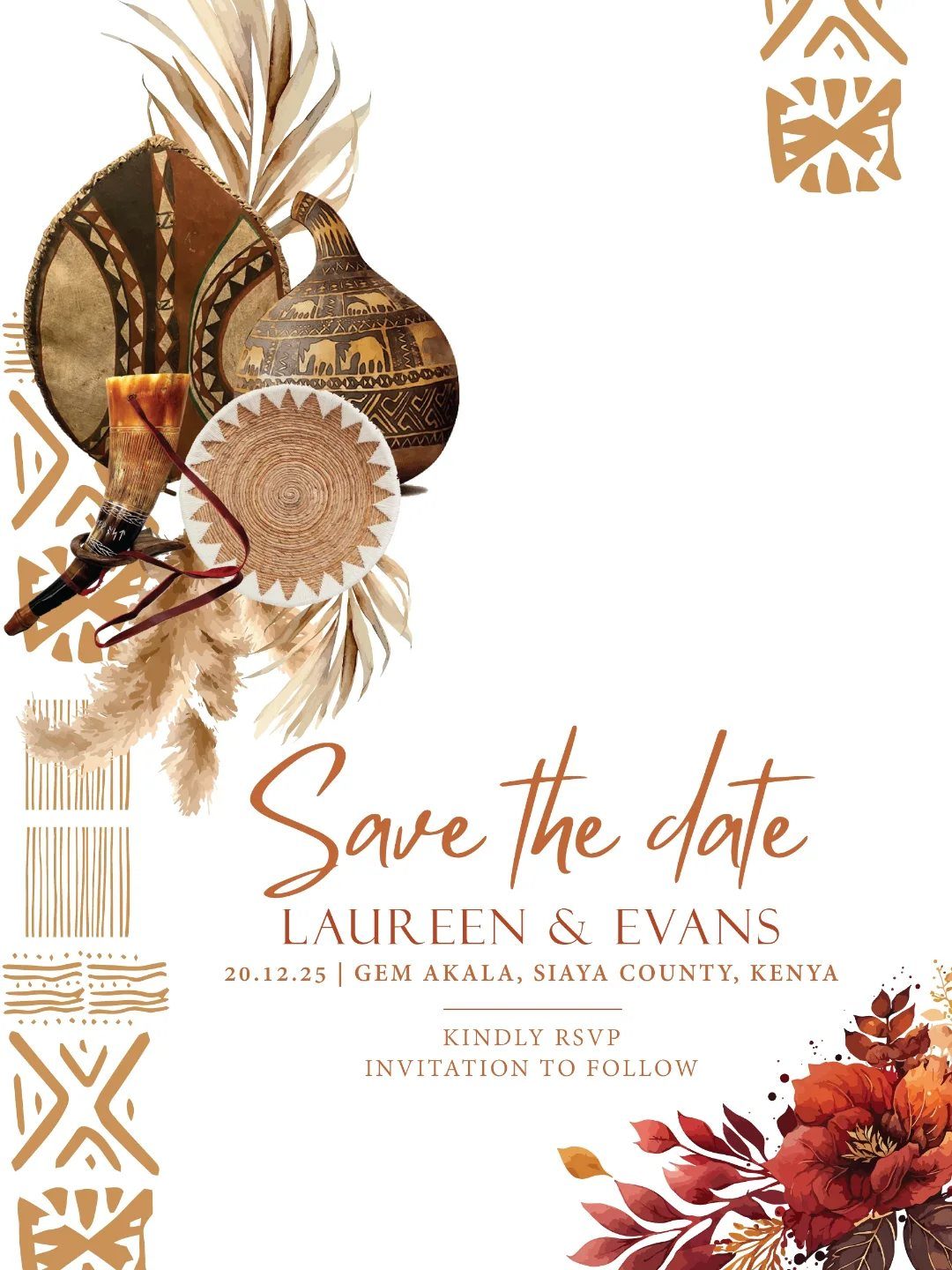
Guests with flights to book need the date long before the invitation arrives, and a digital save the date delivers it fast and cheaply.
Laureen and Evans used Siaya County, Kenya, as the anchor, with a shield and earthy florals making the place part of the announcement.
Name the location on the card itself. Guests who see the place and date together can start checking fares and leave requests right away.
Send it as soon as the date and place are firm. Digital also means no postage and no printing deadline.
3. Itinerary Insert
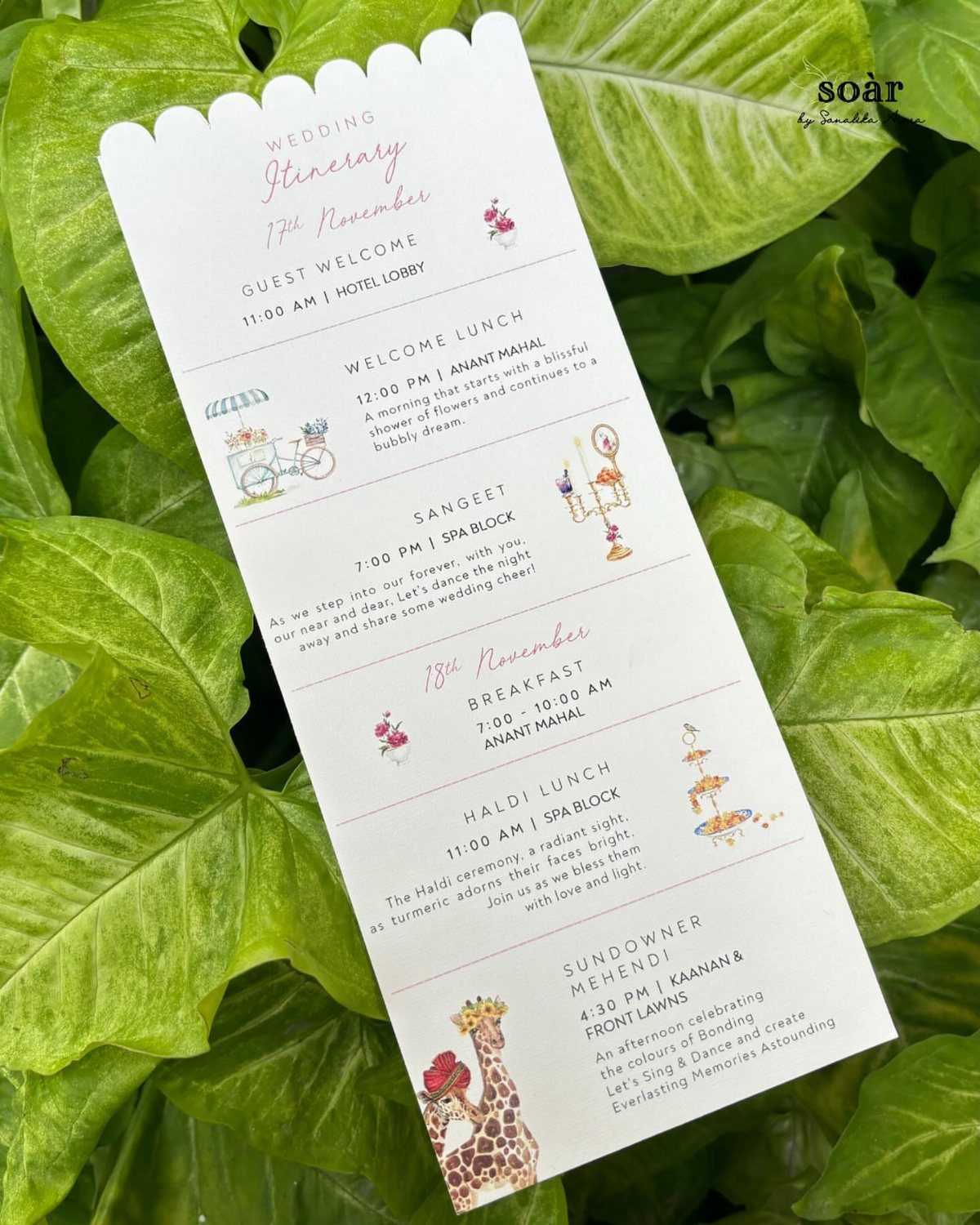
Out-of-town guests want to know what they are packing for, and an itinerary card answers it on one small piece of paper.
Dates, event times and locations go in a clean list, so nobody has to scroll back through an email.
A scalloped white card like this slides easily into an invitation suite. I would keep it to a single side, with each event on its own line.
Add a dress note beside each time. It saves you a dozen texts.
4. Keepsake Invitations
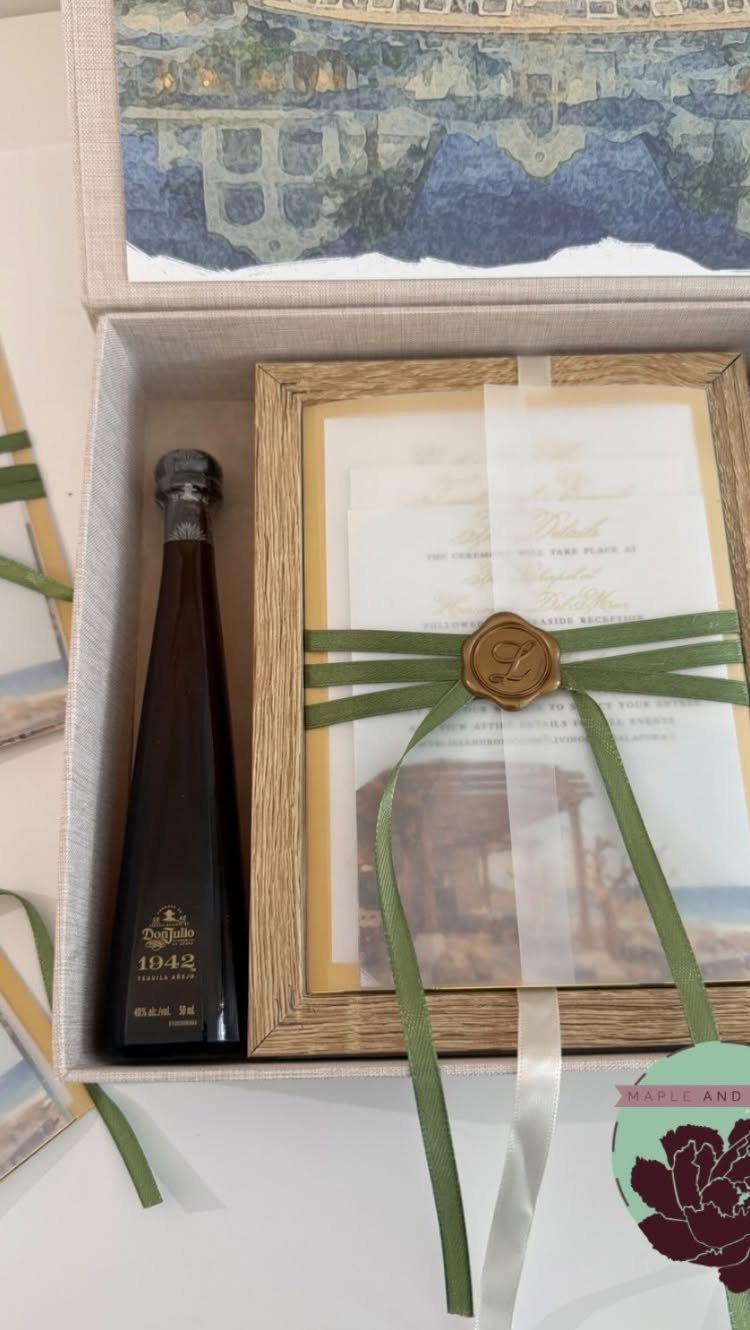
Pairing the invitation with a small gift is how you make people keep it.
Choose the gift to match your wedding’s personality, since a bottle says something about the party ahead. Framing the invitation gives it a second life on a shelf.
Expect this to cost far more per guest than paper. I would reserve it for a short list of close family and the wedding party.
5. Traditional Motifs Invitations
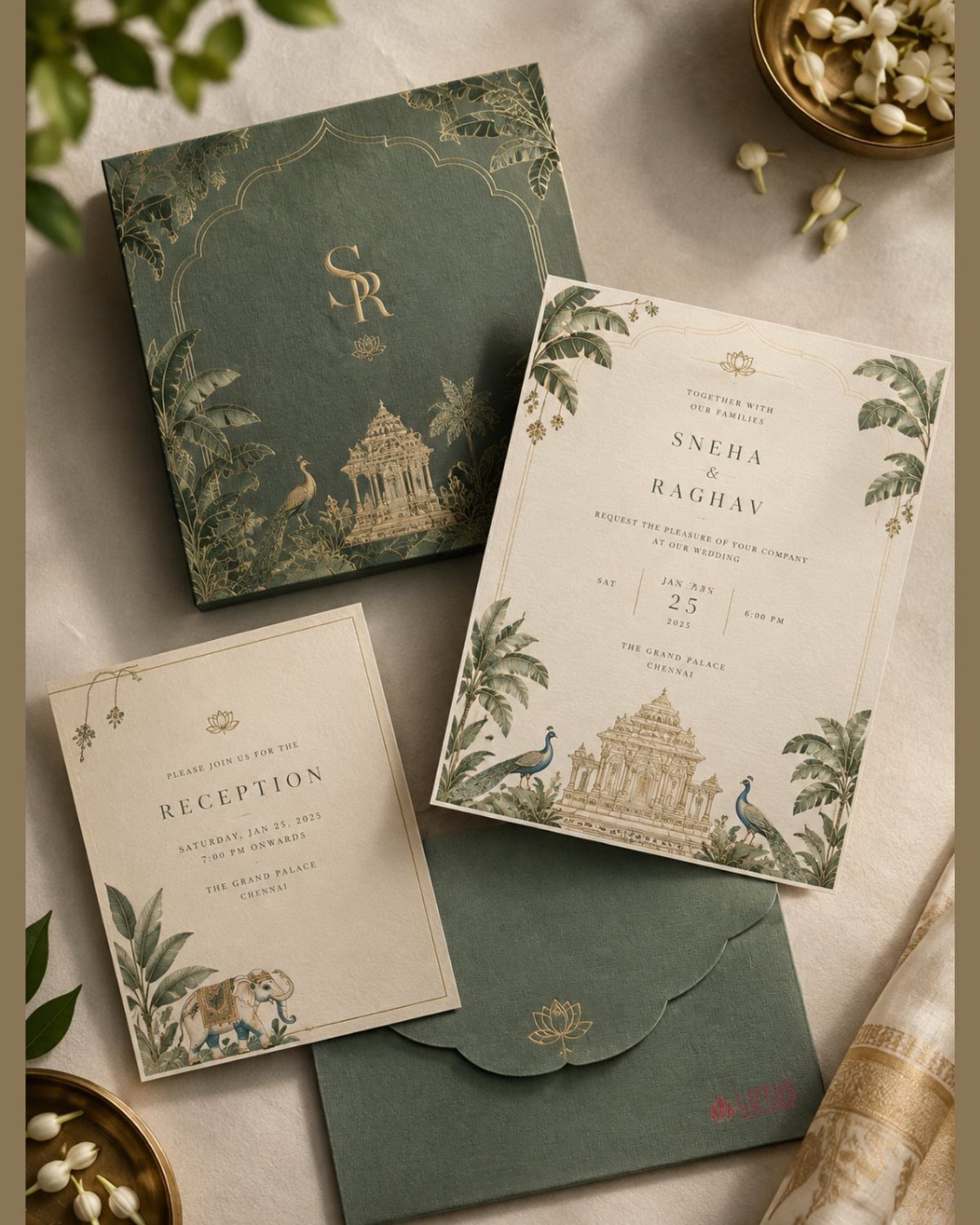
Borrowing the architecture and animals of the place you are marrying makes the invitation feel local before anyone lands.
Put the venue’s name right on the card, since guests will want to place the party before they ever book a flight. Guests then know exactly where they are headed.
Ask a designer or a family member from the region to check any motif. Meaning matters more than looks.
6. Keepsake Boxes
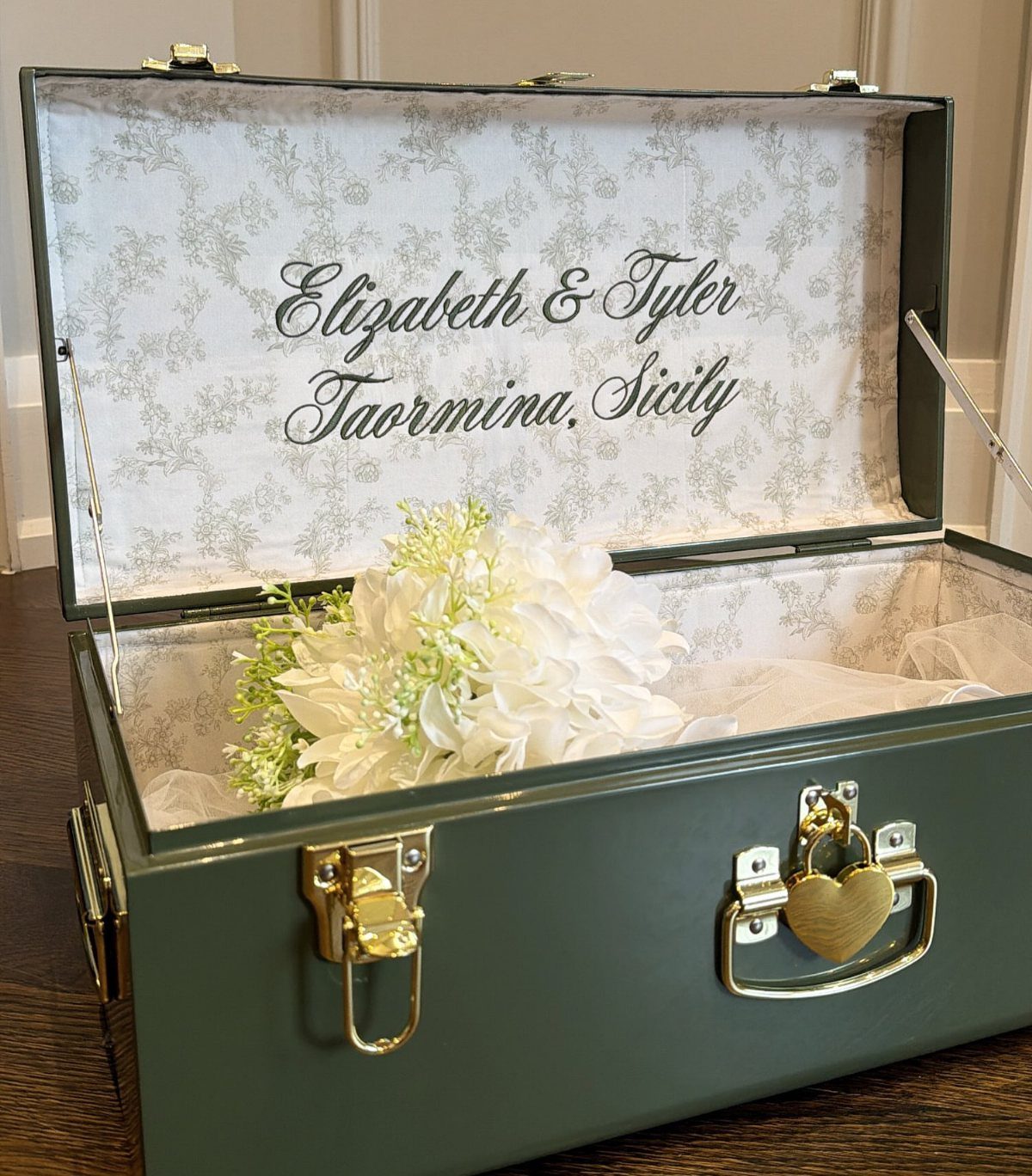
A keepsake box lets the invitation arrive as an object. A small trunk or suitcase-style box, with the couple’s names and the location printed inside the lid, gives guests a piece of luggage they can keep and reuse.
Tuck the invitation and details inside with a few flowers, and print the destination on the lid, because guests will see that line each time they open the box.
Boxes weigh more and cost more to ship than flat mail. I would send them only to a small group.
7. Boarding Pass Invitations
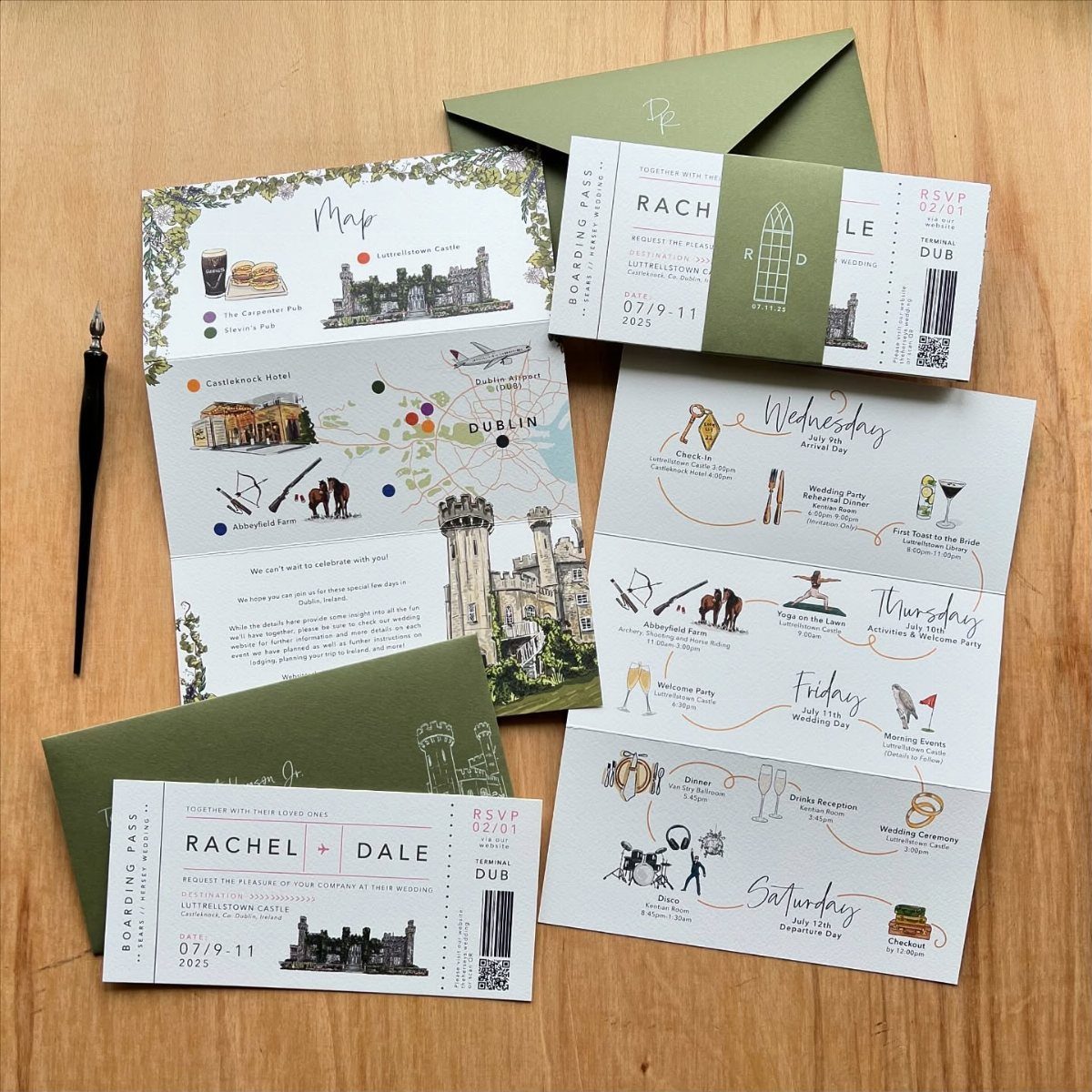
A boarding pass invitation borrows the ticket format, so guests read "you are going somewhere" before they read the names.
Green cards like these pair well with a map and an itinerary card, which hands guests the whole trip in 3 pieces.
Put the destination where an airport code would go, and keep the date and time in the usual ticket spots. I would let the map carry the geography so the pass itself stays uncluttered.
Proof the card at actual size. Small ticket type shrinks fast.
8. Sliding Photo Wedding Invitations
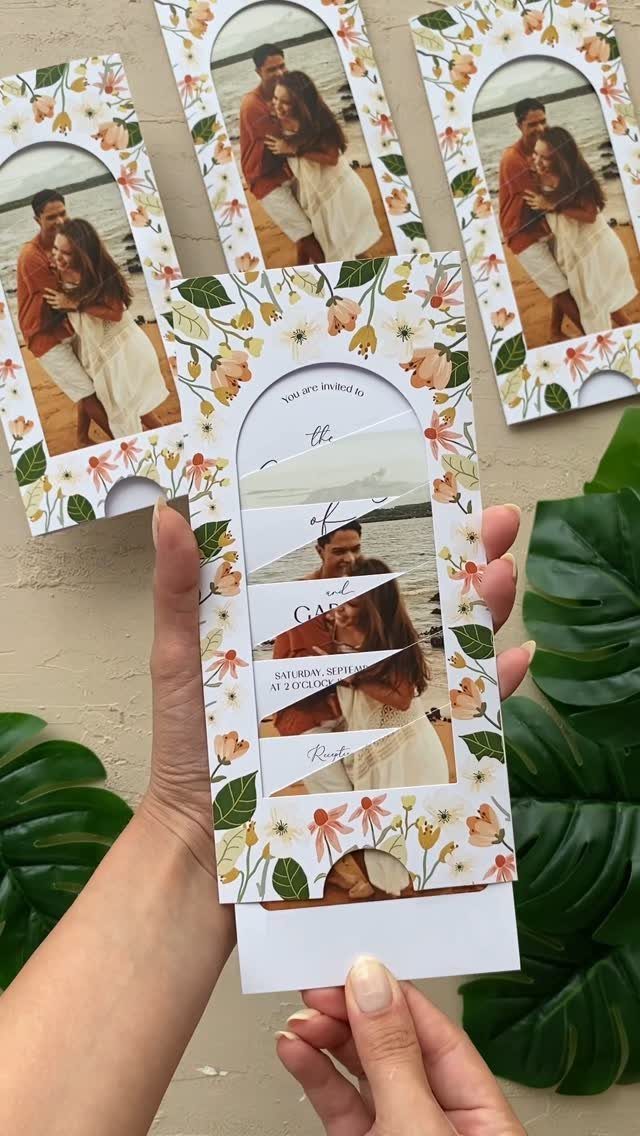
A sliding photo invitation hides the couple’s picture behind a pull tab, so guests have to touch it to see the beach. The floral border keeps the formal text readable while the reveal does the playful work.
Choose a photo that says where the wedding is, since the picture does the announcing for a destination. Keep the date on the front panel where it shows before anyone slides anything.
Moving parts mean extra assembly and thicker mail. Ask your printer for a sample, and test the slide a dozen times.
9. Monogram Foil Fold-out Invitations
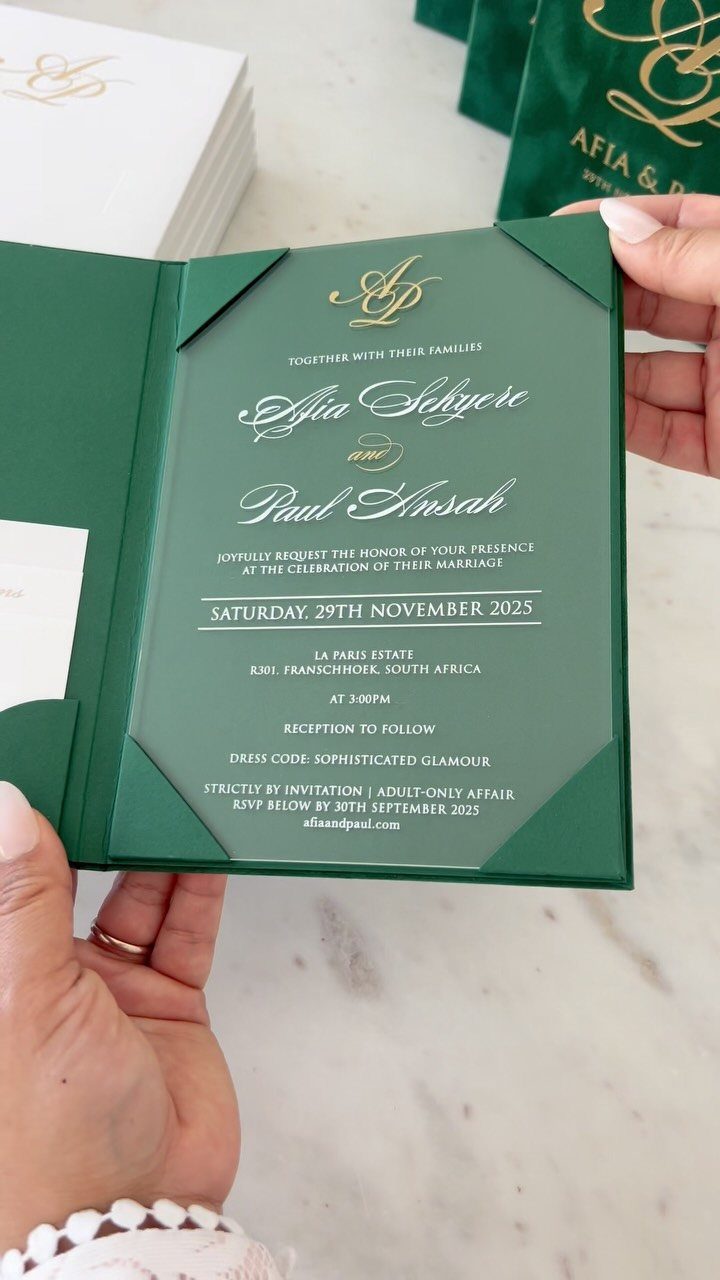
Gold foil on deep green reads as formal before anyone opens the fold. Names, venue and date, here La Paris Estate in South Africa on November 29th, sit in metallic type that catches the light.
For a destination, I would put the country right beside the venue name. Guests abroad need that line to start pricing flights.
Keep the monogram simple, because foil fills in on fine detail.
10. Wax Sealed Embossed Envelopes
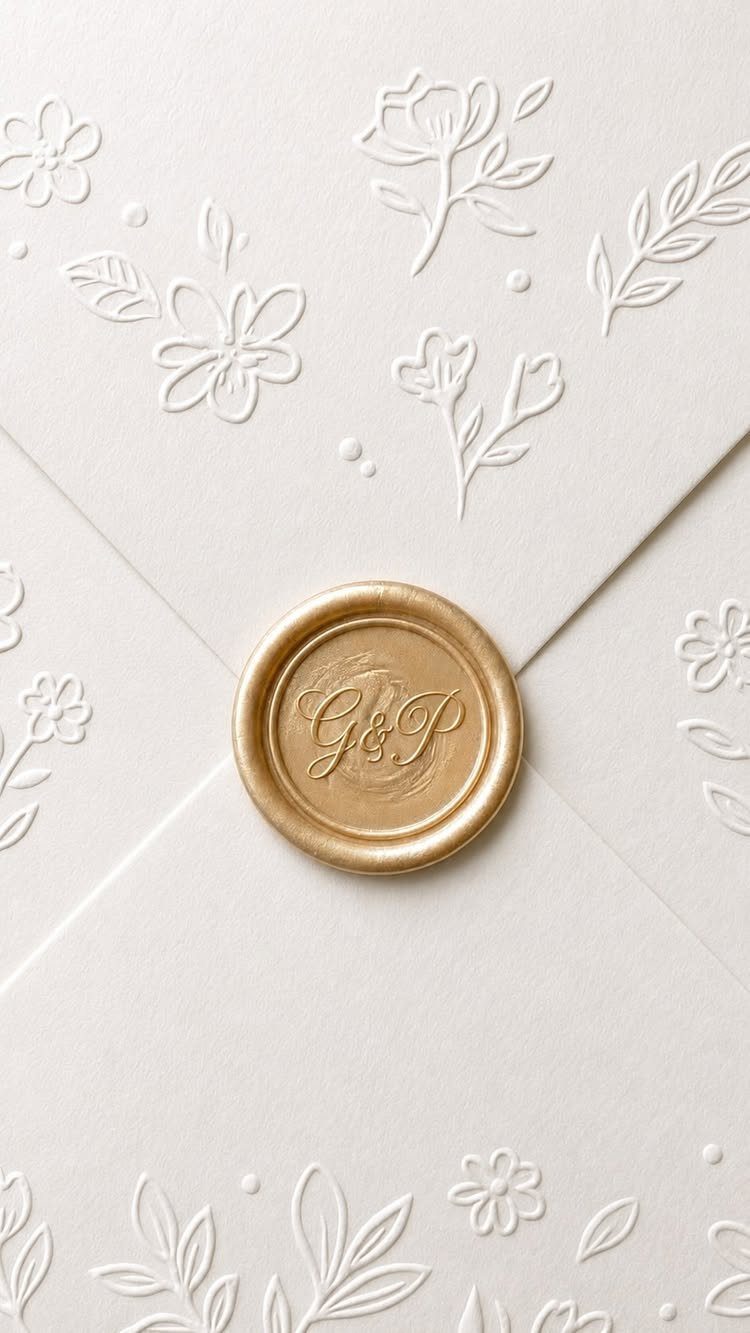
An embossed envelope with a wax seal makes the mail itself feel like the first gift. Initials in gold wax, like the G&P here, tell guests whose wedding it is before they open the flap.
I would seal only the outer envelope and let the invitation inside carry the details. A monogram stamp is a one-time purchase you can reuse on thank-you notes.
Wax can crack in transit, so ask your post office about hand cancelation. Order a few extra seals.
11. Ribbon Tied Place Cards
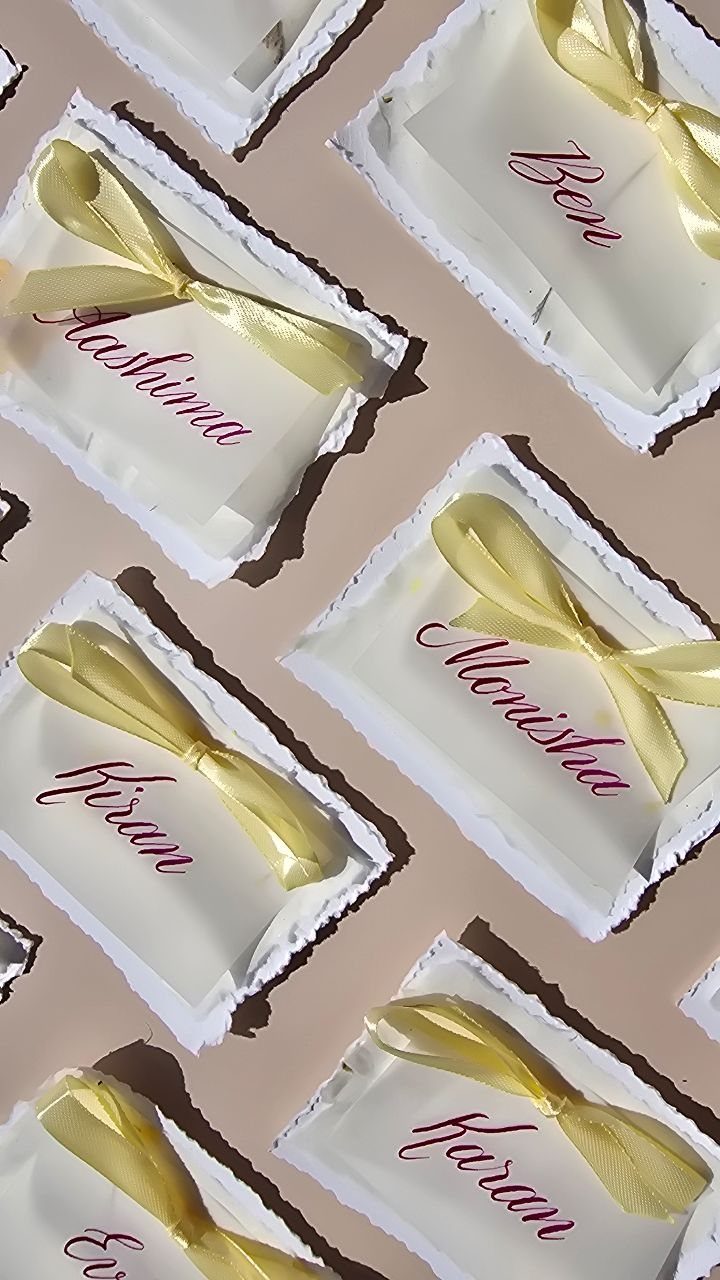
Place cards tied with ribbon turn a seat assignment into a small keepsake. Scalloped edges and gold satin give each guest’s name a finished look, and red calligraphy makes the names easy to read from across a table.
I like using the card as a quiet welcome at a destination dinner, where guests may not know each other. Have the calligrapher write a few spare cards for last-minute changes.
Handwriting takes time and costs more than printing, so confirm your final headcount before ordering.
12. Scalloped Announcement Card with Photos
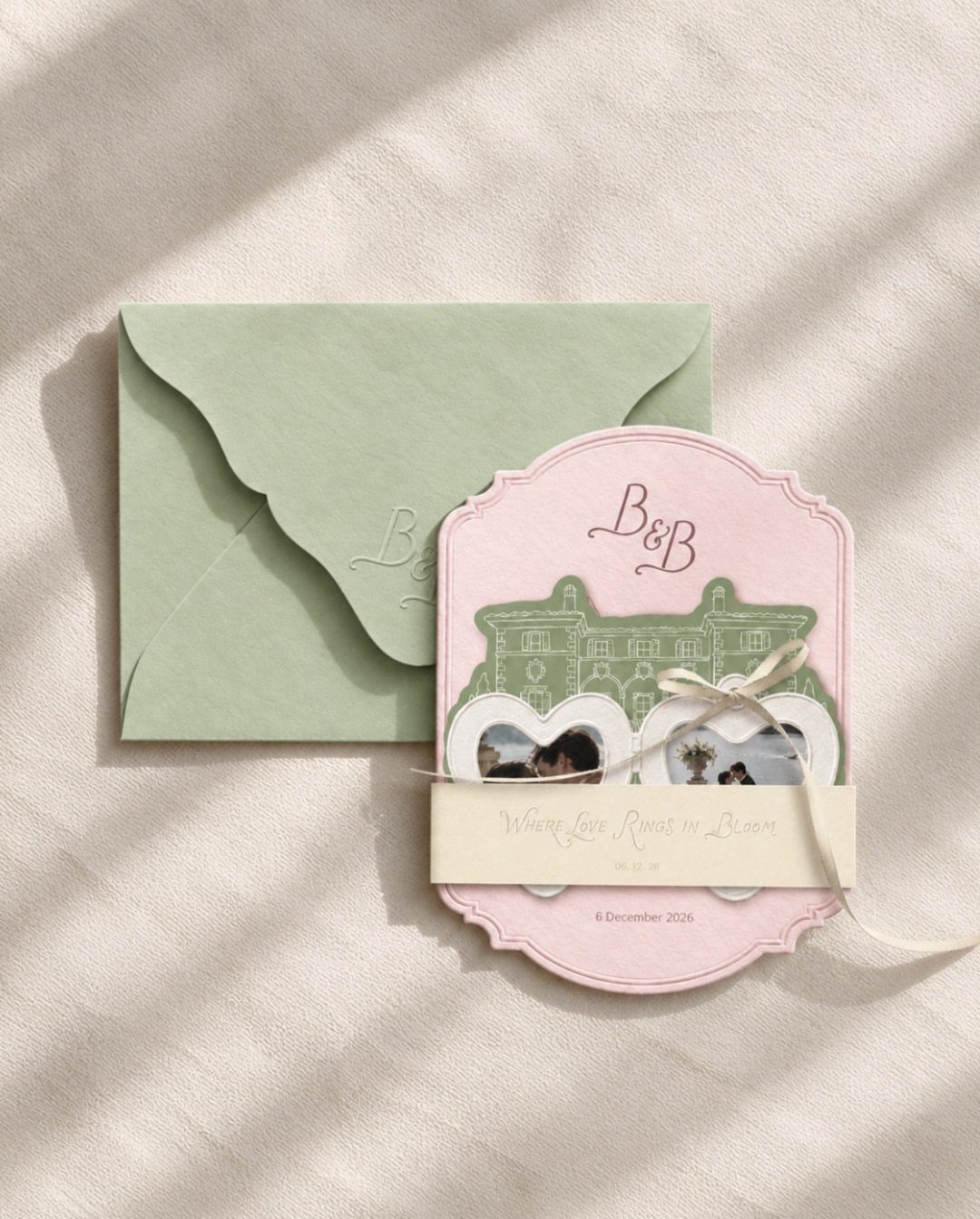
A scalloped announcement card lets the venue artwork and two small portraits share one piece of paper. The couple’s initials, a tagline and the date give guests everything at a glance.
Pair the pink with a sage envelope, as here, so the card stands out when it comes out of the mailbox. I would keep the photos small and let the artwork lead.
Put the destination on the card itself so guests can plan travel from it alone.
13. Photo Destination Announcement Card
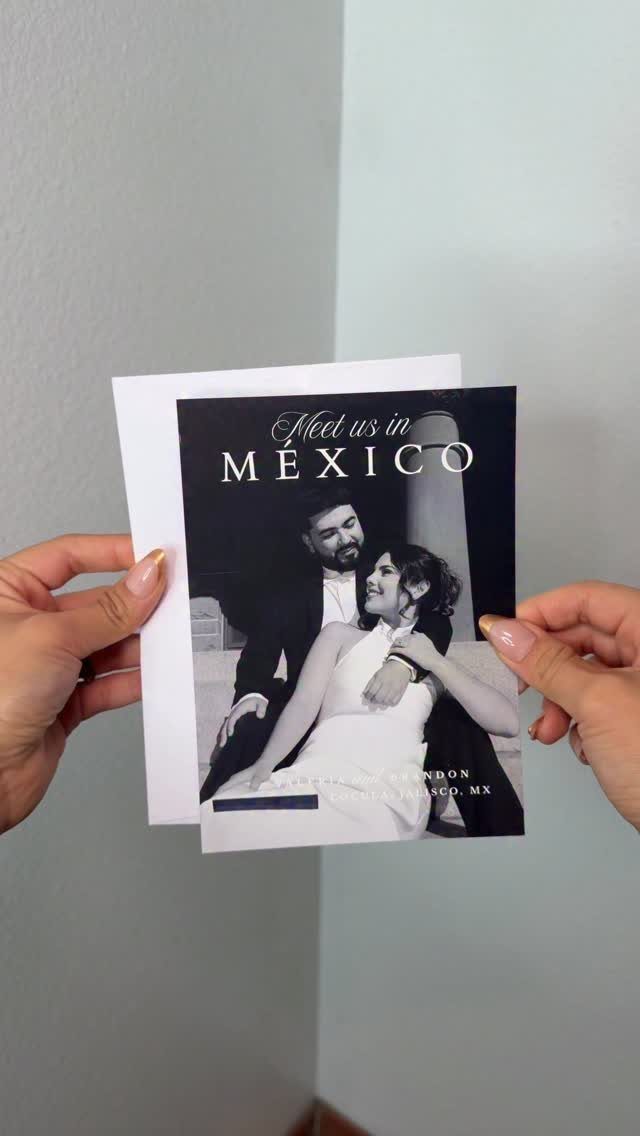
"Meet us in MEXICO" works because the destination gets the biggest type on the card, bigger than the names. A black and white portrait keeps the focus on the couple while the place does the shouting.
Valeria and Brandon print Cocula, Jalisco, right under their names, so guests can look up flights before the invitation ever arrives. Keep that line.
I would choose a photo with plenty of plain background, since headline type needs room to breathe. Add the date if the card is also your save the date.
14. Illustrated Fairytale Castle Suite
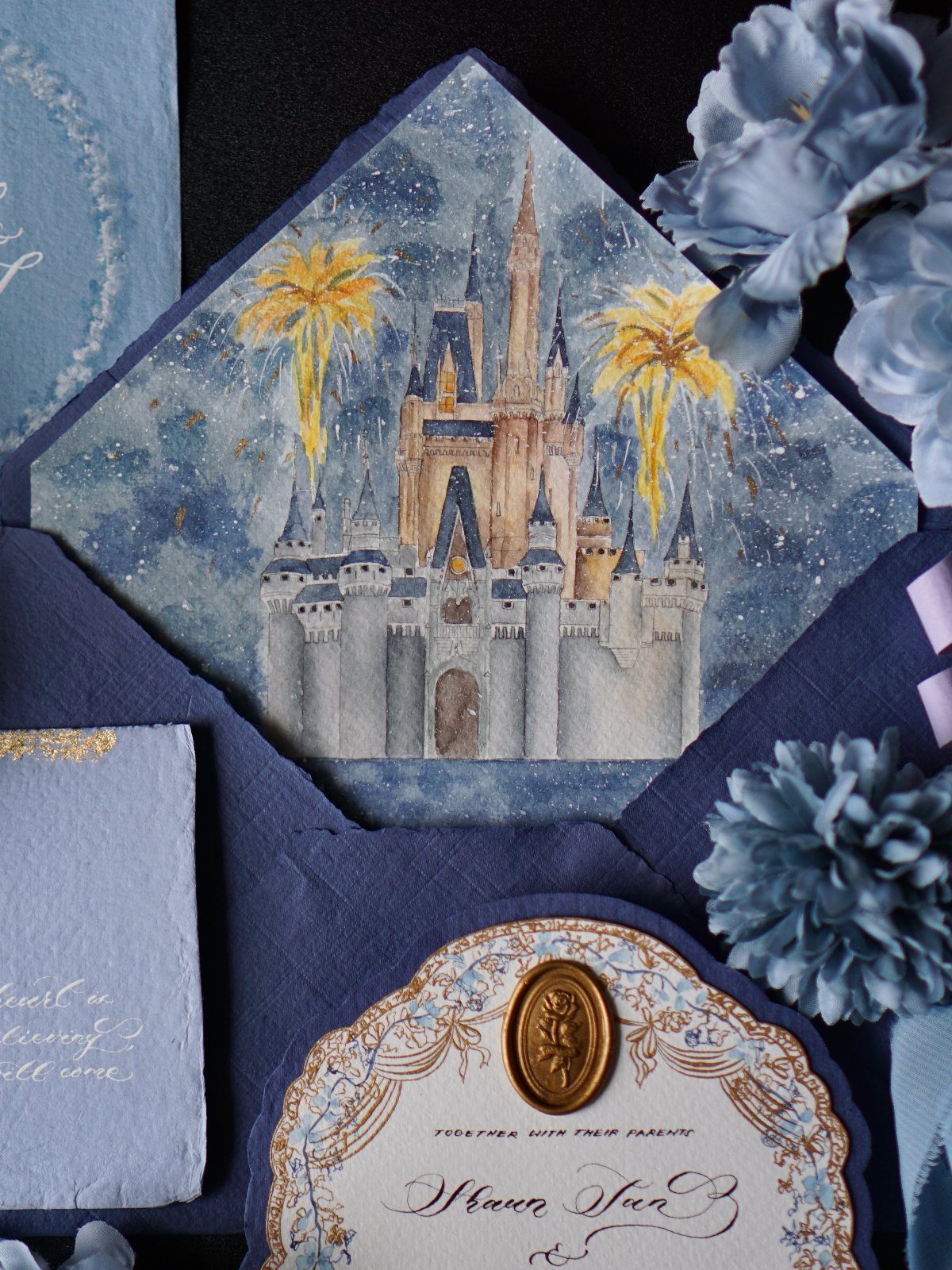
A watercolor castle with fireworks over it sets the mood for a destination wedding before anyone reads a line.
Navy envelopes, a gold wax seal and blue fabric flowers all pull from the same palette, so the suite looks planned as a set.
I would pick the palette first and match everything to the illustration. Dark envelopes make gold and watercolor stand out.
Fabric flowers and wax add weight and cost, so I would save them for a short list of close guests and send everyone else the card alone.
Guest Considerations
Say plainly on the invitation whether children are welcome. A destination trip is expensive and hard to arrange, so parents need the answer before they can decide to come at all.
If kids are invited, think about guests with babies. Ask yourself how they will manage flights, naps and the ceremony, and tell them what you can offer.
If the wedding is adults only, say so kindly and early, so no one has to guess.
Offering plus ones also eases the decision to travel, since many guests would rather not make the trip alone.
A few practical extras help guests pack and plan:
- Expected temperatures and suggested attire
- Transportation details and local customs
- Add an RSVP deadline too, since your room blocks and activity bookings depend on a firm headcount.
I would include all three. Guests who feel informed are far more likely to say yes.
Planning Timeline
Invitation design should begin about 3 months before the wedding, with the printed set going into the mail around the 2-month mark. That is the minimum, and I would treat it as the late end.
For a trip that is costly, distant or complicated, give guests more notice. Save the dates go out 8–12 months ahead; the formal invitation follows 3–4 months before the day, and a little earlier if guests are flying in from abroad.
Pick an RSVP cutoff that falls 8–12 weeks before the wedding, which leaves time to finalize rooms and transport.
Whatever you pick, keep it at least 30 days out, because you will need that time to chase anyone who has not replied and to prepare escort and place cards.
A gentle reminder before the deadline works better than a scramble after it.
Frequently Asked Questions
Can you provide an example of a wedding announcement?
A photo announcement card with the destination in the biggest type works well: "Meet us in MEXICO" over a black and white portrait, with the town printed under the couple’s names.
A save-the-date that names the city and month lets guests start watching airfares months before anything formal shows up in the mailbox.
If the card doubles as a save the date, add the wedding date. For a written announcement, open by stating the marriage directly, then add a line about the ceremony and a thank-you.
What should be included in a destination wedding invitation?
A destination invitation needs both names, the date, the venue and town, the ceremony start time, how to reply, and the web address where guests will find travel details.
Keep it readable and move the rest, like the nearest airport, suggested arrival dates and hotel blocks, to the website or a details card.
I would also name the country beside the venue so guests abroad can start pricing flights. Expected temperatures, attire and transportation details help guests pack.
When should RSVPs be due for a destination wedding?
I’d set the reply deadline somewhere between 8 and 12 weeks out, and treat 30 days as the absolute floor.
That much lead time gives me room to lock in the room block and shuttles, track down the people who went quiet, and print the place cards from a real headcount.
A short nudge a week or two ahead of the deadline gets more replies than a frantic round of texts after it passes.





