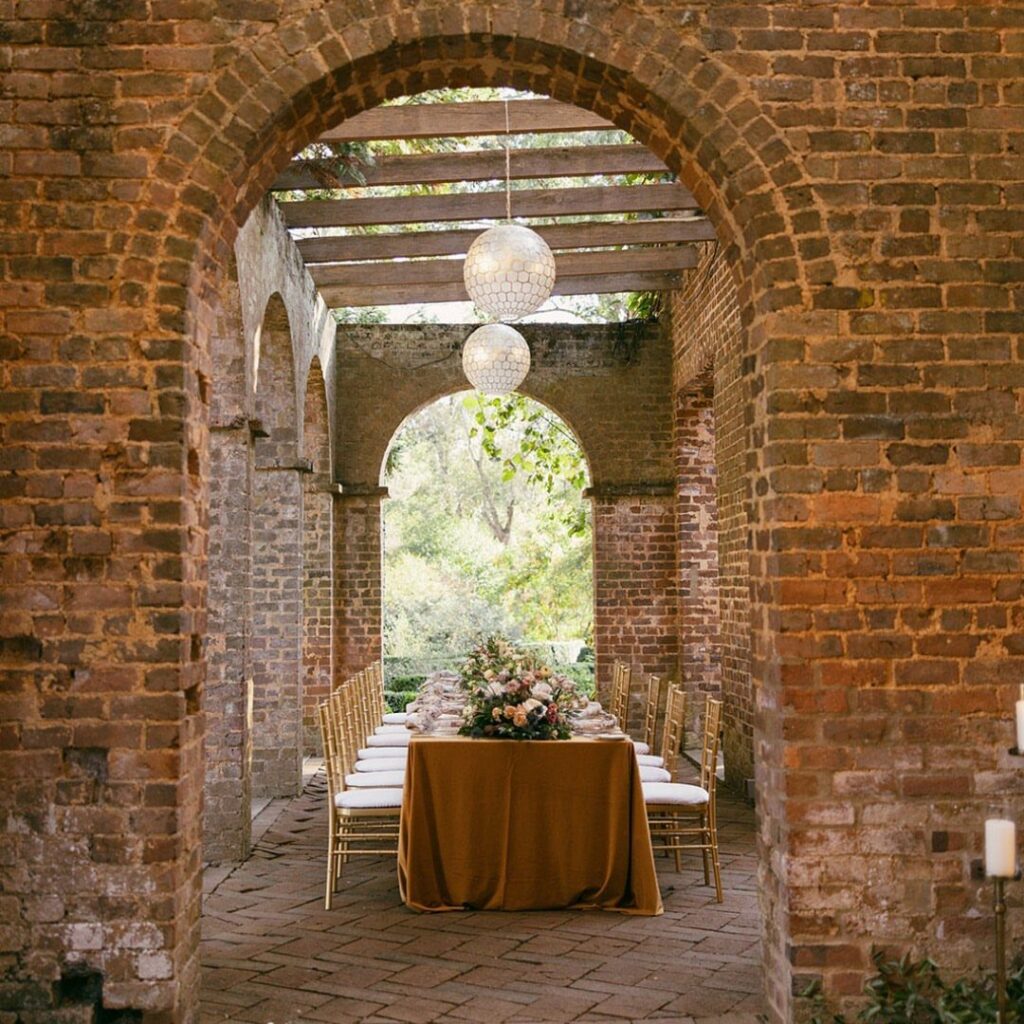
Old buildings come with rule sheets, and those rules decide a vintage venue more than the architecture does: no open flames, no confetti, no tape or nails in the walls.
The list runs from a preserved rustic barn with its original beams to a historic stone castle, and the more work the building does, the less decor you have to pay for.
Get the venue’s limits on candles and hanging decor in writing before a florist sketches anything, since a design that breaks one of those rules gets thrown out late and costs you the deposit on the work.
1. Victorian Elegance Inn Estate
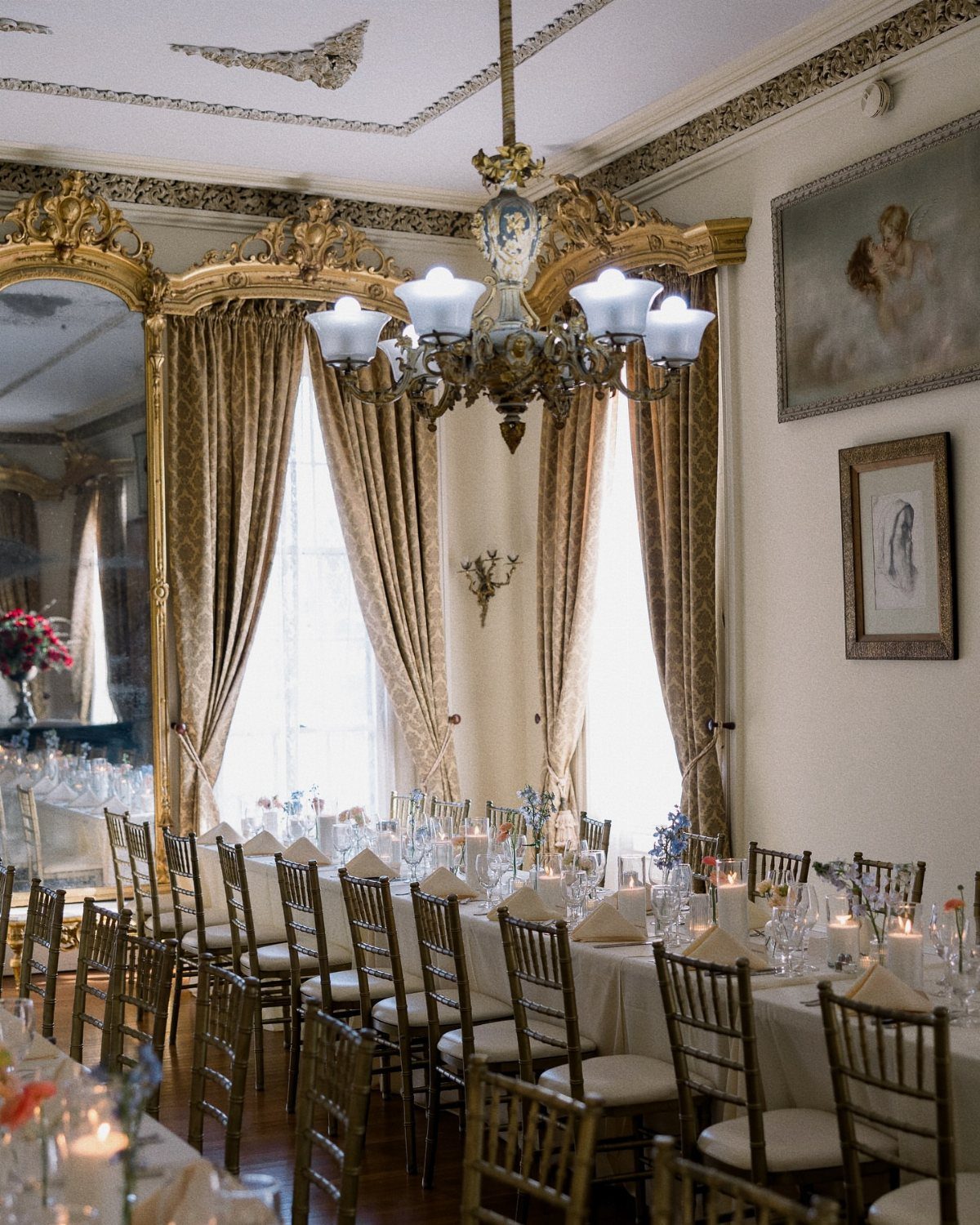
For a budget couple, that is the appeal: the room already carries the decor.
Skip rented draping and heavy centerpieces, since the walls and paintings are doing the work. Low candles and a simple runner would be my choice.
Ask the inn whether the dining room is included in the rental or priced as an add-on.
2. French Château Ballrooms and Formal Gardens
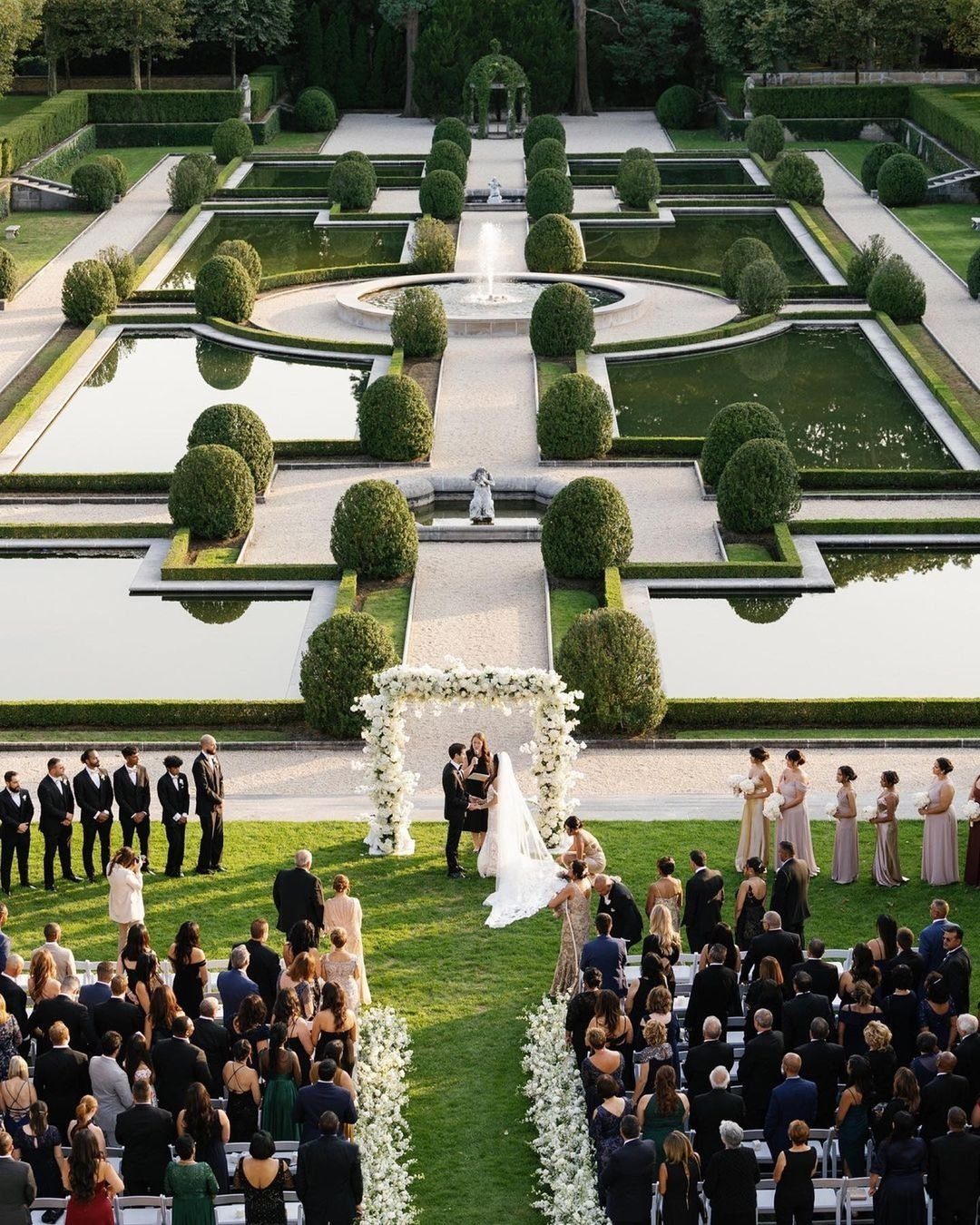
Symmetry is what a French château garden sells: paired ponds, clipped hedges, and a ceremony that frames itself without much help.
That means the florals can stay modest.
A single white floral arch is enough at a château garden; adding more competes with the hedges. Straight rows of seats echo the garden’s lines, and I’d pick that over curved layouts.
The château also has ballrooms for the reception, so ask about a rain plan that moves the ceremony indoors.
3. Italianate Mansion with Terraced Gardens
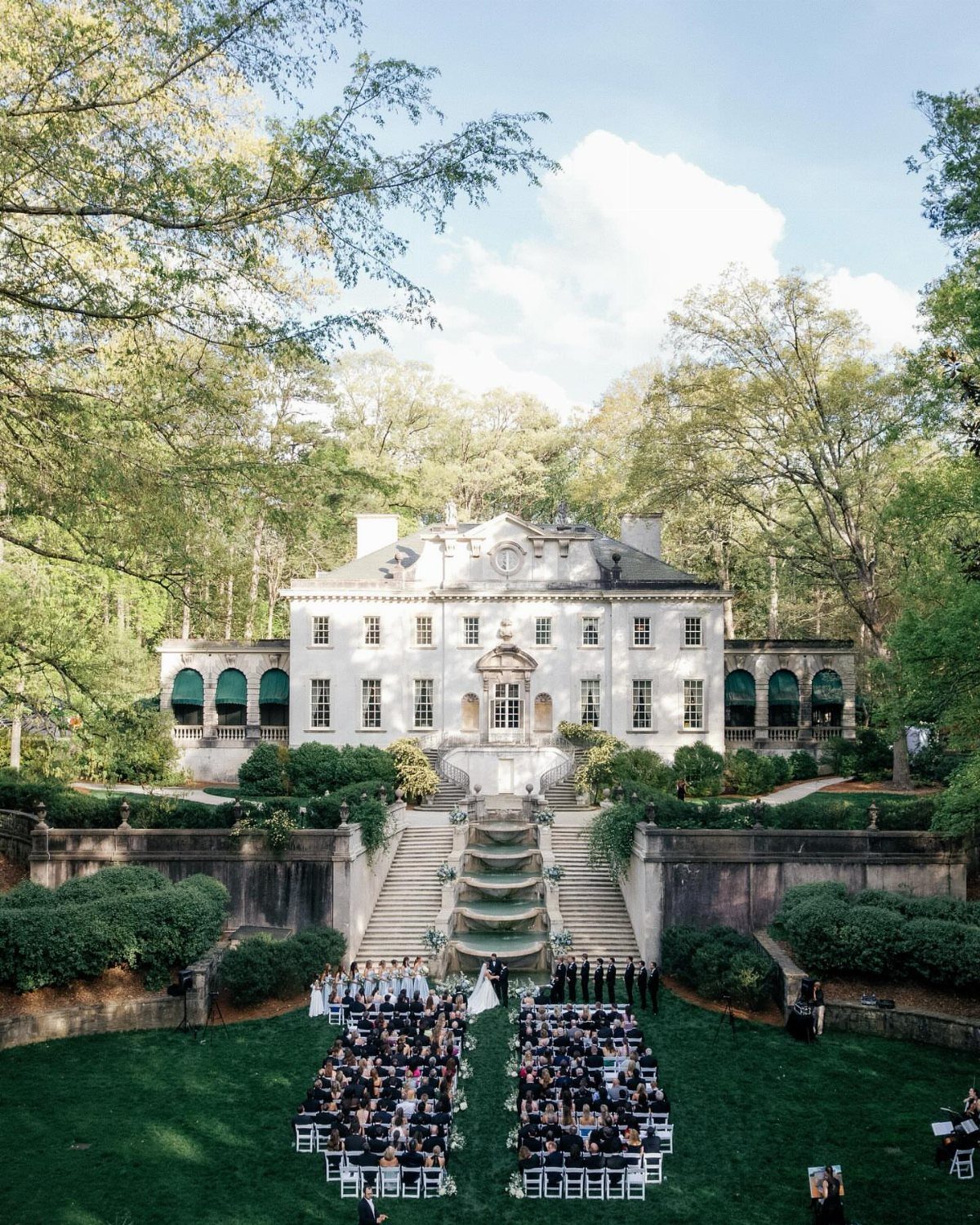
Terraces turn a lawn into a stage. With an Italianate mansion, the stairs and cascading fountain give you a backdrop for the ceremony, and guests can sit on the lawn below.
Because the house is white and the gardens are layered, a simple palette lets the architecture carry the photos. Heavy decor gets lost against a building this size.
Plan for the stairs: anyone with mobility concerns needs a clear route to the lawn, so ask the venue about it early.
4. Georgian Mansion with Botanical Gardens
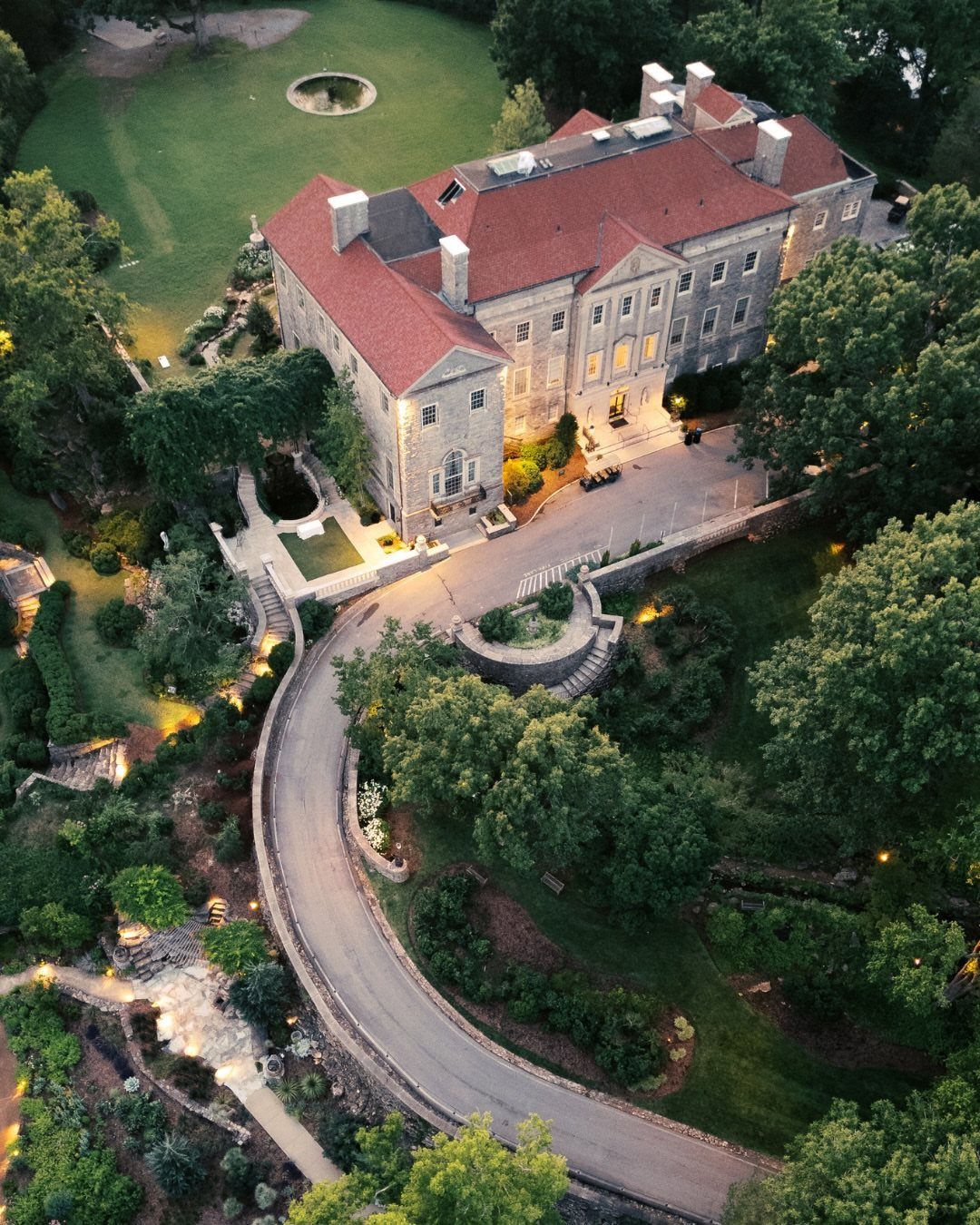
Seen from above, a red-roofed Georgian mansion looks like a small estate village: stone walls, a winding driveway, and green gardens all around.
This setting pays off for anyone who wants the grounds, not just a room.
Guests arrive by that long driveway, which sets the mood before anyone sits down. Ask how parking and shuttles work for it, since a drive like that can bottleneck.
I would take this over a ballroom if you love gardens and photos outdoors.
5. Grand Staircase and Sun-Drenched Atrium
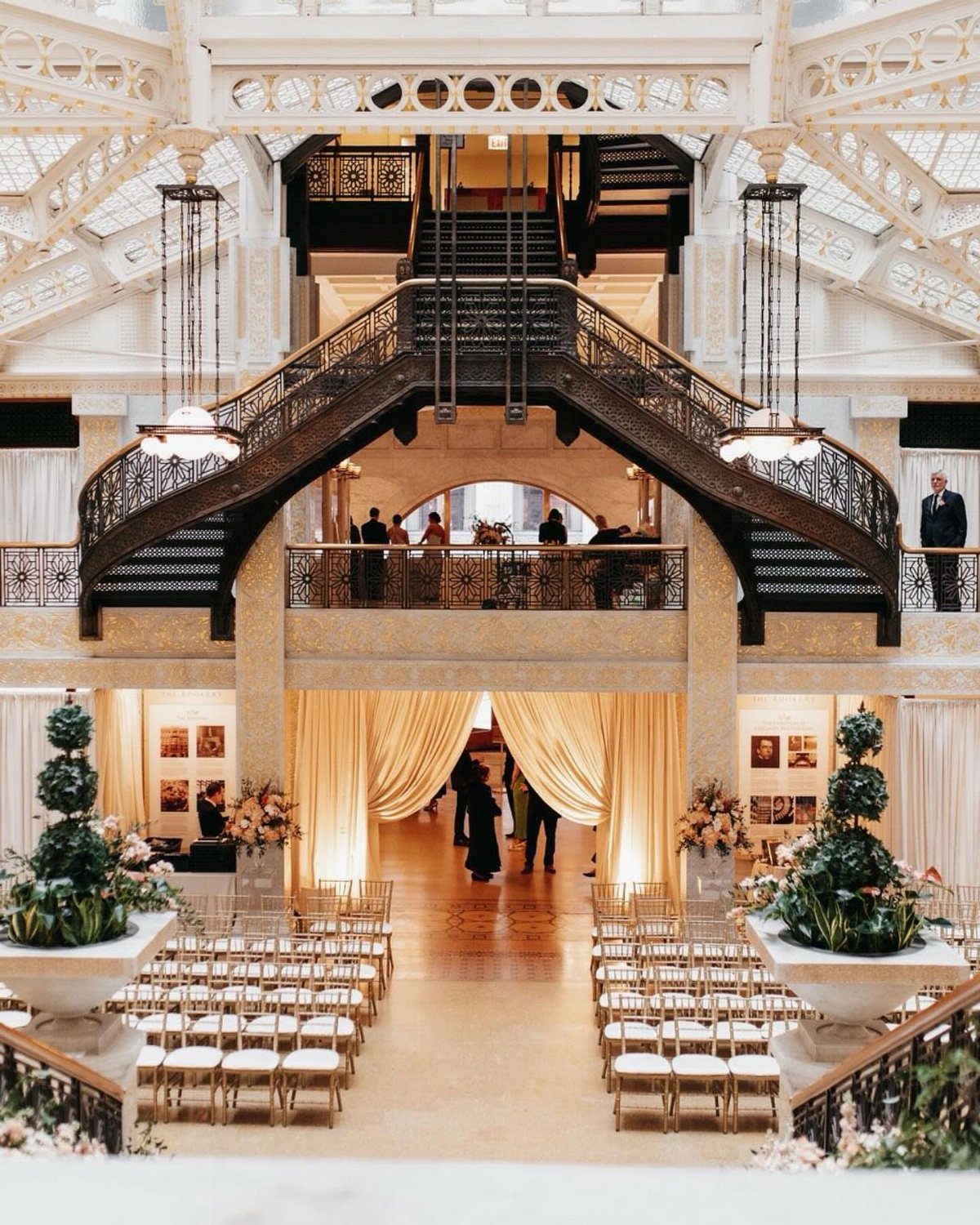
An ornate metal staircase rising over a sunlit atrium is architecture that needs almost no styling. Gold chairs and a few floral arrangements, as set up here, are plenty.
Downtown historic buildings like this are easier for guests to reach than country estates, which helps with out-of-town relatives. Spend your decor budget on the ceremony area at the staircase’s base and leave the rest alone.
Ask about the light: a glass atrium changes through the day, so pick your ceremony time with a site visit in mind.
6. Tiffany Dome Cultural Wedding Venue
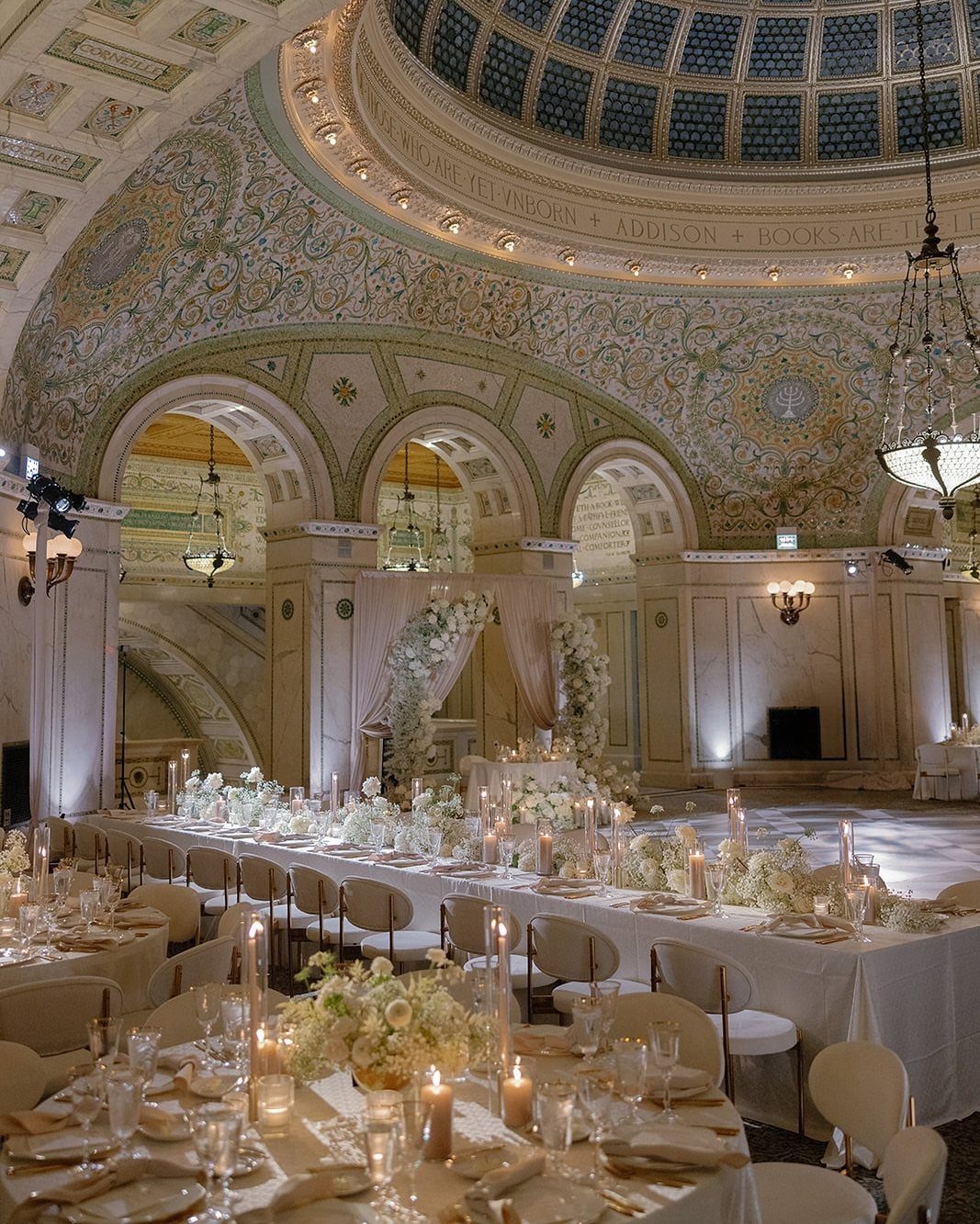
In a cultural venue like this one, the room itself is the decor, so a long white table with flowers and candles is all it asks for.
Keep everything low and white so nothing blocks the view upward. Candles add glow, but confirm the venue allows open flames before you buy any.
This works for art and elegance on a modest decor budget, since the building covers most of it.
7. Glamorous Hotel with Crystal Chandeliers
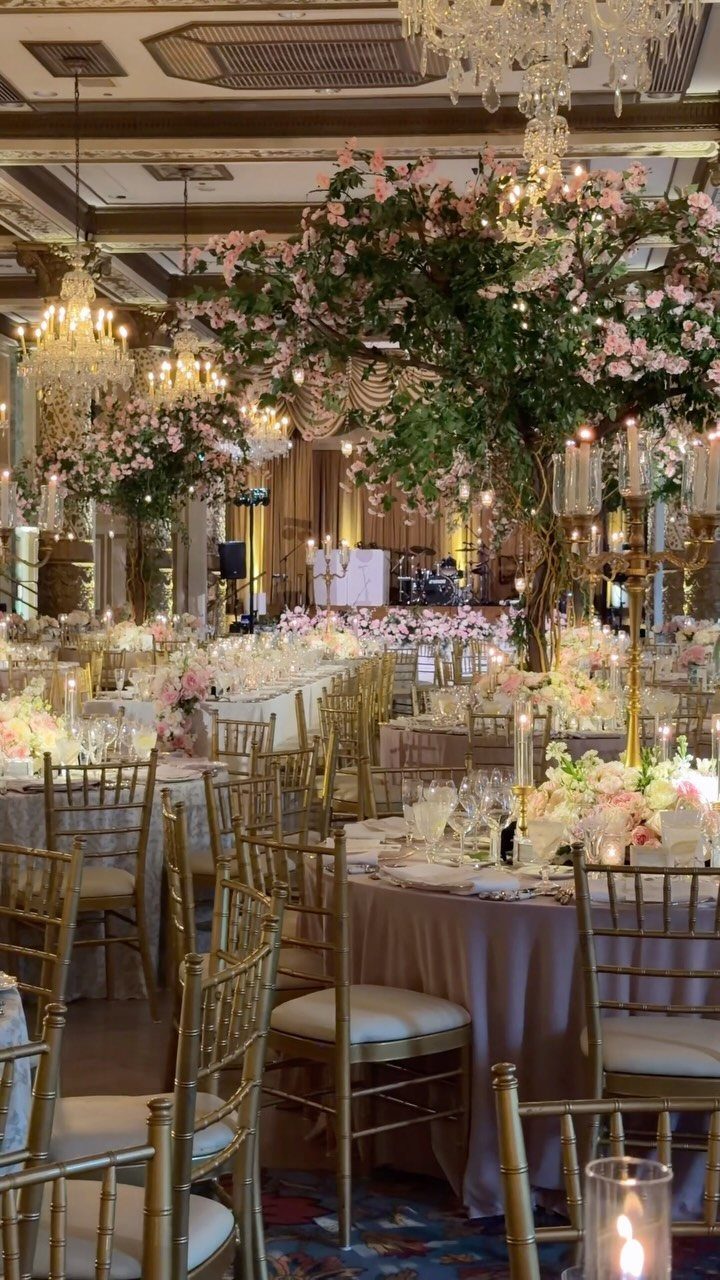
Gold chairs, round tables and a ballroom full of crystal chandeliers: this venue arrives already dressed, so spend on the tables, not the ceiling.
Gold Coast charm suits a formal, dinner-and-dancing wedding better than a casual one. I’d pick this over a barn for guests dressed up and a room that feels like an occasion.
Check that the hotel’s tables, chairs and linens are included, since renting them separately adds up fast.
8. The Oaks Wedding Venue
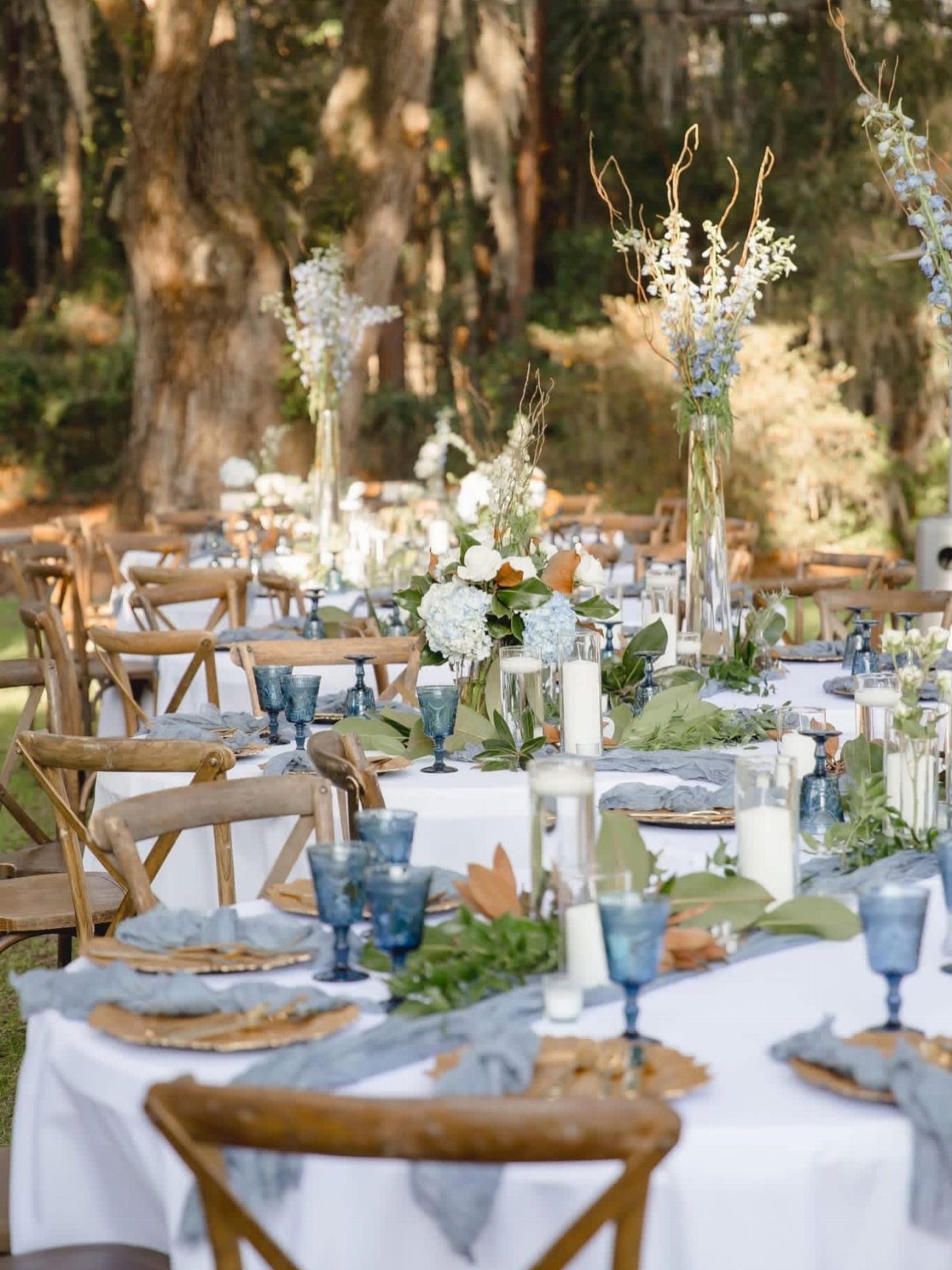
The Oaks Wedding Venue picks up the sky through the branches and stands out against white linens without a lot of flowers.
A garden estate like The Oaks gives you shade and grandeur, so one long table with simple centerpieces does the job. Wooden cross-back chairs keep it relaxed.
Before booking, ask what the backup plan is if it rains, since trees and tables are not much cover.
9. Preserved Rustic Barn
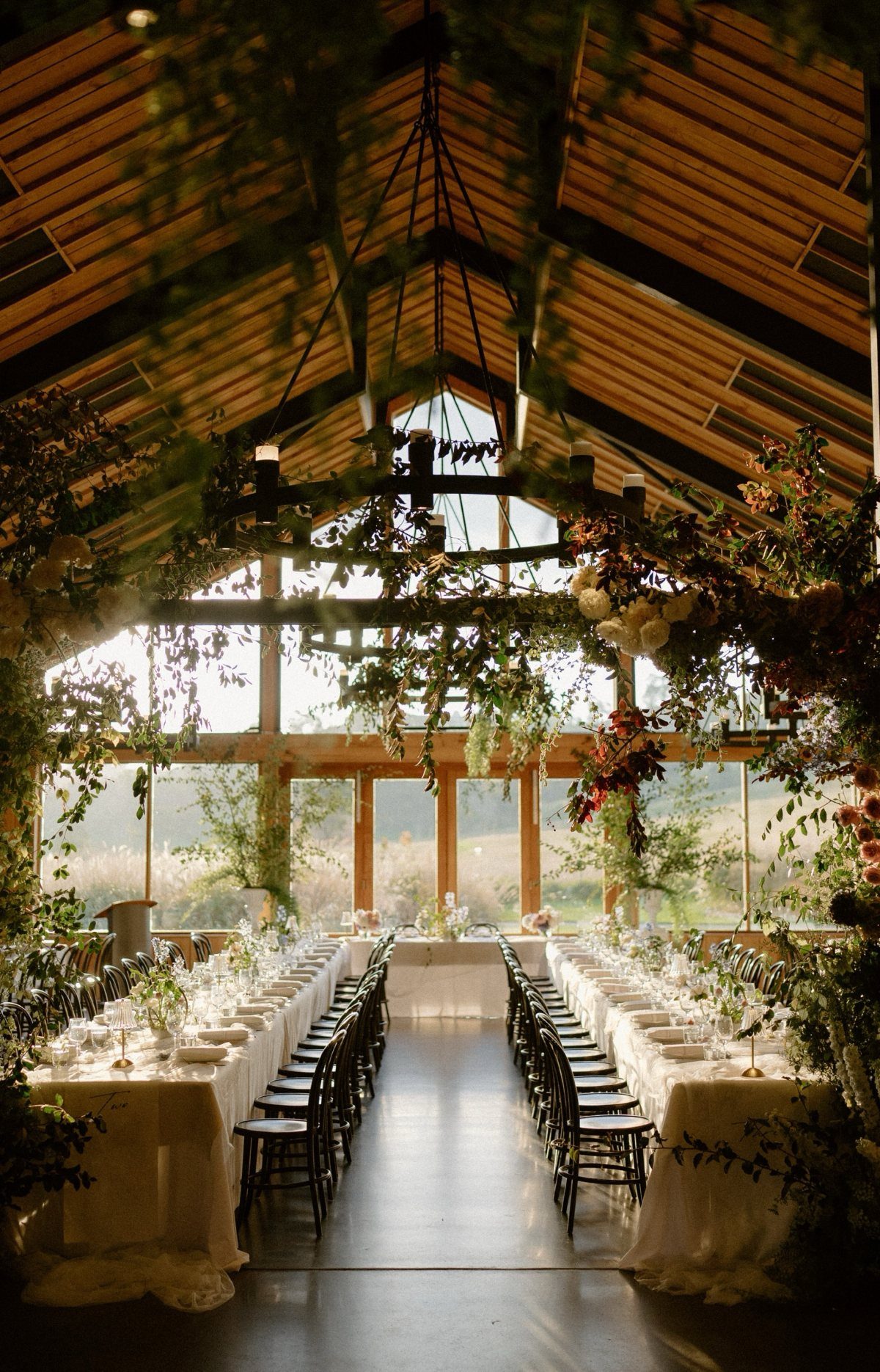
Vaulted wooden ceilings do the heavy lifting in a preserved barn, so leave the rafters visible and hang one large chandelier over the room.
Long white tables with greenery running down the middle keep the look clean against all that wood. I’d choose that over busy centerpieces, which compete with the beams.
For a budget couple, greenery costs less than a full floral order, and it suits the building better. Ask the barn what lighting is already in place before you rent more.
10. Neoclassical Colonnade Estate
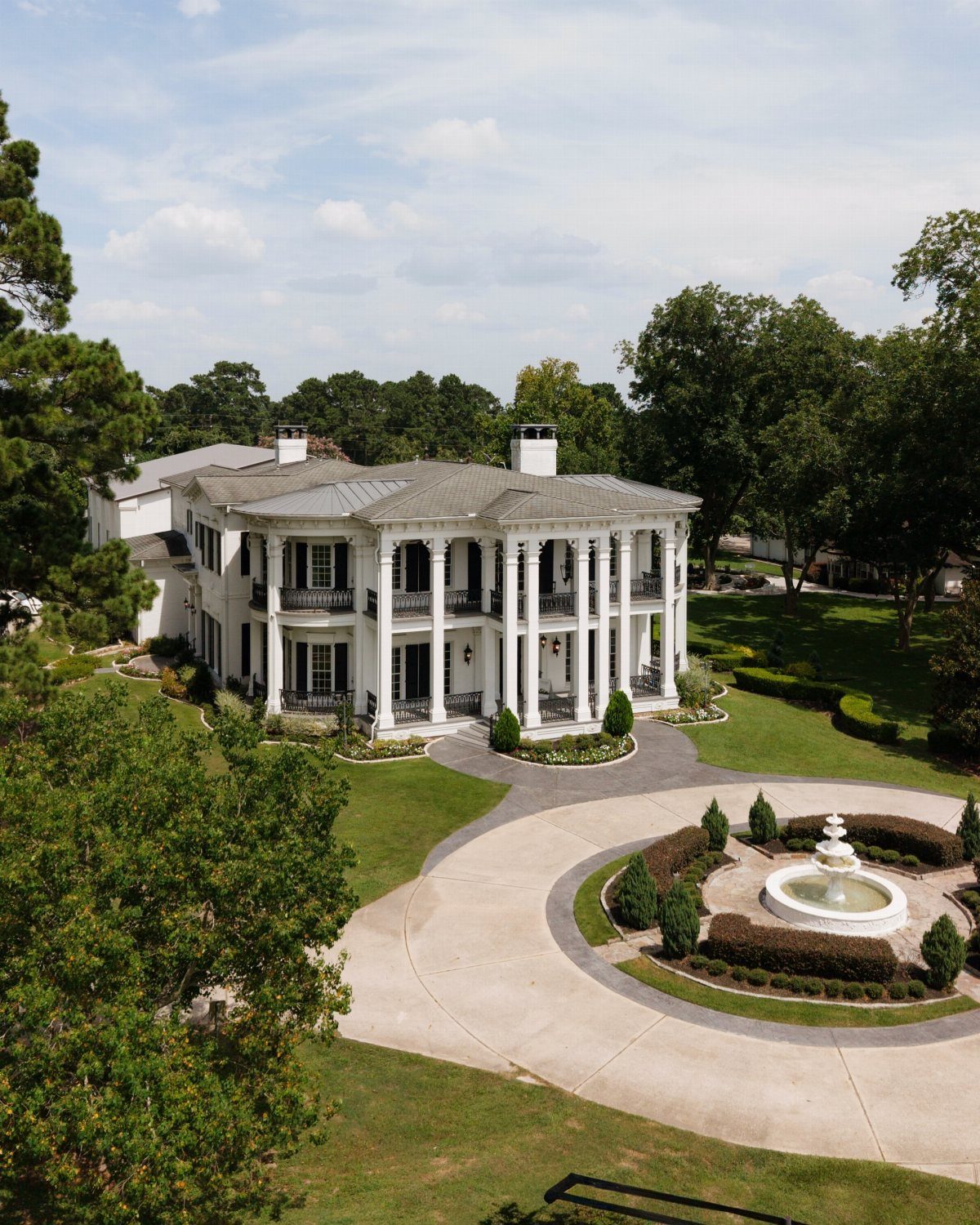
A curved colonnade gives you a ceremony backdrop you can’t buy: tall pillars, white walls and a fountain in the driveway circle.
Keep the styling restrained. Against a white two-story mansion this size, a simple palette and a few arrangements near the columns will look better than heavy decor.
Manicured lawns mean seating can go up almost anywhere, so I’d place the ceremony facing the pillars and let guests gather around the fountain afterward. Ask where vendors can park, since the circular drive is also the entrance.
11. Historic Stone Castle
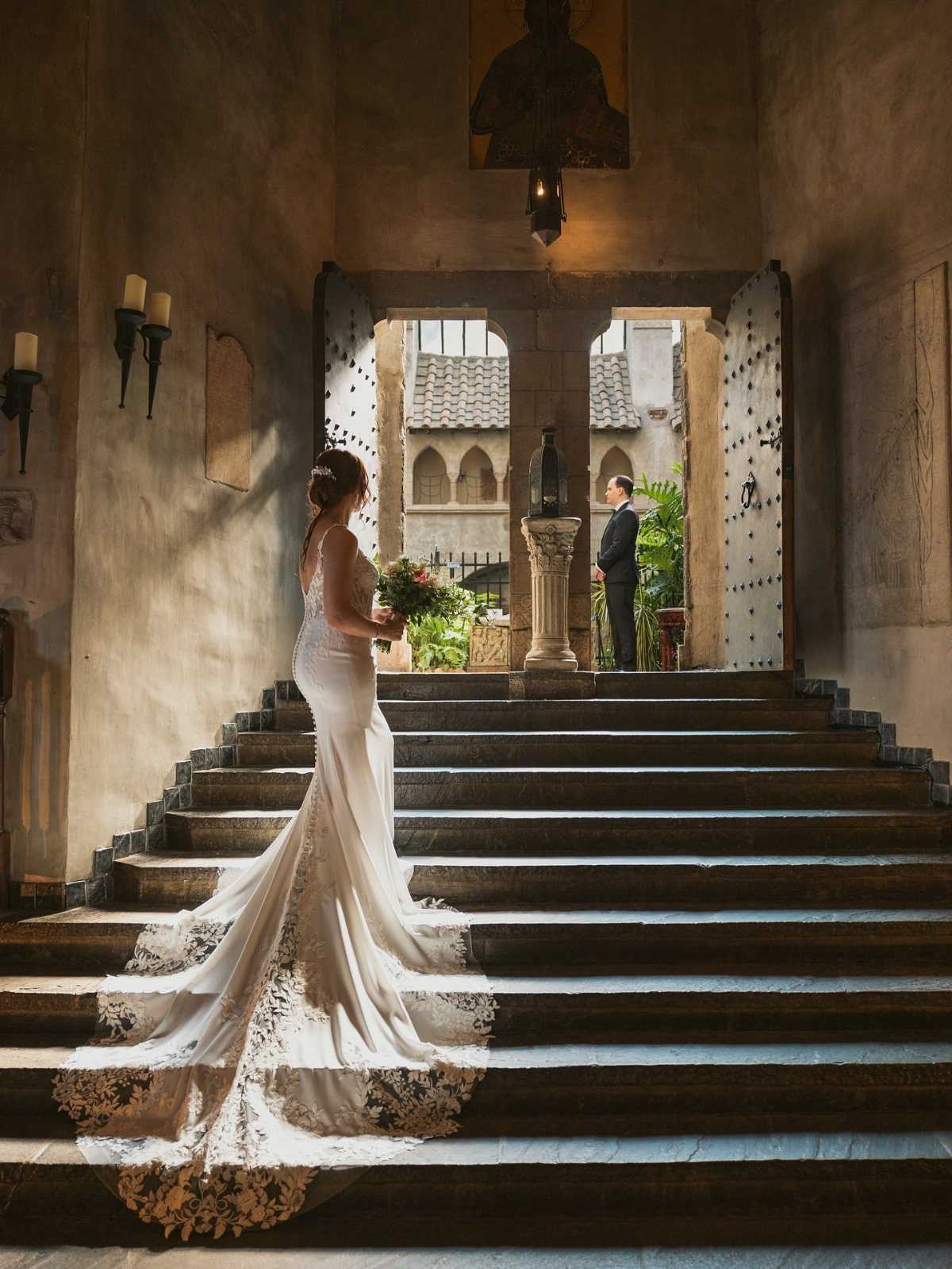
Stone arches, towering walls and candlelit vaulted halls make a castle the most dramatic venue type for a vintage wedding, and the doorway alone works as a ceremony spot.
Candle sconces already light the stairs, so you need very little added lighting. I’d skip loud decor and let the stone speak.
Bridges and stairs mean a lot of walking and climbing, so ask about guests with limited mobility early. Confirm candle rules before bringing any of your own.
12. Vine-Covered Stone Terrace
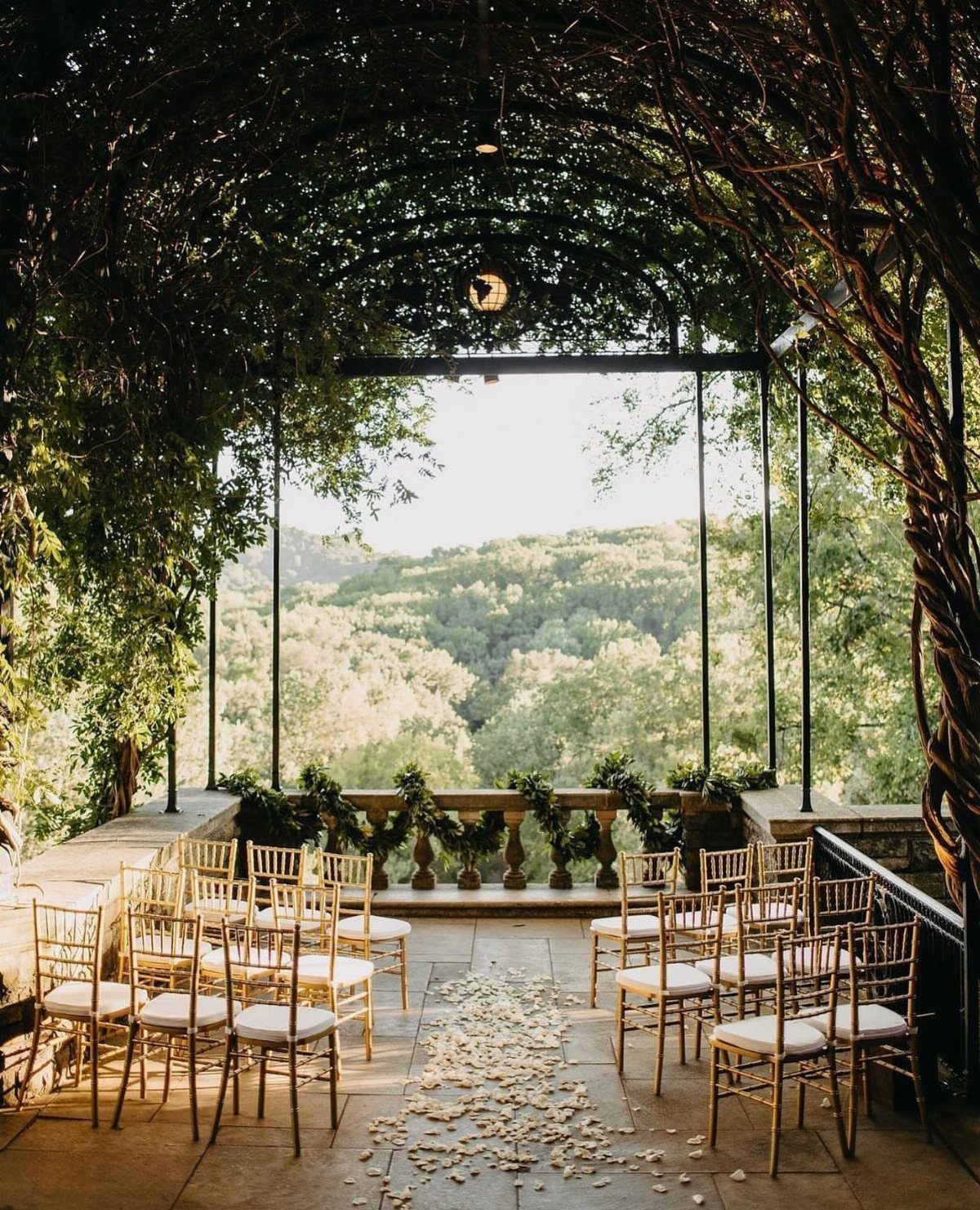
Rolling green hills past a vine trellis give a terrace ceremony its whole setting, so a few rows of gold chairs and scattered petals are enough.
Stone underfoot makes this a firm, flat place to seat guests, and the trellis supplies shade and greenery for free. That keeps the decor budget low.
Face the chairs toward the hills, and I’d leave the aisle bare except for petals. Visit at the hour of your ceremony to see where the light falls.
Choosing a Vintage Venue
Decor restrictions decide more than the architecture does. Old buildings usually come with a rule sheet: no candles with open flames, no confetti, no tape or nails in the walls, and nothing heavy on fragile floors or tables.
Ask the venue for those limits in writing before a florist or stylist designs anything around them.
Also ask whether the venue has a preferred or exclusive vendor list. That one answer can change your catering and rental costs.
Match the building to your theme, too. A venue with real historical significance and a clear architectural style gives you a mood to work with, so choose the atmosphere first and the decor second.
Venue Capacity Considerations
Count the ceremony space and the reception space separately. A room that seats your full list at dinner may not hold everyone at a ceremony, and the reverse is just as common.
Ask for the maximum capacity for each space, then check it against your guest list with tables and a dance floor included, not just chairs in rows.
If your list is close to the limit, I’d cut the list or pick a larger room before squeezing in more tables.
Old buildings often have fire-code limits that are lower than the floor space suggests, so ask for the posted number.
Photography Opportunities
Look at the light and the quiet corners before you book. Natural skylight, intimate bridal suites, mosaic details for portraits, and a grand entrance that frames a first look are all worth asking a photographer to scout.
Once you’ve asked about photo spots at a vintage wedding venue, confirm where portraits can happen if rain keeps you inside.
Check for photo rules too, since some historic buildings limit tripods, lighting gear, or access to certain rooms.





