Ideas here range from a planner you hire and planning software to DIY decor, lighting, overhead florals, a projected stage backdrop and stationery, so the cost swings from nearly free to real money.
If the venue’s rules or your number are fixed first, pick the lighting, draped pergola and DIY ideas that work inside the room, and save the overhead floral installation for a budget with space to spare.
1. Wedding Color Palette
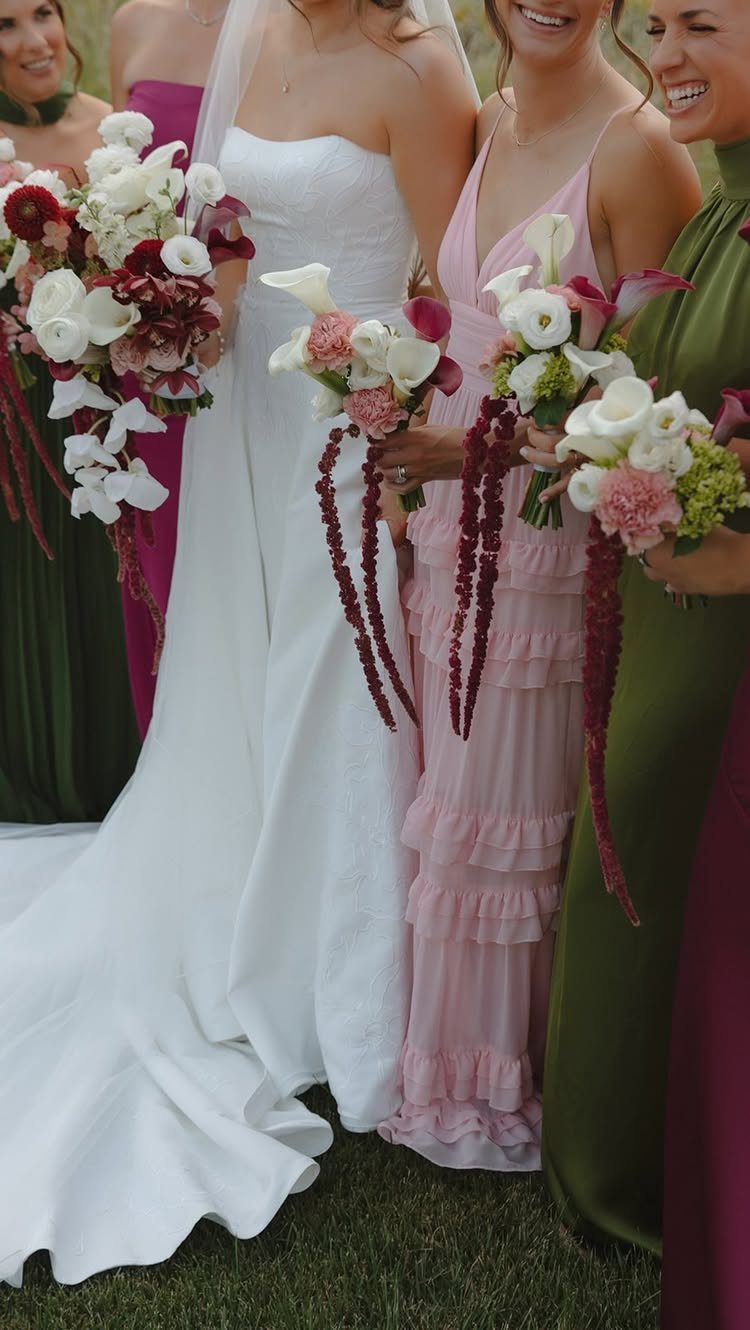
Pick two or three colors and let a fourth be the neutral.
White plus olive, pink and magenta is a good model: the greens and pinks sit close enough on the wheel that nothing fights, and the bouquets can match the dresses without looking uniform.
Take fabric swatches and a few stems to the same daylight before you commit. Outdoor grass shifts how pink reads, and a color that looks soft on a screen can go loud in the sun.
Once the palette is set, every later choice gets easier to say no to.
2. Wedding Planner
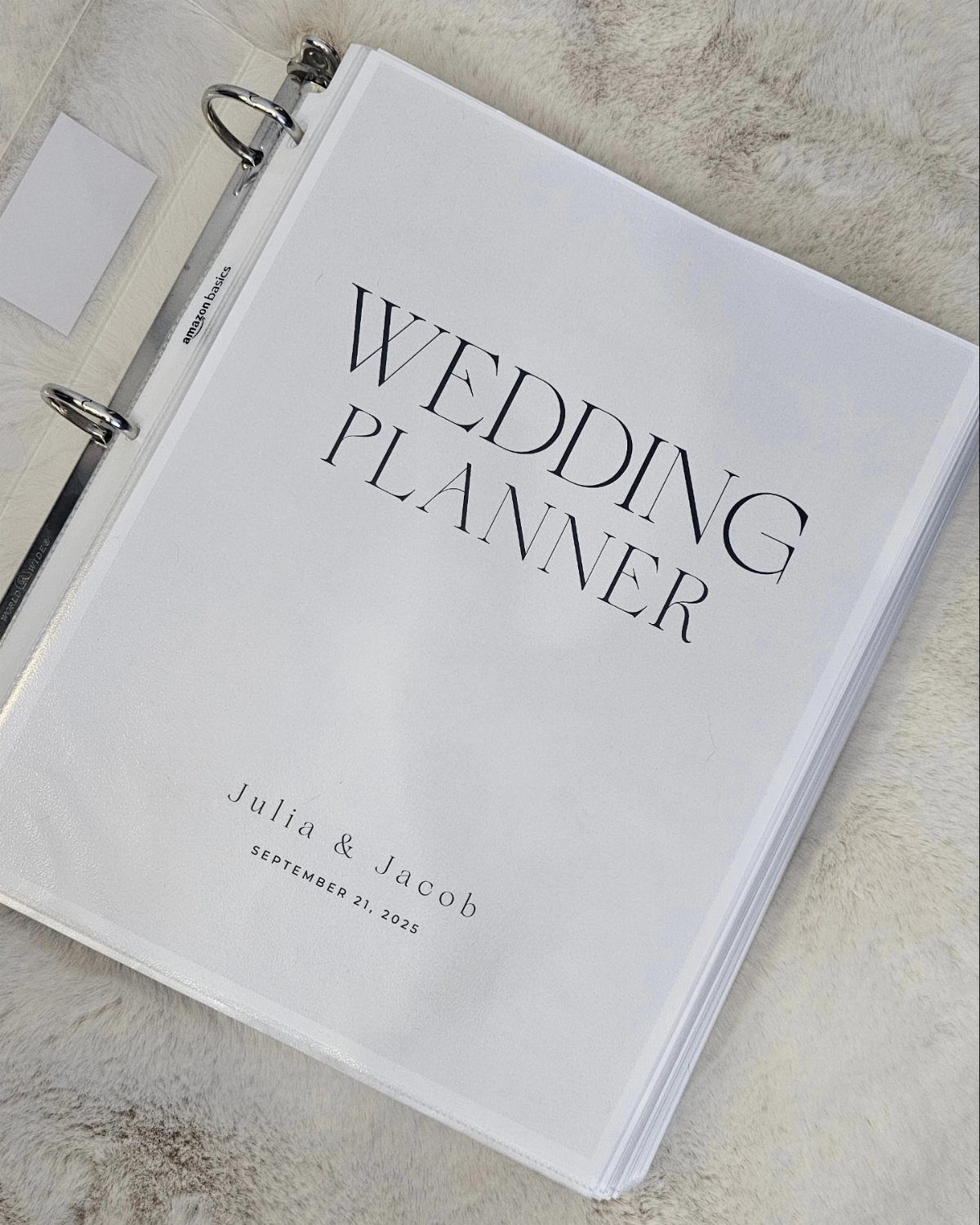
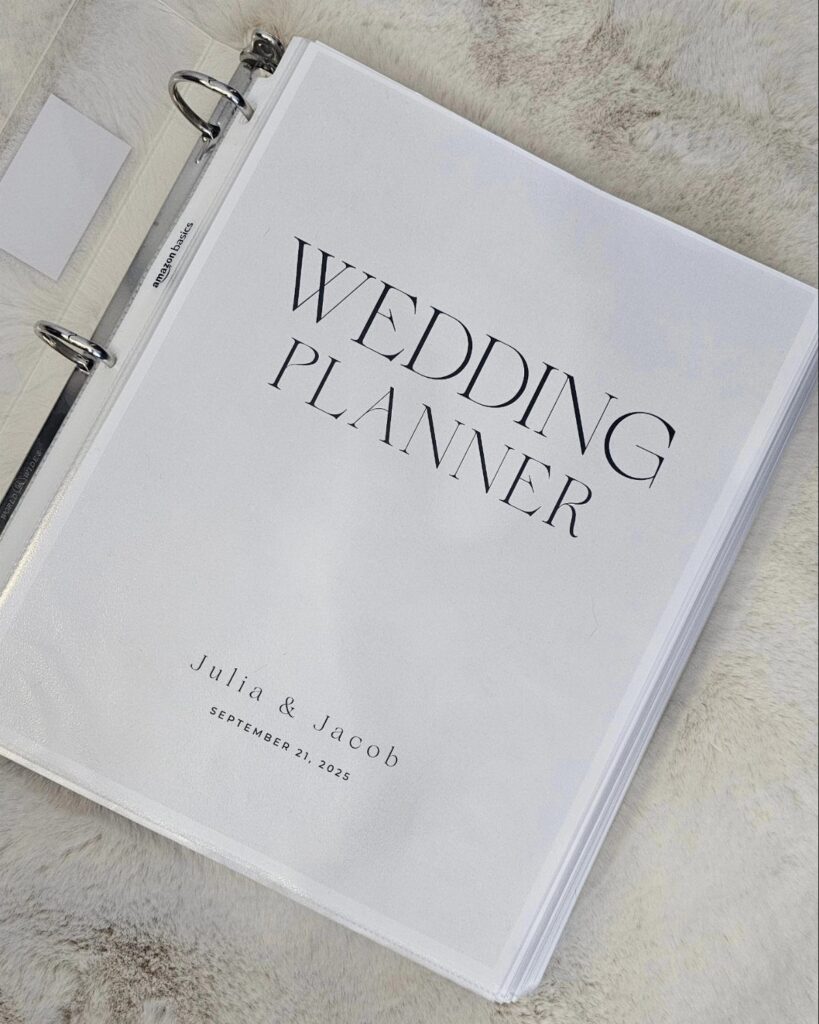
A physical binder still beats a folder of screenshots, mostly because everything lives in one place you can hand to a parent or a day-of helper.
Put the couple’s names and the date on the cover, as this one does, and it becomes the single source of truth.
I would sort it with tabs: budget, vendors, timeline, paperwork, guest list. Keep contracts and receipts in sleeves behind the vendor tab.
Cost is a binder and some dividers, which suits a tight budget. The only real work is updating it weekly.
3. Wedding Lighting
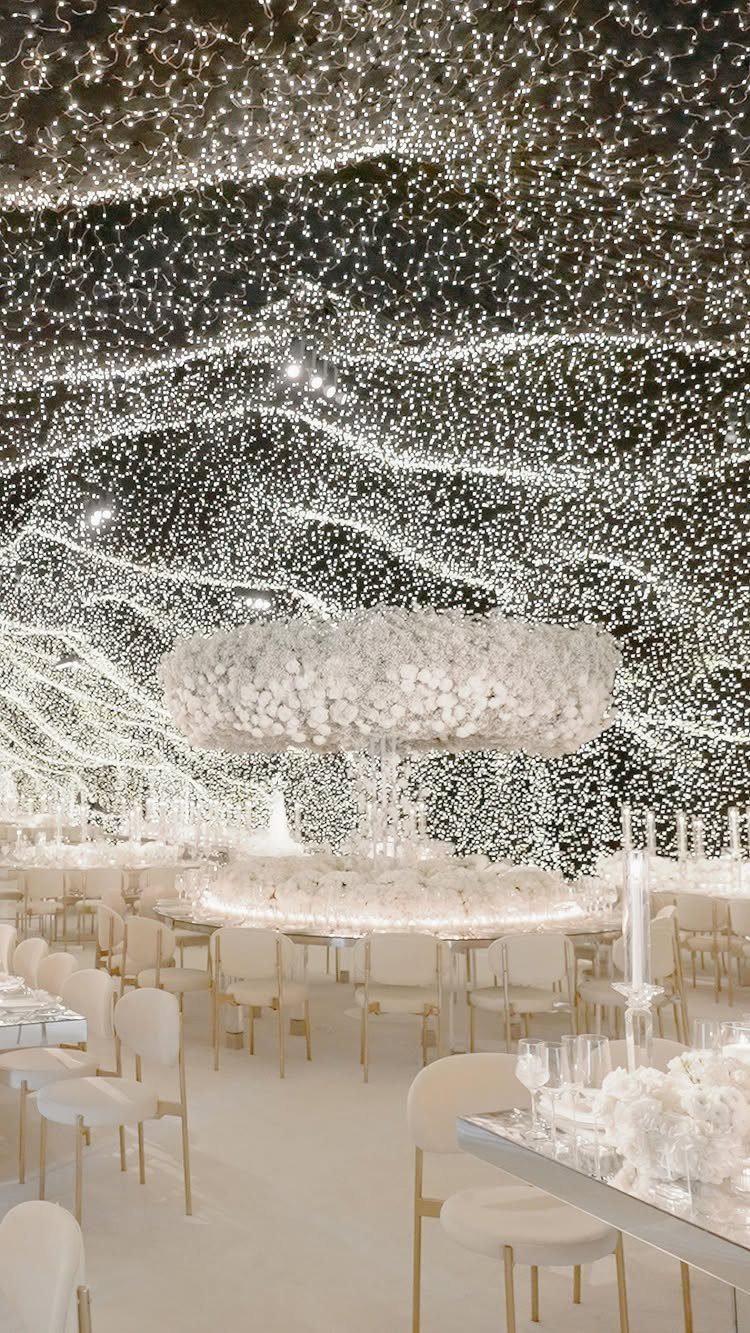
Overhead lights change a room more cheaply than almost anything on the rental list.
A ceiling of tiny white fairy lights over white tables makes a plain reception space feel like a night sky, and it asks nothing of the flowers.
Keep the light warm and the tables simple, so the ceiling is the one big statement. Large floral centerpieces work well under it because they stay readable without competing.
Ask the venue early whether you can hang anything from the ceiling, and who has to do the installing. Prices vary a lot, so get a written quote.
4. DIY Wedding Decor
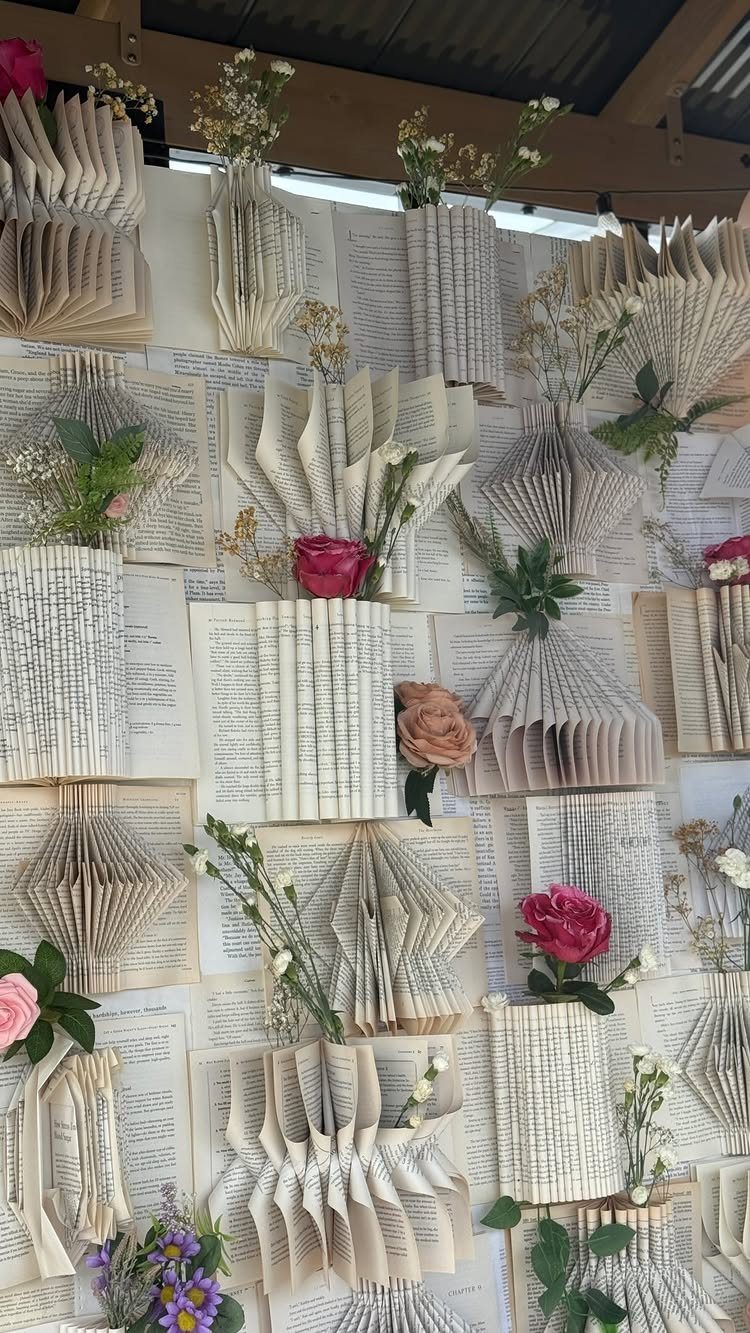
Folded book pages turned into little vases are my favorite kind of DIY: cheap, texture-heavy and personal. The maker started with almost 60 books from a flea market, and that count shows the real cost is volume and patience, not money.
Buy more books than you think you need, since some pages tear.
A wall covered in printed text, like old book pages or script, gives a backdrop a vintage feel, and soft pink and white fresh flowers stand out against it without fighting the pattern.
Test one fold before you commit, and set aside a few evenings. Add the flowers last, close to the event, so they stay fresh.
5. Overhead Floral Installation Reception
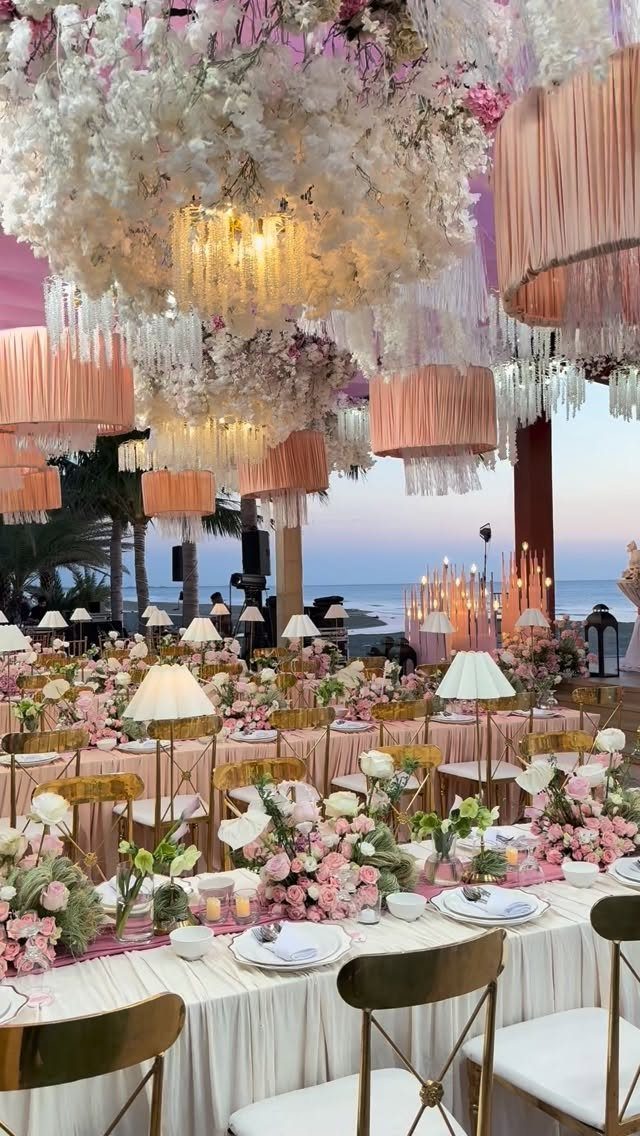
Floral clouds overhead turn dining tables into a full room without adding a single wall. White and pink blooms with fringed chandeliers hanging below them pull the eye up, so the centerpieces below can stay low and pink.
This is a dream-budget move, and I would say so plainly: ceiling florals take a lot of flowers and labor. If money is tight, do one cloud over the head table and keep the rest simple.
Check what your outdoor site can safely support before you plan anything hanging.
6. Draped Pergola Outdoor Dining
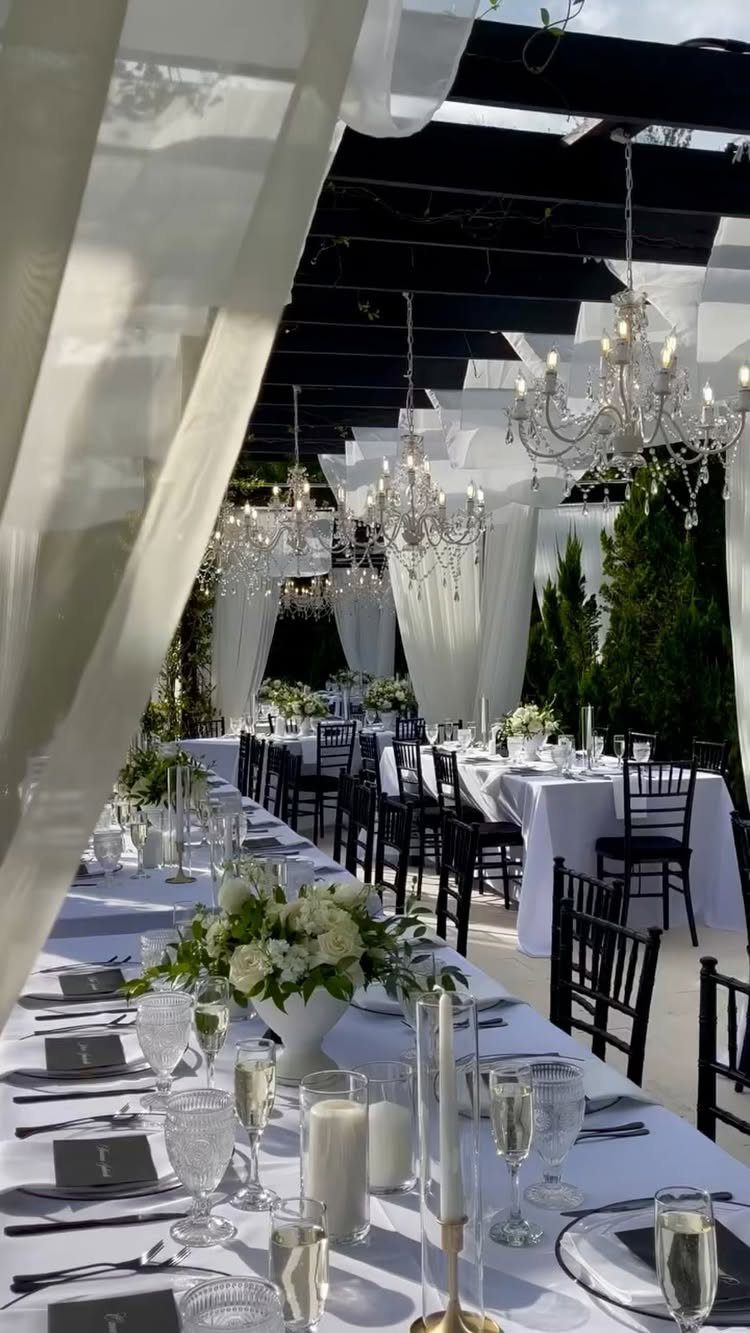
A black pergola draped in white fabric gives outdoor dining a ceiling, which is the thing most backyard tables lack. Crystal chandeliers hang from it and catch light, while black chairs keep the white cloths from looking washed out.
Long tables in a single row make the room feel formal and keep conversation going down the line.
If you rent the structure, ask what can be attached to it before choosing fabric. For a lower cost, drape only the center section and leave the ends open.
7. All-White Ballroom Ceremony
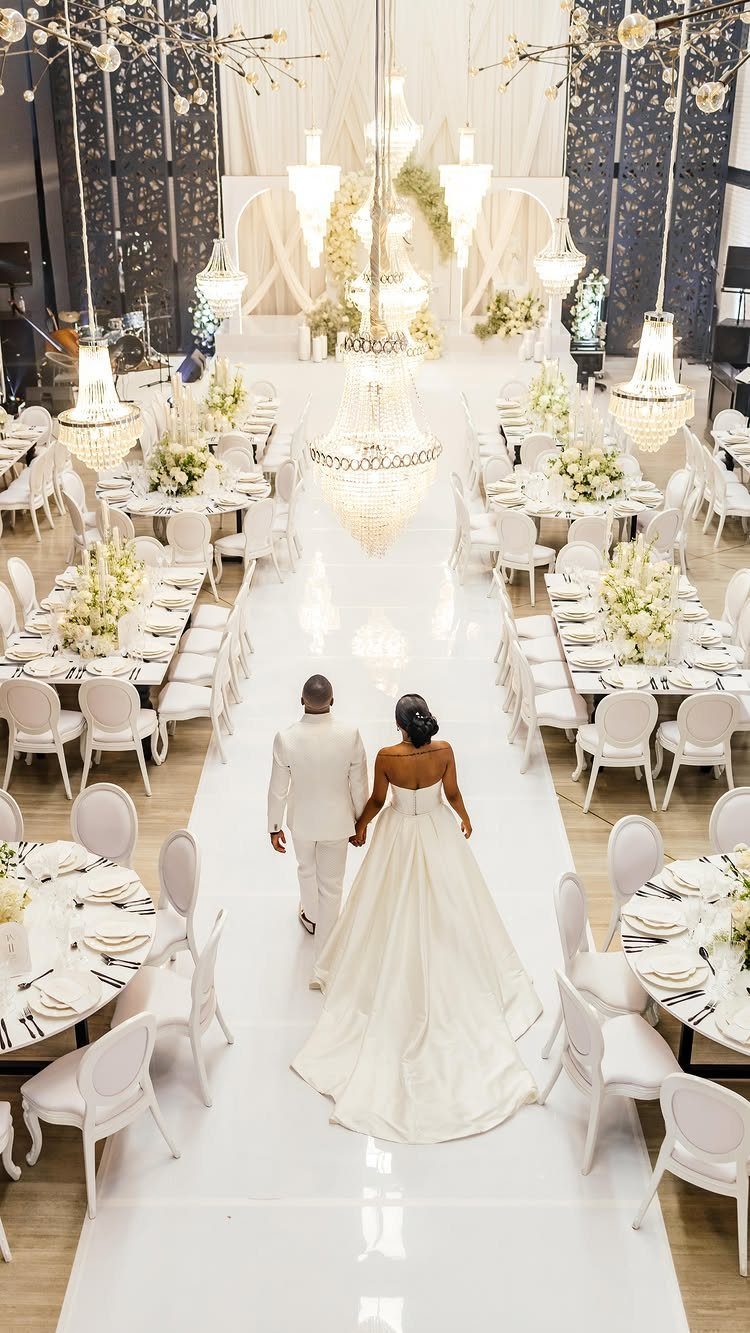
White on white works only when texture does the job color usually does. Crystal chandeliers, white florals in a few shapes and white chairs give the eye enough to read without a single accent.
Keep the aisle and the seating in the same white, or the mismatch shows at once. Pick flowers with different forms, some round, some trailing, so the monochrome has depth.
This is a ballroom move, and I would say it costs real money for the florals alone. For a tighter budget, white fabric on the aisle and chairs does most of the work.
8. Candlelit Staircase Decor
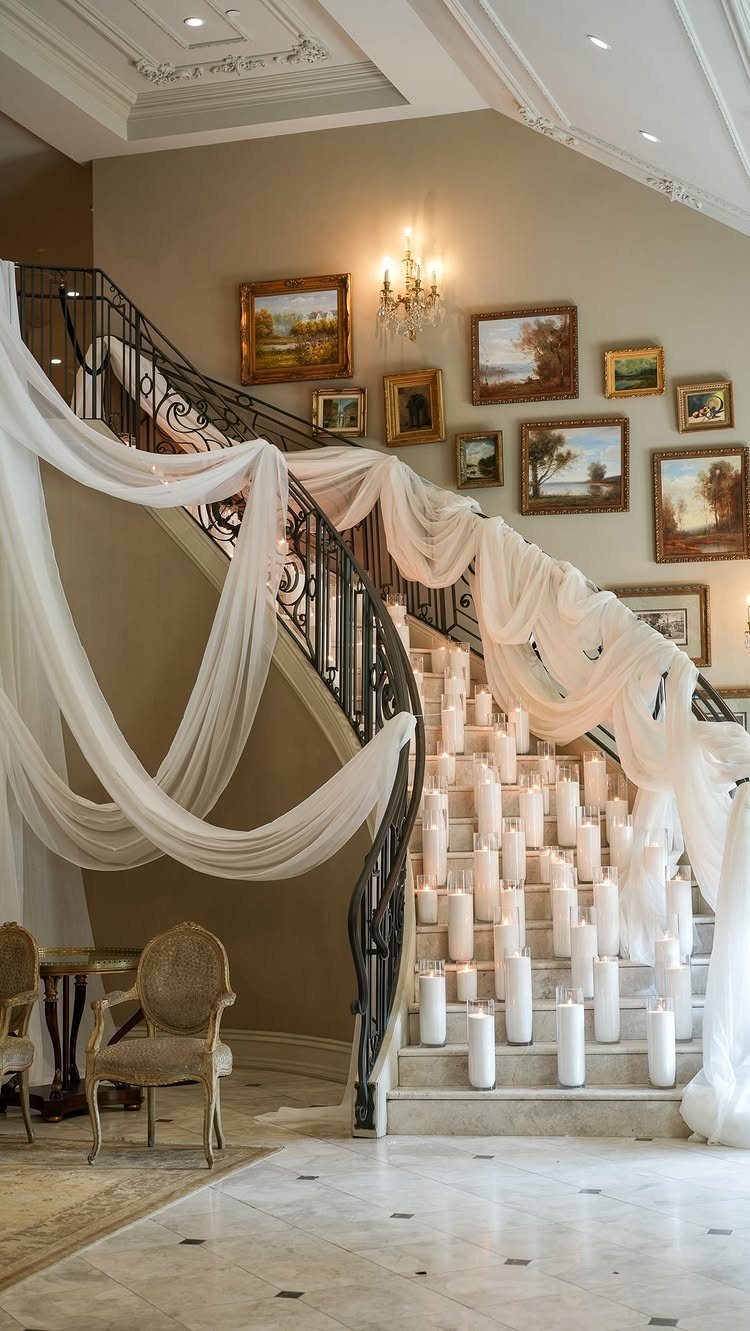
Candles on stone steps do the lighting and the decor in one pass. Sheer white fabric draped down the railing softens a hard staircase, and pillar candles in clusters of different heights give it rhythm.
I prefer clusters to a straight line, since a row on each step reads like an airport runway. Dark railings and marble need nothing else.
Check the venue’s open flame policy first, since some require flameless pillars, and only then order candles. Flameless ones cost less to replace and are the safer pick if guests will be walking past in formal clothes.
9. Stage Backdrop with Projection
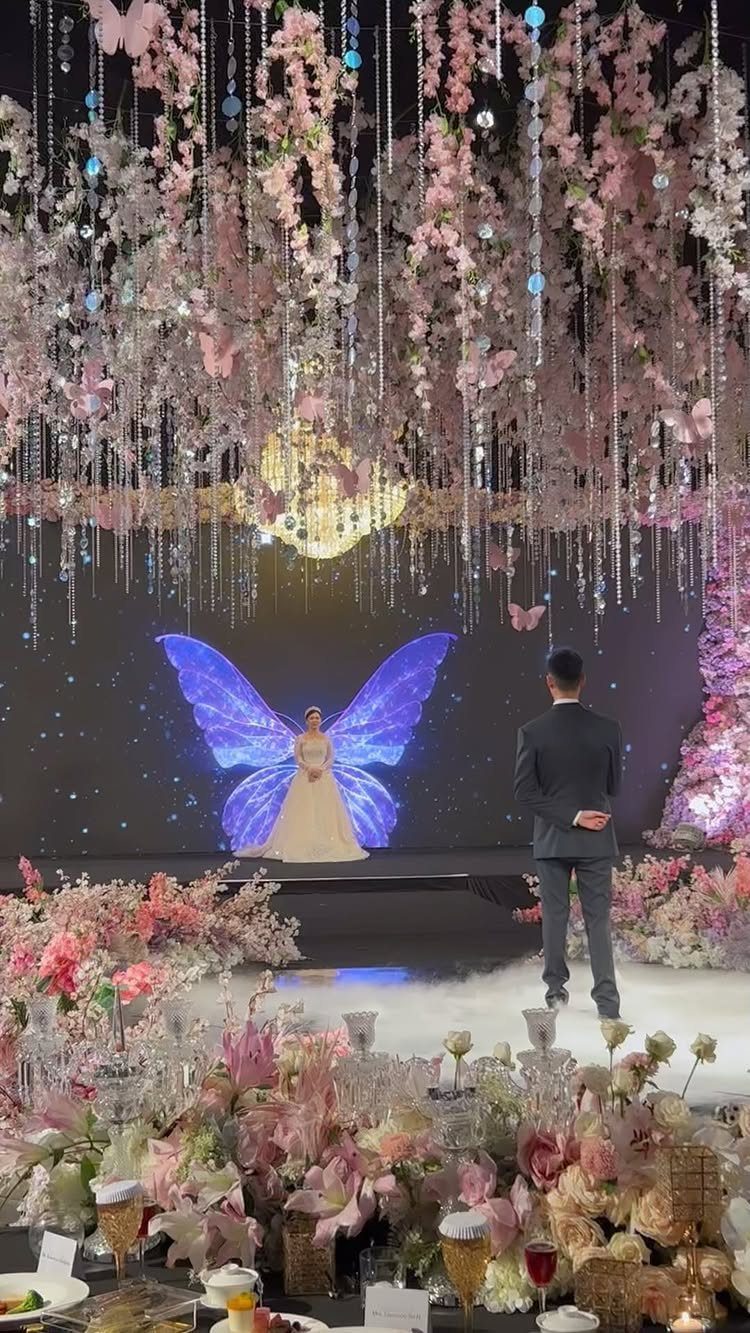
A projection turns a plain stage into a backdrop you can change by swapping a file.
One large butterfly image in blue, with pink flowers hanging above and crystals catching the light, gives the couple a focal point with real depth.
Hanging blooms and a glowing image can compete, so keep the florals to one color family. Pink against blue works because the two stay distinct.
Projection needs a projector, a clean surface and a darker room, so ask the venue about lighting and power.
Hire someone to run it. A dream-budget move, I would say, but a flat-screen alternative costs less.
10. Curated Wedding Stationery Flat Lay
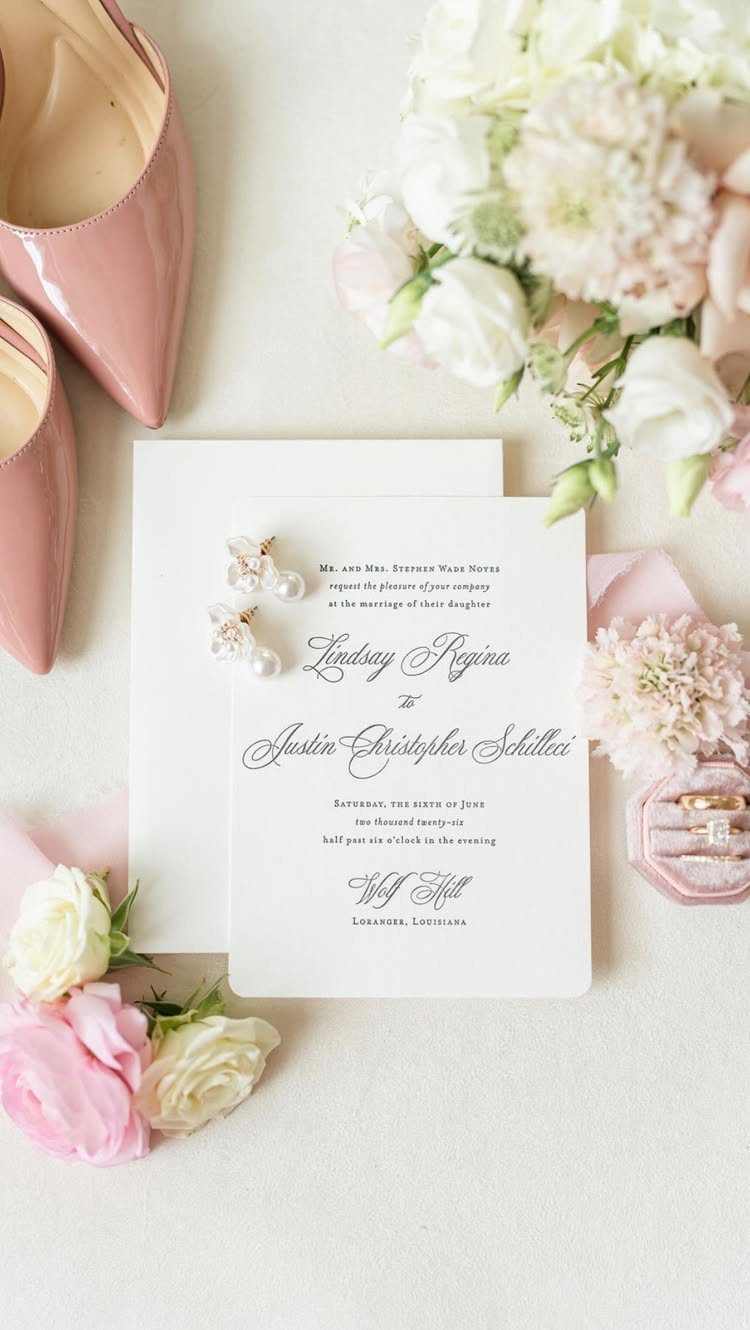
Pink heels, pearl earrings, white and pink roses and a ring box all pull from one palette, so nothing fights the names printed on the card.
Shoot it by a window in daylight before the day itself, since you will have the heels, jewelry and ring box all in one place. Order a few extra invitations for this, because the first one often gets creased.
The cost is nearly zero if you already own the pieces.
Differences Between Planning and Design
Planning is logistics: budget, vendor contracts, timelines, paperwork, RSVPs.
Design is the look: color, flowers, lighting, table settings. A planner can do both, but they are two different jobs, and many couples assume one person covers them without asking.
Ask each candidate whether the quoted price covers planning, design, or both, and get the answer in the contract. If design is extra, decide whether you will handle it yourself.
The venue question comes up early.
Some couples settle on a look first and search for a space that suits it. Others let the budget pick the venue and build the design around what the room already has.
Either order works, but sketch a few loose design ideas before you tour.
When money picks the venue for you, hold your vision loosely, since the room you end up loving may reshape the plan around it. Until the venue is booked, hold the details loosely.
Using Wedding Planning Software
Use software built for weddings rather than a general to-do app. It will already have fields for guest lists, RSVPs, budgets and vendors, so you are not building them from scratch.
Plenty of these tools cost nothing, and a free version is the place to begin. Pick the one you will actually open each week, even if a prettier one is on offer.
Test it with one real task before you commit: enter your budget, add three vendors and see whether the totals make sense to you. If it takes more than an evening to feel comfortable, try another.
Software also pairs well with paper. Let the app track RSVPs and payments, and keep signed contracts where you can hand them to a helper on the day.
Advice for New Planners
Start by working for an established planner or planning company. Assisting on real weddings teaches you how a day runs, who to call and where things go wrong, and it builds the relationships you will need later.
Next, write a business plan. Start by writing down your goals, what you plan to charge, how you will find clients, and what you expect your costs to be.
Choose a location with care, since some states and cities have far more weddings than others, and demand drives your income.
Clients want proof, so build a portfolio before you have many clients.
A styled shoot is a common way to do it: a staged event with local vendors that produces polished photos and puts you in touch with the people you will work with later.
Budget the shoot like a real job, because the cost and time add up.
Frequently Asked Questions
How do I create my own wedding planner?
A paper binder is the format I’d pick: names and wedding date on the front, then tabbed dividers for budget, vendors, timeline, paperwork and guest list.
The setup costs a binder and a pack of dividers; the real effort is a weekly update, so a parent or day-of helper can open it cold and find whatever they need.
What is the average cost of decor for a wedding?
I can’t give a reliable average for decor, because costs swing with the venue, the flowers and who installs what.
Hanging flowers and ceiling lights eat up stems and hours of labor, so a written quote before you sign is the safest move.
Cheaper routes include DIY pieces like folded book-page vases, flameless candles, and fabric draped only over a center section. Planner fees are the one number the sources give, and they typically land between $2,000 and $10,000.
What is the difference between wedding planning and wedding design?
Planning covers the logistics: money, vendor contracts, schedules, legal paperwork and RSVP tracking. A single person can handle both, but they are different jobs, so ask every planner which ones the quote includes and have the contract spell it out.





